
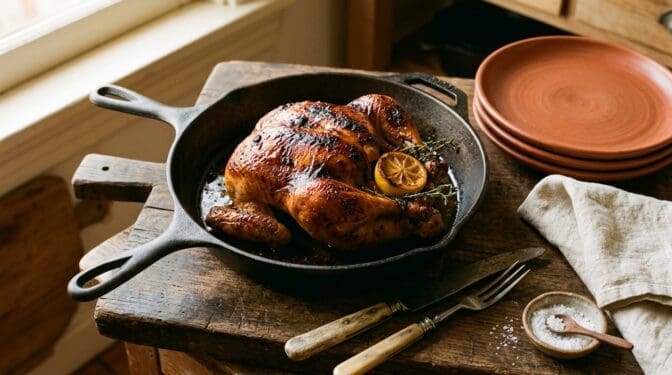
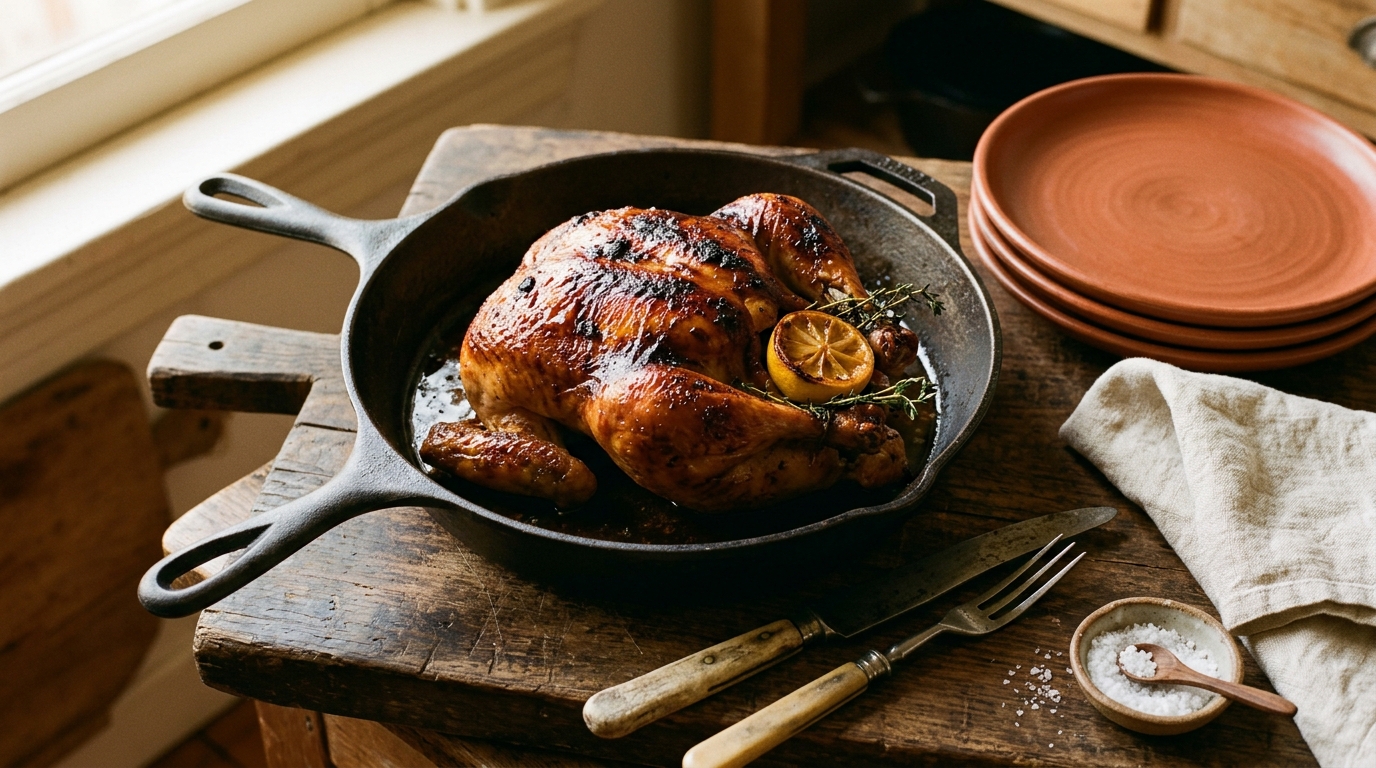
Brined overnight, butter under the skin, lemon and thyme inside, roasted hard until the skin shatters at the touch of a fork. The Sunday lunch flagship taken seriously.
Why you should cook this
A perfect roast chicken is the dish that separates a person who can cook from a person who cooks. There is no hiding behind a long ingredient list, an exotic technique, or a piece of equipment your audience hasn’t seen before. There is just a bird, an oven, and the question of whether you can render the skin to glass and keep the breast meat moist at the same time. The professional answer is yes. The home cook’s answer is usually “more or less.” The difference between professional and home cook on a roast chicken comes down to four small decisions, all of which you have probably been getting wrong, and all of which take ten extra minutes the day before.
Decision one: brine the bird overnight in a salty water bath. The salt penetrates the meat, seasons it from the inside out, and tightens the proteins so they hold moisture during the cook. A 5% brine (50g of salt per litre of cold water) for 12 to 24 hours transforms the breast meat. Decision two: dry the skin completely after brining, ideally by leaving the bird uncovered on a rack in the fridge for another 12 hours. Wet skin steams; dry skin crisps. Decision three: rub softened butter under the skin, between the breast meat and the skin, before cooking; the butter melts into the meat and helps the skin lacquer. Decision four: roast hard, hot, and short rather than soft, low, and long. 220°C fan-forced for 50 to 60 minutes is the sweet spot for a 1.6kg bird; longer or lower and you dry the breast.
Use a free-range bird. The supermarket bird at $9 has lived a short, dim, sad life and tastes like the script of a 1990s Australian film about ennui in the suburbs. The free-range bird from a butcher (Vic’s in Surry Hills, Hudson Meats anywhere they exist, the Saturday Eveleigh markets) costs $24 to $35 for a 1.6kg bird and tastes the way you remember chicken tasting in your grandmother’s kitchen. The price difference is the price of cooking a chicken that does not need to apologise for itself.* Buy the bird two days before the meal. Brine. Dry. Roast.
(*The Sunday Lunch Bird Premium is real and it is paid in full at the carving stage. The flavour difference is not subtle; it is the difference between a song you tolerate and a song you put on twice.)
What to drink with it
A medium-bodied Pinot Noir or a lightly oaked Chardonnay. Both are classical. A Yarra Valley Pinot (Giant Steps at $42 from Dan Murphy’s, By Farr Sangreal at $80 if you have splashed) gives the dish the elegant savoury counterpoint; a Chardonnay (Mac Forbes RS3 at $30, Leeuwin Estate Art Series at $80) leans into the rich skin and the butter. A Tasmanian sparkling (Jansz NV at $30) also works for a starter glass. Avoid heavy red; the Shiraz will smother the bird. The bird is the star.
Recipe · Dinner
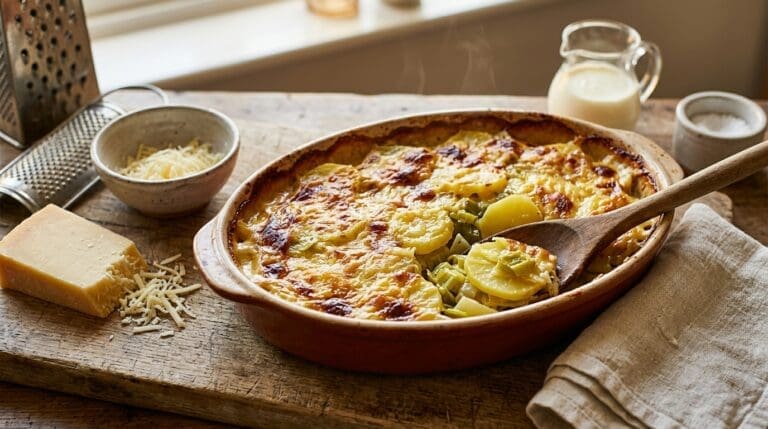
Leek and Potato Gratin
Sliced potato, soft leek, cream and gruyere, baked until the top is amber and the inside is the kind of soft you can spoon. The side that pretends…
Read the recipe →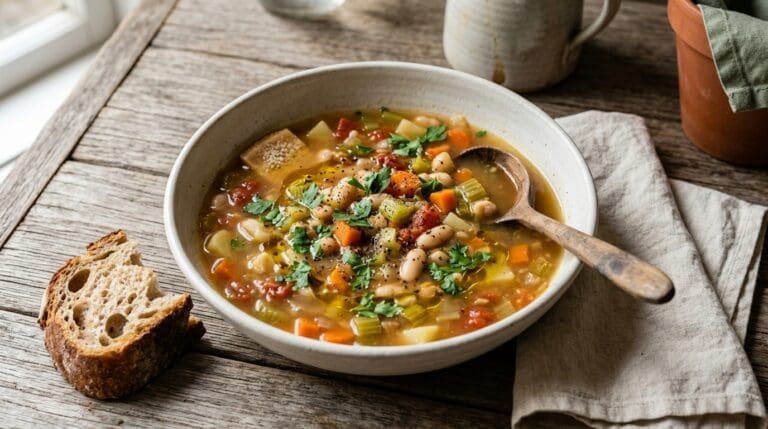
Recipe · Dinner
Winter Vegetable Soup
Three hours of slow extraction, an old parmesan rind, a few cheap vegetables. The soup the Italians have been quietly winning at since the fourteenth century. Why you…
Read the recipe →
Notes from the kitchen
Brine the bird the day before. 50g of fine salt per litre of cold water in a large container; submerge the bird (use a plate or a bowl on top to keep it under), refrigerate for 12 to 24 hours. Lift out, pat absolutely dry with paper towel, and (if you have the fridge space) leave uncovered on a rack over a tray in the fridge for another 12 hours. Dry skin is the entire game. Wet skin steams in the oven and never crisps; dry skin crisps in the first ten minutes and stays crisp.
Soften 50g of butter at room temperature; mash with a fork with a clove of crushed garlic and a teaspoon of fresh thyme leaves and a pinch of pepper. Slide your fingers gently between the breast meat and the skin to loosen (do not tear the skin), then push the butter under the skin and spread it across the breast with the back of your fingers. Stuff the cavity with half a Eureka lemon, a few thyme sprigs, two whole garlic cloves and a small bay leaf. Truss the legs with kitchen string if you have it; tuck the wing tips under the bird so they don’t burn.
Roast at 220°C fan-forced. Place the bird breast-side-up in a wide cast-iron pan or a heavy roasting tray. Roast for 50 minutes for a 1.6kg bird (add 5 minutes per 200g over 1.6kg). The bird is done when the juices run clear from a thigh pierced at the joint, or when a probe in the thickest part of the thigh reads 75°C. Rest the bird for 15 minutes on a warm plate, loosely covered with foil, before carving. The rest is non-negotiable; carving early loses all the juice to the board and dries the breast in 90 seconds.
Make the gravy in the pan while the bird rests. Pour off most of the fat (reserve for roast potatoes the next day). Place the pan over medium heat. Sprinkle in a tablespoon of plain flour, whisk into the dark fond stuck to the pan. Add 250ml of chicken stock and a splash of white wine, whisk hard, simmer for 5 minutes until the gravy thickens. Strain through a fine sieve into a warmed jug. Season. Pour over the carved bird at the table.
Two things that go wrong
Skin is pale and rubbery instead of glossy mahogany shatter
You did not dry the skin enough before cooking. The bird needs at least 12 hours uncovered in the fridge after brining for the skin to dry out properly. If the skin is rubbery after the cook, push the temperature to 240°C for the last 8 minutes, or finish under a hot grill for 3 minutes (watch it; it goes from pale to burnt in 90 seconds).
Breast meat is dry while the legs are still pink at the joint
Your bird was cooked too long, or the oven was too hot for the size. Use a probe thermometer; 75°C in the thickest part of the thigh is the target. If the breast is dry but the legs are not done, carve the breast off, tent with foil, and return the leg quarters to a 180°C oven for another 10 to 15 minutes. The legs catch up; the breast rests.
Variations worth knowing
Roast chicken with 40 cloves of garlic
Skip the lemon in the cavity. Scatter 40 unpeeled garlic cloves around the bird in the pan with a glug of olive oil. Roast as usual. The garlic confits in the chicken fat and turns into a sweet caramel paste you can spread on toasted sourdough alongside the bird. Anthony Bourdain’s favourite Sunday lunch.
Roast chicken with chimichurri
Make a quick chimichurri (a bunch of flat-leaf parsley, a clove of garlic, a teaspoon of red wine vinegar, 60ml olive oil, blitzed) and serve in a small bowl alongside the carved bird. The Argentinian-leaning version, brighter and more herbal. Goes with a Malbec instead of a Pinot.
Spatchcocked roast chicken (the faster one)
Cut the bird’s backbone out with kitchen scissors, press flat. Brine and dry as usual. Roast skin-side-up at 220°C for 35 to 40 minutes. The bird cooks in two-thirds the time and the skin crisps over a wider surface. The version for a weeknight roast.
Leftovers and make ahead
Leftover roast chicken is one of the great unspoken gifts of a Sunday lunch. The cold meat keeps in the fridge for four days, covered. Pull the meat off the bones with your fingers (not a knife; the fingers shred to the right size for sandwiches and salads). Save the carcass for stock. Use the meat in: chicken sandwiches with mayo and rocket on sourdough toast (Monday lunch), a quick chicken laksa with leftover stock (Tuesday dinner), a chicken Caesar salad with parmesan and anchovy dressing (Wednesday lunch), and a chicken-and-leek pie with leftover gravy on Thursday.
The carcass goes into a stockpot with a halved onion, a halved carrot, a stick of celery, a bay leaf, a few peppercorns and 2L of cold water. Bring to a gentle simmer, no boil, no lid, for 3 hours. Strain. The result is a deep amber chicken stock that goes into risottos, soups, gravies and braises for the next month. One $30 bird buys you four meals plus 1.5L of stock. The roast chicken is the unbeatable household economy.
The recipe
[fd-wprm-placeholder]
Ingredients
Method
- Day before: dissolve the salt in the cold water in a large container. Submerge the bird, refrigerate 12 to 24 hours.
- Day of: lift the bird out, pat very dry with paper towel. If you have time, leave uncovered on a rack in the fridge for another 12 hours to dry the skin further (the morning of works at a pinch).
- Preheat oven to 220°C fan-forced. Mash the softened butter with the crushed garlic, thyme leaves and a pinch of pepper.
- Gently slide your fingers between the breast meat and the skin to loosen. Push the herb butter under the skin, spread it across the breast.
- Stuff the cavity with the lemon halves, thyme sprigs, whole garlic cloves and bay leaf. Truss the legs with kitchen string if you have it; tuck the wing tips under.
- Place breast-side-up in a wide cast-iron pan. Season the skin with cracked pepper. Roast for 50 minutes for a 1.6kg bird (add 5 minutes per 200g over 1.6kg).
- Test for doneness: juices should run clear from a thigh pierced at the joint, or a probe in the thickest part of the thigh should read 75°C.
- Lift the bird onto a warm plate. Tent loosely with foil. Rest 15 minutes (non-negotiable).
- Make gravy: pour off most of the fat from the pan. Place the pan on medium heat. Whisk in the flour to the dark fond. Add stock and wine, whisk hard, simmer 5 minutes until thickened. Strain into a warm jug.
- Carve the rested bird. Sprinkle with flaky salt. Serve with the gravy poured over.