
Why you are cooking this tonight
If you only learn one pasta sauce in your life, make it this one. Bolognese from the tin is fine as a substance. Ragu that has been reducing on your stove for three hours is a different category of thing altogether. It is the sauce that makes people ask if you made it, then look confused when you say yes, then quietly text you on the way home for the recipe.
The trick with a proper ragu is that it is not a quick red sauce. It is a slow sauce. It is closer to a stew than to pasta sauce as most Australians think of it. Meat, a bit of pork for richness, a long sweat of onion and carrot and celery, a glass of red wine, a tin of tomatoes, and time. The time is the ingredient most people skip. It is the one that matters.
Sunday-afternoon cooking. Not-so-bad Monday reheating.
What you need
500 g beef mince, not the cheapest, not the leanest. Chuck or blade mince, around 15 percent fat. Ask your butcher. Supermarket premium beef mince is fine too.
250 g pork mince. The pork is the secret. It brings fat, sweetness, tenderness. If your butcher will do you 750 g of a beef-and-pork blend, even better.
100 g pancetta or streaky bacon, finely diced. Optional. Makes everything better.
1 brown onion, very finely chopped.
1 large carrot, very finely chopped.
2 celery stalks, very finely chopped. (Onion, carrot and celery together is soffritto. Learn the word, use it, feel better about yourself.)
4 fat garlic cloves, finely chopped.
200 ml red wine. Medium-bodied Italian style. Sangiovese, Chianti, Nero d’Avola. Whatever’s in the kitchen.
250 ml whole milk. I know. Trust me. It mellows the acid, tenderises the meat, and the sauce finishes silky instead of sharp. This is how the Italians do it and the Italians are right about pasta.
800 g tinned whole peeled tomatoes, crushed with your hand over the pot.
2 tbsp tomato paste.
2 bay leaves.
2 sprigs of fresh thyme and 2 sprigs of fresh oregano if you have them, skip the oregano if not.
1 parmesan rind if you keep those in the fridge like a proper person (you should).
400 g pappardelle, egg pasta if you can get fresh. Good dried pappardelle is also fine. Tagliatelle, rigatoni, or paccheri all work. Spaghetti does not work. A ragu needs a ribbon or a tube to hang on to.
Olive oil, salt, pepper, parmesan to finish.
How to cook it
Step 1. Build the soffritto
Big heavy pot, medium heat, a decent glug of olive oil. In with the pancetta. Let it render and go crispy at the edges, about 6 minutes.
In with the onion, carrot and celery, a pinch of salt. Low heat, lid on, 15 minutes, stirring occasionally. You are sweating the vegetables, not frying them. They should turn translucent and soft and vaguely sweet. Garlic in for the last two minutes. This step is not the one to rush.
Step 2. Brown the meat
Heat up. Tip in the beef and pork. Big wooden spoon. Break it up as it cooks. Do not just stir, actively press the mince against the bottom of the pot. You want brown, you want crust, you want maillard. Twelve minutes. Season with salt and pepper.
If a puddle of liquid has pooled in the pot, keep going until it evaporates. The sauce is not the meat’s sauce, it is your sauce, and you are the boss.
Step 3. Tomato paste moment
Tomato paste in, stir through the meat, 90 seconds. The paste should darken one shade, from bright red to a rustier red. This is where the sauce gets depth.
Step 4. Deglaze with wine
Wine in, scrape the bottom. Let it bubble off for two or three minutes. The sharp edge goes, the savoury stays.
Step 5. Milk (yes, milk)
Milk in. Stir. Let it reduce for a few minutes until it looks absorbed. The sauce will look weird for a minute. It comes good.
Step 6. Tomatoes and the long simmer
Crushed tomatoes, tomato paste’s herb friends (bay, thyme, oregano), parmesan rind if you have one. Half a tin of water swilled out and in. Bring to a very low simmer.
Lid half-on, lowest possible heat, two and a half to three hours. Stir every 20 minutes or so. Scrape the sides. The sauce will reduce from soupy to glossy. It will darken. It will start to smell like the best restaurant in Carlton.
If it reduces too fast, a splash of water. If it won’t thicken, lid off for the last 30 minutes.
Taste at the end. Salt, pepper, a grate of fresh nutmeg if you’re feeling operatic. Fish out the bay leaves and parmesan rind.
Step 7. Dress the pasta
Salt the pasta water aggressively: 10 g salt per litre, it should taste like the sea. Cook pappardelle one minute shy of the packet time.
Lift the pasta straight into the ragu pot with tongs. Reserve half a cup of pasta water. Stir the pasta through the sauce on low heat, splash of pasta water to loosen if needed, for a minute until the sauce coats every ribbon. A knob of butter in at the end, optional, makes it glossy.
Step 8. Serve
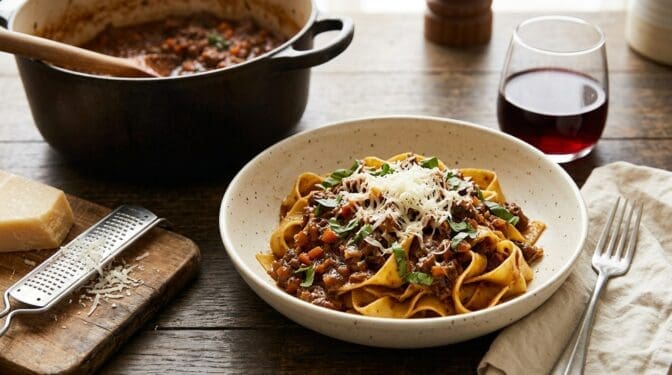
Warm bowls. Pasta. More ragu on top. A mountain of parmesan. A tear of basil. Eat immediately. No sides required. A simple green salad after if anyone wants one, but nobody will want one.
What to pour with it
Wine. Sangiovese-based Italian red is the classic match. Chianti Classico, Brunello di Montalcino, or a Vino Nobile. Australian alternative: a Heathcote or Barossa Sangiovese.

Cocktail
The Negroni
The Negroni is the cocktail for people who think they do not like cocktails. Three ingredients, equal parts, stirred over ice. No shaking, no fruit juice, no sugar.…
Read the recipe →
Cocktail
The Boulevardier
The Boulevardier is a Negroni that swapped its gin jacket for a wool one and went hunting. Same Campari, same sweet vermouth, but with bourbon or rye instead…
Read the recipe →
Cocktail
Negroni Sbagliato
A bartender in Milan in 1972 grabbed the wrong bottle and poured prosecco instead of gin into a Negroni. Why you are pouring this tonight The Negroni Sbagliato…
Read the recipe →Two things that go wrong
The sauce tastes thin. You didn’t brown the meat hard enough. The single most skipped step. Next time, keep the heat on the meat a few minutes longer. Today, a tablespoon of tomato paste, another 20 minutes of simmer, and a generous hand with the parmesan on the plate.
The sauce is greasy. Your mince was too fatty, or the pancetta gave off more than you expected. Skim with a spoon, or cool the sauce briefly and spoon off the top. The sauce underneath will be right.
Variations worth knowing
White ragu
No tomatoes. Replace the tomatoes with an extra 300 ml milk, a cup of chicken stock, and a grating of nutmeg. Gentle, pale, excellent with pappardelle and a small shaving of truffle oil if you feel fancy. This is the Piedmontese version.Duck raguTwo whole duck legs, slow-braised at the start, meat shredded, returned to the sauce. Knockout for autumn. Dress with pappardelle and a heap of pecorino.Mushroom raguVegetarian. 500 g mixed mushrooms (portobello, Swiss brown, king oyster), finely chopped or blitzed in the food processor until “minced”. Follow the same method. Add a splash of soy sauce for savoury depth. You won’t miss the meat.
Leftover plan
Leftover ragu is better than first-night ragu. Fight me on this. Pile it onto fresh pasta, layer it into lasagne, spoon it over baked potatoes, or put it on soft polenta with a fried egg on top. It freezes perfectly for three months in 500 ml portions.
You might also like

Recipe
The Proper Aussie Beetroot Burger
Why you should cook this The Aussie burger is the only burger format that openly admits to being a structural disaster. Beef pattie, melted tasty cheese, fried egg,…
Read the recipe →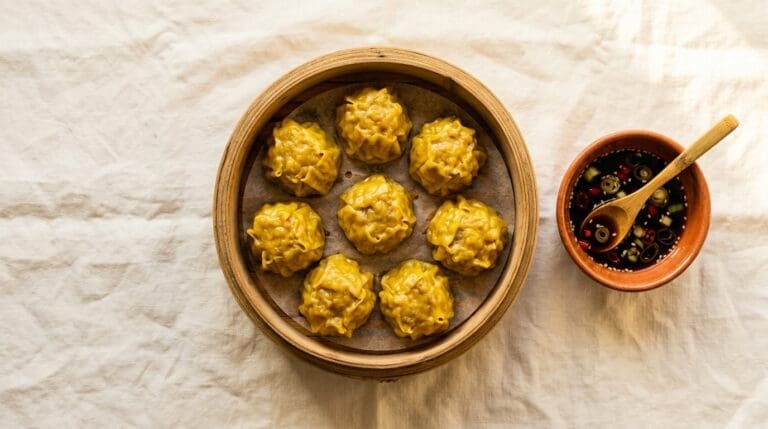
Recipe
Pork & Cabbage Dim Sims (Aussie Style)
The Australian-Chinese fish-and-chip-shop dim sim. Why you should cook this Dim sims are the Australian-Chinese fish-and-chip-shop classic that nobody outside Australia has heard of and that everyone inside…
Read the recipe →
Recipe · Baking
Vegemite & Cheese Scrolls
Why you should cook this The lunchbox classic that you remember as the highlight of grade four and that, when you make them yourself as an adult, you…
Read the recipe →
Recipe
Savoury Cheese & Bacon Muffins
School lunchbox classic, grown-up version. Why you should cook this The lunchbox muffin that actually holds together. Cheddar, crispy bacon, spring onion, a fold of self-raising and a…
Read the recipe →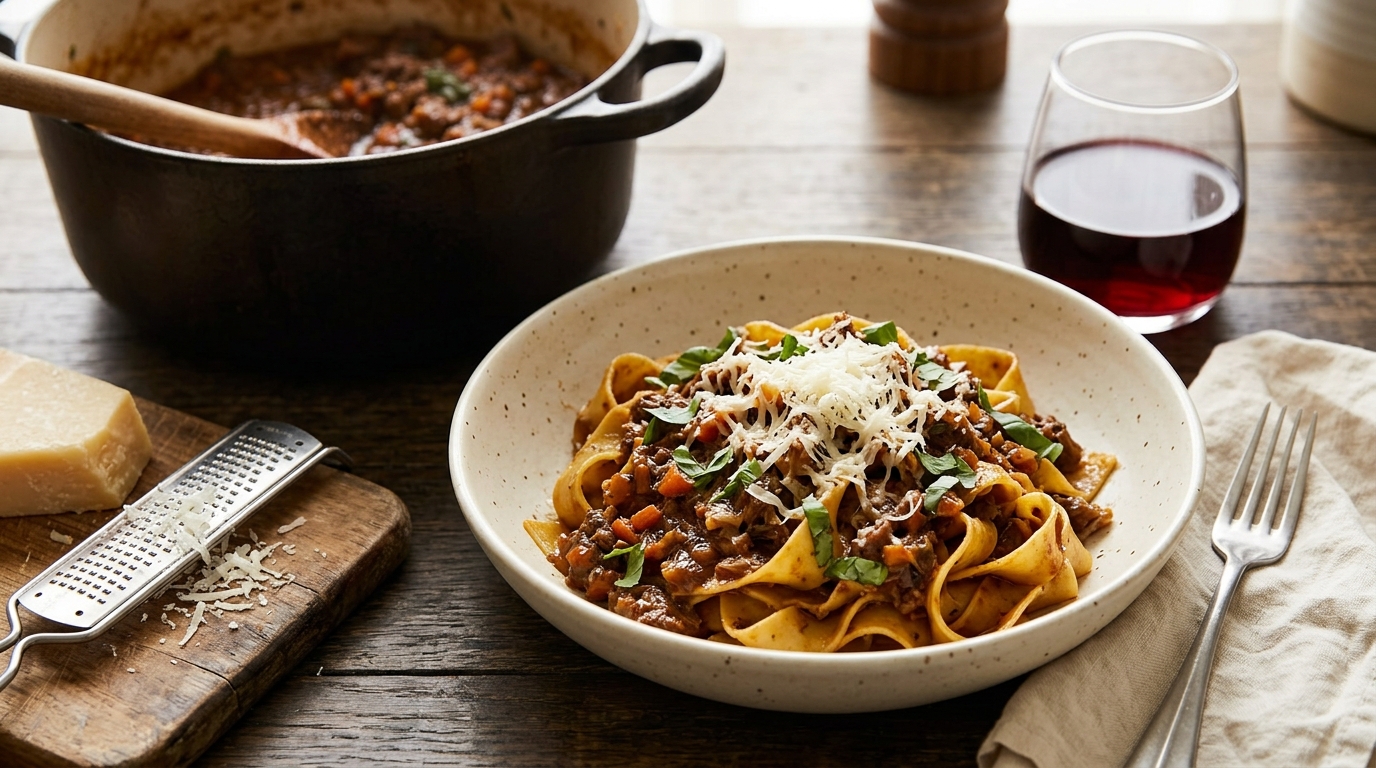
Pappardelle with Slow-Cooked Ragu
Ingredients
Method
- Heat oil in a heavy casserole over medium heat. Cook pancetta until crisp, 5 minutes. Add onion, carrot, celery. Cook slowly for 10 minutes until very soft.
- Add garlic, cook for 1 minute. Turn the heat up high. Add beef and pork mince. Break up and cook until browned, 10 minutes.
- Stir in tomato paste. Cook for 2 minutes. Pour in wine and reduce by half.
- Add milk and simmer for 5 minutes until almost absorbed. This is the step most home cooks skip. Don't.
- Add tomatoes, stock, bay leaves and rosemary. Bring to a gentle simmer.
- Partially cover and simmer on very low heat for 2.5 to 3 hours, stirring occasionally, until rich and glossy.
- Cook pappardelle in salted boiling water until al dente. Drain, reserving 1 cup of pasta water.
- Toss pasta through ragu with a splash of pasta water. Serve with parmesan and parsley.