
Why you are cooking this tonight
Fish and chips is an Australian birthright. We grew up with it wrapped in newspaper at the beach, eaten off the tailgate of a ute with a can of something cold. Good versions are spectacular. Bad versions (soggy batter, thin oily chips, overcooked flathead) are a tragedy.
Doing it at home sounds ambitious but is genuinely easier than most home cooks expect. Two steps. Make a proper beer batter, make proper twice-cooked chips. The whole exercise takes an hour, yields better fish than most takeaways, and costs about half. The only special equipment you need is a thermometer and a wide heavy pot.
The trick is the batter. Ice-cold beer, low-protein flour, minimum stirring. Lumps are good. You want a batter that shatters when you bite it and puffs up with bubbles. Everything else is rigging.
What you need
4 x 150 g firm white fish fillets, skinless, boneless. Flathead, snapper, gurnard, ling, hake, or barramundi. Ask for line-caught or sustainable. Avoid orange roughy. Blue-eye trevalla is lovely if your budget stretches. Pat them very dry with paper towel.
For the batter:
250 g plain flour (plus 50 g extra for dusting the fish). 10 g baking powder. 1 teaspoon sea salt. 1 teaspoon smoked paprika (optional but good). 330 ml ice-cold Australian lager or pale ale. Coopers Pale, Stone & Wood, Little Creatures Pale Ale, or even a VB if that is what is cold. The colder the better. Fridge is fine, half an hour in the freezer is better.
For the chips:
1.2 kg large floury potatoes. Russet Burbank (standard chip potato), Sebago, or Coliban. Do not use waxy potatoes like Desiree or Nicola, they won’t fluff. Peeled, cut into 1.5 cm sticks. Or 1 cm if you want English-style straight-cut.
For frying: 2 to 3 litres neutral oil (vegetable, rice bran, or peanut oil). A proper deep heavy pot, a thermometer.
Sea salt, extra.
For the tartare:
200 g good whole-egg mayo (Kewpie, S&W, or home-made). 2 tablespoons capers, chopped. 2 tablespoons cornichons or dill pickles, chopped. 2 tablespoons flat-leaf parsley, chopped. 1 small eschalot, finely diced. Squeeze of lemon. Pinch of salt and pepper.
Lemon wedges, malt vinegar (Heinz if you are being traditional), and buttered white bread to serve.
How to cook it
PART 1: Chips first (because they take longer)
-
Cut and soak the chips. Peel and cut the potatoes into 1.5 cm sticks. Tip into a bowl of cold water and soak 20 minutes (longer is fine, up to a few hours). This pulls out surface starch so the chips don’t stick together and go golden, not grey.
-
First fry: the blanch. Heat the oil in a heavy pot to 135°C. Drain and dry the chips completely on a clean tea towel or paper towel. Wet chips and hot oil is how you end up at the GP. Fry the chips in batches for 6 to 8 minutes at 135°C. They should be pale, fully cooked through, but not coloured. Lift out with a slotted spoon onto a wire rack. Let them cool and dry for at least 15 minutes. They can sit like this for an hour if you want to get ahead.
-
Heat the oil to 190°C for the final fry, coming up later.
PART 2: The batter
-
Whisk the dry. In a large bowl, combine the 250 g flour, baking powder, salt, and paprika. Whisk together.
-
Pour in the ice-cold beer all at once. Whisk just enough to combine, lumps are fine, lumps are actually welcome. Over-whisking develops gluten and you end up with tough batter. 10 seconds of whisking, tops.
-
Rest 5 minutes in the fridge while you prep the fish.
PART 3: The fish
-
Dust the fish. Sprinkle the extra 50 g flour on a plate. Dip each fish fillet in the flour, patting off excess. This helps the batter grip.
-
Final chip fry, while the oil hits temperature. Bring your oil (or a second pot of fresh oil) to 190°C. Fry the pre-cooked chips in batches, 2 to 3 minutes at 190°C, until deep gold and shattering-crisp. Lift onto paper towel, salt immediately. Keep warm in a low oven (80°C, door slightly ajar) while you fry the fish.
-
Dip the fish. One fillet at a time, coat in the batter, let the excess drip off for a second.
-
Fry the fish at 190°C. 4 to 5 minutes per fillet until deep gold, crisp, floating. Do not crowd the pot, two fillets at a time max. The batter should bubble up and around the fish into a puffy crust. If the oil is too cool, the batter absorbs oil and goes greasy. If too hot, the batter burns before the fish cooks. A thermometer pays for itself in one cook.
-
Lift onto a wire rack (not paper towel, that steams the underside). Season with sea salt.
PART 4: Tartare and serve
-
Make the tartare while things fry. Stir mayo, capers, cornichons, parsley, eschalot, lemon, salt, and pepper in a bowl. Taste. Done.
-
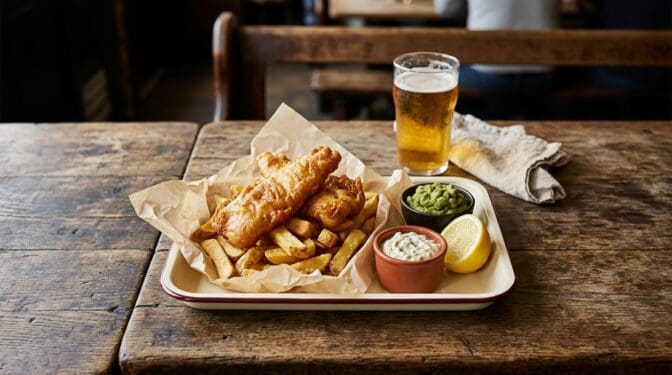
Serve immediately. Pile the chips, lay the fish on top, lemon wedges on the side, tartare in a ramekin. Malt vinegar in reach. A slice of buttered white bread. That’s the plate.
What to pour with it
Beer. A cold lager. Coopers Pale, Asahi, or any decent pilsener. The carbonation and bitterness reset the palate against the rich batter. White wine drinkers, a cold Sauvignon Blanc or Chablis works.
Cocktail
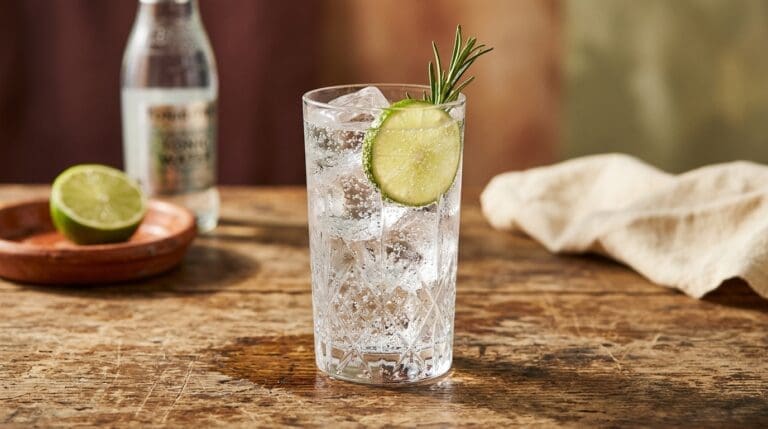
Gin and Tonic
The Gin and Tonic is the most quietly ruined drink in the country. Every pub in Australia charges you $18 for a thimble of gin, a splash of…
Read the recipe →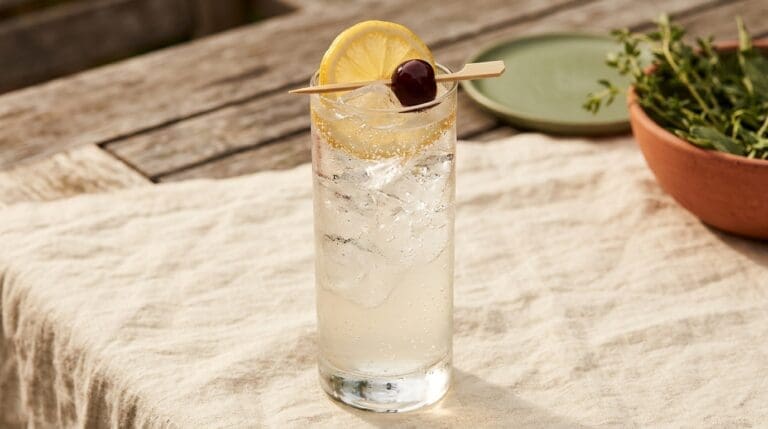
Cocktail
The Tom Collins
The original highball. Why you are pouring this tonight The Tom Collins is the original highball and the cocktail every other tall drink owes a royalty to. Limmer's…
Read the recipe →
Cocktail
Saint-Germain Spritz
The most floral spritz in the family. Why you are pouring this tonight The Saint-Germain Spritz is the cocktail you make on the first Friday afternoon you can…
Read the recipe →Two things that go wrong
Soggy batter, soaked in oil. The oil was too cool or the batter was too warm. 190°C for frying. Ice-cold beer, keep batter bowl in a bowl of iced water while you work. Cold batter hitting hot oil is the whole secret.
Chips that are brown on the outside, raw in the middle. You skipped the first-fry at 135°C, or you crammed too many chips into the second fry and dropped the oil temperature. Always twice-cook, always small batches, always at the correct temperatures.
Variations worth knowing
Grilled fish and salad
Skip the batter and frying altogether. Pan-fry or grill the fish in butter. Serve with the chips and a lemony cos salad. Lighter, still delicious, still Friday night.Salt and pepper squidSame batter and method, swap fish for 500 g cleaned squid tubes cut into rings. 2 minutes in the fryer per batch, not longer. Serve with the tartare and chips.Battered prawns or scallopsSame batter, 2 minutes frying, works brilliantly for a dinner-party version. Serve as a starter with lemon and tartare, chips optional on the side.
Leftover plan
Fish and chips is actively hostile to leftovers. The batter goes soggy, the chips go sad. If you must, reheat the chips spread on a tray at 200°C for 6 minutes, no oil. Fish does not reheat well, turn it into a brand-new fish finger sandwich instead: cold fish, buttered white bread, iceberg lettuce, mayo, malt vinegar, pickle. Saturday lunch solved.
You might also like
Recipe
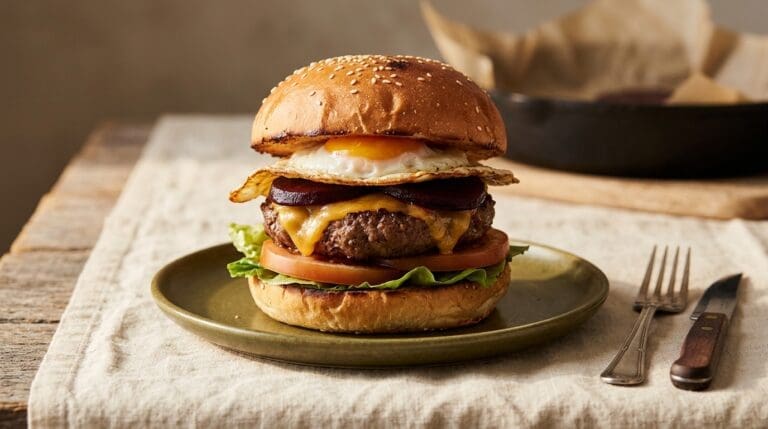
The Proper Aussie Beetroot Burger
Why you should cook this The Aussie burger is the only burger format that openly admits to being a structural disaster. Beef pattie, melted tasty cheese, fried egg,…
Read the recipe →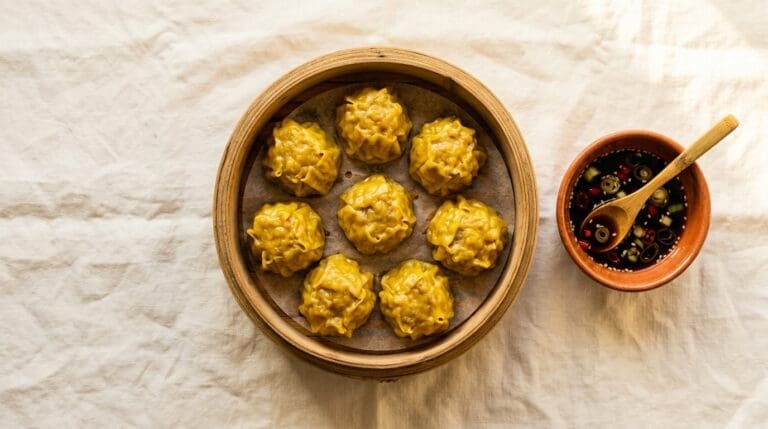
Recipe
Pork & Cabbage Dim Sims (Aussie Style)
The Australian-Chinese fish-and-chip-shop dim sim. Why you should cook this Dim sims are the Australian-Chinese fish-and-chip-shop classic that nobody outside Australia has heard of and that everyone inside…
Read the recipe →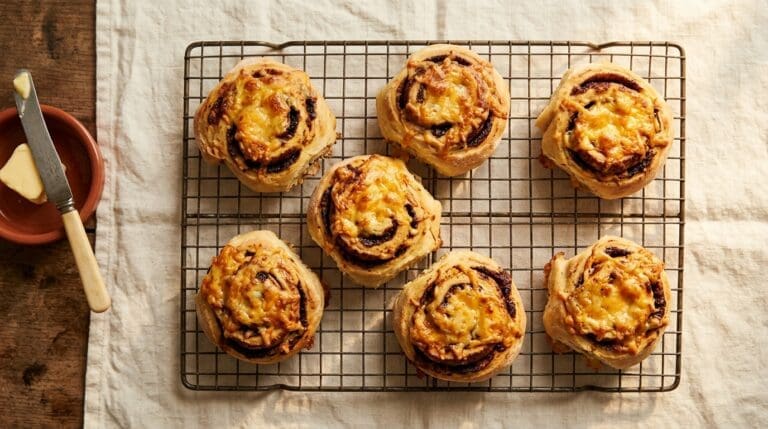
Recipe · Baking
Vegemite & Cheese Scrolls
Why you should cook this The lunchbox classic that you remember as the highlight of grade four and that, when you make them yourself as an adult, you…
Read the recipe →
Recipe
Savoury Cheese & Bacon Muffins
School lunchbox classic, grown-up version. Why you should cook this The lunchbox muffin that actually holds together. Cheddar, crispy bacon, spring onion, a fold of self-raising and a…
Read the recipe →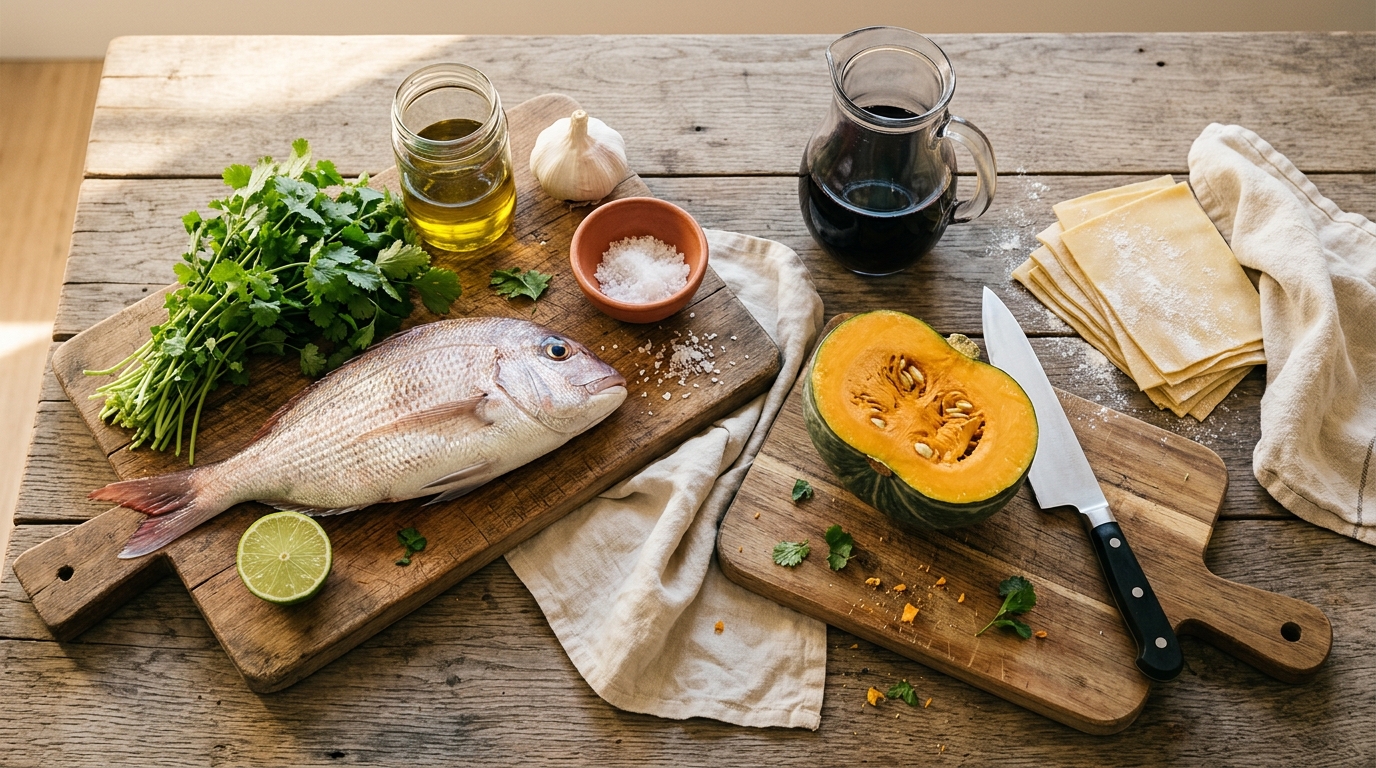
Beer-battered fish and chips at home that beats the takeaway
Ingredients
Method
- Peel and cut potatoes into 1.5 cm sticks. Soak in cold water for at least 20 minutes.
- Drain and dry the chips thoroughly. Heat oil to 135°C. Fry chips in batches for 6 to 8 minutes until pale and cooked through. Lift onto a wire rack.
- Whisk flour, baking powder, salt, and paprika together. Pour in the ice-cold beer. Whisk just until combined (10 seconds) — lumps are fine. Rest in the fridge.
- Mix all tartare ingredients in a bowl. Taste and adjust.
- Heat oil to 190°C. Re-fry chips in batches for 2 to 3 minutes until deep gold and crisp. Salt immediately.
- Dust each fish fillet in the extra flour. Dip in batter, let excess drip.
- Fry fish two fillets at a time at 190°C for 4 to 5 minutes until deep gold.
- Drain on a wire rack, not paper towel. Salt immediately.
- Serve with chips, tartare, lemon wedges, and malt vinegar.