

Why you are cooking this tonight
Risotto has a reputation for being fussy and it does not deserve it. Thirty-five minutes of mostly standing and stirring while you sip a glass of white wine. That is it. You could do worse with a Tuesday.
The trick is knowing three things. The rice has to be the right rice (arborio or carnaroli). The stock has to be hot, not cold. And the finish has to be loose, not stodgy. Risotto on the plate should flow slightly when you tap the bowl, not sit there like a scoop of rice pudding. The Italians call this all’onda, in the wave. If it doesn’t wave, it’s not done.
Mushroom risotto in particular is the home cook’s weapon. Cheap ingredients, restaurant result. A handful of dried porcini in the stock transforms it from good to extraordinary for about $3 of investment. Autumn and winter dinner sorted.
What you need
320 g arborio or carnaroli rice. Carnaroli is slightly more forgiving and holds its bite better. Arborio is everywhere and costs less. Do not use basmati, jasmine, or brown rice. They physically cannot make risotto.
20 g dried porcini mushrooms. Small packet from a decent deli or supermarket. The flavour backbone of the dish.
400 g mixed fresh mushrooms. A combination: swiss browns, portobellos, shiitake, oyster, enoki. Button mushrooms alone are too polite. If you can find a single pack of “mixed exotic”, use that. Torn by hand into big pieces, not sliced thin.
1.2 L hot chicken stock (or vegetable stock for a vegetarian version). Keep it on a gentle simmer on a back burner the whole time.
1 small brown onion or 2 eschalots, finely diced.
3 garlic cloves, finely chopped.
150 ml dry white wine. Pinot Grigio, unoaked Chardonnay, or dry sherry all work. Keep it going, pour yourself a glass while you cook.
50 g butter, in two halves.
2 tablespoons olive oil.
80 g grated parmigiano reggiano. Real parmesan. Not the plastic shaker stuff. Save the rind in the freezer, they are gold in future stocks.
4 sprigs thyme, leaves picked.
Salt, black pepper, a squeeze of lemon at the end.
Optional but brilliant: 1 tablespoon truffle oil or a few shavings of fresh truffle at the very end.
How to cook it
-
Hydrate the porcini. In a small bowl, cover the dried porcini with 200 ml of boiling water. Leave for 15 minutes. They will swell and the soak water will go deep brown. This water is liquid gold, do not throw it out.
-
Chop the porcini roughly once soft. Strain the soak water through a paper towel or fine sieve (to catch grit) and stir it into the hot chicken stock. The stock is now porcini stock.
-
Heat the stock. 1.2 litres in a saucepan, barely simmering on the stovetop. Cold stock on hot rice is the classic risotto killer because it seizes the starch.
-
Cook the fresh mushrooms separately, high heat. In a large wide pan (not the risotto pan), heat 1 tablespoon of olive oil and 25 g of butter over high heat. Once it is genuinely hot (butter foaming, not browning), add the fresh mushrooms in a single layer. Don’t stir. Let them sit 2 minutes to sear, then toss. Cook 4 to 5 minutes total until they are deep brown and glossy. Season with salt, pepper, and half the thyme leaves. Tip onto a plate. This is critical: mushrooms that are crammed in steam, mushrooms that are given space fry.
-
Build the risotto base. In a heavy-bottomed saucepan or a shallow sauteuse (cast iron is ideal), heat the remaining olive oil over medium heat. Add the onion with a pinch of salt. Cook 5 to 6 minutes until soft, not coloured. Add the garlic, cook 1 minute.
-
Toast the rice. Tip in the rice. Stir for 2 minutes until every grain is glossy and translucent at the edges. You can hear it, it sounds like sand. This is the toast step. Do not skip it.
-
Deglaze with wine. Pour in the wine. Let it bubble and get absorbed, stirring gently. About 2 minutes. The raw alcohol burns off, the acid tightens the grain.
-
Add the porcini. Stir them through.
-
Ladle, stir, repeat. Add one ladle of hot stock (about 150 ml). Stir until mostly absorbed, 2 to 3 minutes. Add another ladle. Stir. Repeat. The rice will slowly go from chalky to creamy. This takes 18 to 22 minutes total from the first ladle. You do not need to stand over it with a wooden spoon like a maniac, but you do need to stir regularly and check the heat. Medium, bubbling gently, not boiling hard.
-
Test the rice. After 18 minutes of ladling, bite a grain. You want tender with a fine white pinprick at the centre, not mush. Add more stock if needed, 50 ml at a time. You may not use all the stock, or you may need a bit more than 1.2 L, depending on your pan and heat.
-
Stir in the fresh mushrooms (save a few of the prettiest for the top) in the last 2 minutes so they warm through and release their juices into the sauce.
-
Pull off the heat. Mantecatura. This is the critical final move. Take the pan off the heat. Add the remaining 25 g cold butter and all the parmesan. Stir hard for 30 seconds. The rice goes glossy and creamy, the butter and cheese emulsify into the sauce. Add a squeeze of lemon to wake it up.
-
Check the consistency. Tap the side of the pan. The risotto should ripple like a wave. Too thick? A splash more hot stock. Too loose? Another 30 seconds back on the heat.
-
Serve immediately in warm shallow bowls. Top with the reserved mushrooms, extra parmesan, the remaining thyme leaves, a twist of black pepper. Drizzle of truffle oil if you are going there.
What to pour with it


Carpano Antica Formula Sweet Vermouth
Cold sweet vermouth over ice. The vanilla in the vermouth meets the parmesan crust.
Read more →
Two things that go wrong
Stodgy, solid risotto. You added too little stock at the end, or didn’t do the mantecatura properly. Always finish with butter and cheese off the heat. Loosen with hot stock to the wave. Stodge comes from under-seasoning the sauce as much as under-diluting it.
Rice is mushy. You overcooked it. Next time, start tasting at 15 minutes and stop while the grain still has a fine white centre. Residual heat in the pan keeps cooking it for another 2 minutes after the heat is off.
Variations worth knowing
Pea and mint risotto
Skip the mushrooms. Stir in 300 g frozen peas in the last 3 minutes, finish with chopped mint, a squeeze of lemon, a sprinkle of feta instead of all parmesan. Spring-summer cousin.
Seafood risotto
Use fish stock, skip the mushrooms, stir in 400 g prawns and calamari in the last 3 minutes. Finish with parsley, olive oil, a squeeze of lemon, and no parmesan (Italian rule, seafood and cheese don’t mix).
Risotto alla Milanese
A pinch of saffron steeped in the stock. No mushrooms. Serve alongside osso buco, or on its own with gremolata (parsley, lemon, garlic). The yellow risotto Italians grow up with.
Leftover plan
Cold risotto makes the best arancini on earth. Roll small balls, stuff a cube of mozzarella in the middle, crumb in flour-egg-panko, deep fry at 180°C for 3 minutes. Serve with a dipping sauce of sriracha and mayo, or a tomato sugo. Monday lunch, absurd value.
You might also like

Recipe
The Proper Aussie Beetroot Burger
Why you should cook this The Aussie burger is the only burger format that openly admits to being a structural disaster. Beef pattie, melted tasty cheese, fried egg,…
Read the recipe →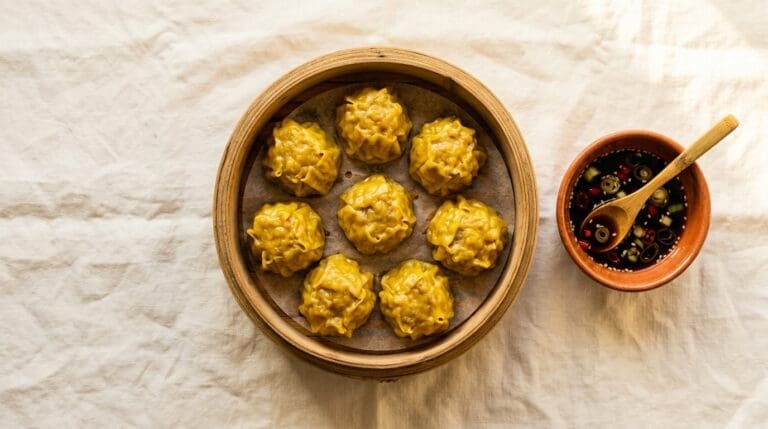
Recipe
Pork & Cabbage Dim Sims (Aussie Style)
The Australian-Chinese fish-and-chip-shop dim sim. Why you should cook this Dim sims are the Australian-Chinese fish-and-chip-shop classic that nobody outside Australia has heard of and that everyone inside…
Read the recipe →
Recipe · Baking
Vegemite & Cheese Scrolls
Why you should cook this The lunchbox classic that you remember as the highlight of grade four and that, when you make them yourself as an adult, you…
Read the recipe →
Recipe
Savoury Cheese & Bacon Muffins
School lunchbox classic, grown-up version. Why you should cook this The lunchbox muffin that actually holds together. Cheddar, crispy bacon, spring onion, a fold of self-raising and a…
Read the recipe →
Wild mushroom risotto without the panic
Ingredients
Method
- Cover dried porcini with 200 ml boiling water. Leave 15 minutes. Chop roughly. Strain soak water through paper towel into the hot stock.
- Keep stock barely simmering on a back burner throughout.
- In a wide pan, heat 1 tbsp olive oil and 25 g butter over high heat. Add fresh mushrooms in a single layer. Sear 2 minutes, toss, cook 4 to 5 minutes until deep brown. Season with salt, pepper, half the thyme. Remove.
- In a heavy saucepan, soften the onion in remaining olive oil over medium heat for 5 minutes. Add garlic, stir 1 minute.
- Add rice. Stir 2 minutes until glossy and toasted.
- Pour in wine. Stir until absorbed, 2 minutes.
- Stir in chopped porcini.
- Add hot stock one ladle at a time, stirring regularly. 18 to 22 minutes total until rice is tender with a fine white pinprick at the centre.
- Stir fresh mushrooms through in the last 2 minutes.
- Off the heat, beat in the remaining 25 g cold butter and all the parmesan. Squeeze of lemon.
- Loosen with a splash of hot stock if needed — it should ripple when you tap the pan.
- Serve immediately in warm bowls with reserved mushrooms on top, remaining thyme, extra parmesan.