There is no more Australian dessert than the pavlova.
Why you are cooking this tonight
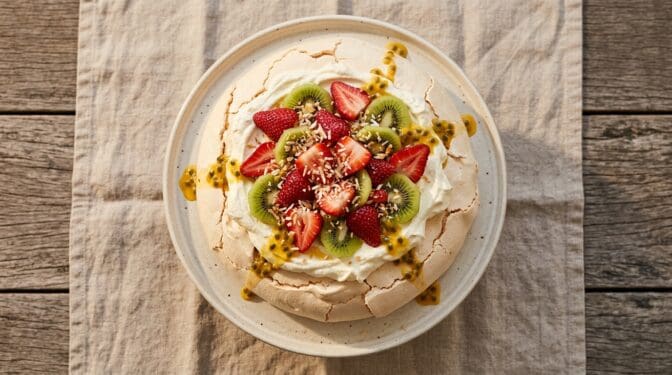
There is no more Australian dessert than the pavlova. We can argue with the New Zealanders about who invented it until the sun goes down, but we both know who serves it on every Christmas table and every Australia Day lunch: us. The marshmallow-centre, crisp-shell pavlova is the dessert that ends every serious Australian summer meal.
It is four ingredients (egg whites, caster sugar, cornflour, vinegar) and a slow oven. The difficulty is patience: you bake it low and slow, then cool it inside the oven with the door propped. Rush either step and you will crack the surface. Forty minutes is the difference between a pav and a meringue biscuit.
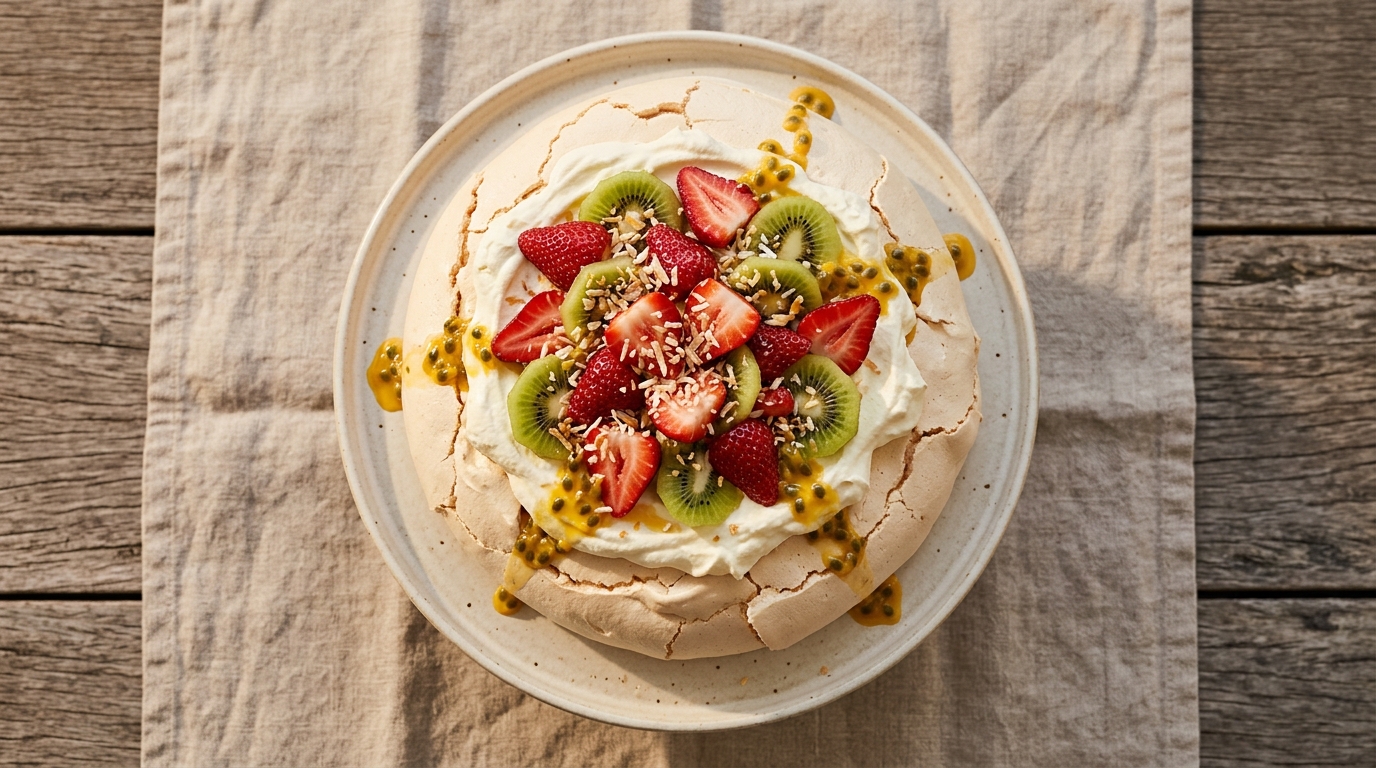
Top it however the season tells you. Strawberries and passionfruit in November. Mango and lime in January. Poached rhubarb and toasted almonds in May. The pav is the blank canvas. What you put on top is the season.
Notes on method
Use room-temperature egg whites, a spotlessly clean bowl (any trace of fat and they will not whip), and caster sugar not icing sugar. Add the sugar a tablespoon at a time. Cornflour makes the marshmallow centre; vinegar stabilises the foam. Bake at 120°C fan-forced for ninety minutes, then turn the oven off and leave it there for two hours.
What to pour with it
Late harvest riesling from Eden Valley. Or a glass of Tasmanian sparkling. If you want a cocktail, make a French 75: the lemon and champagne cuts through the cream beautifully.



The recipe
Ingredients
Method
- Preheat oven to 120°C fan-forced. Line a tray with baking paper and mark a 22cm circle on it.
- Beat egg whites to soft peaks. Add caster sugar a tablespoon at a time, beating until the meringue is thick, glossy, and a pinch between your fingers feels smooth not gritty.
- Fold in cornflour, vinegar and vanilla with a spatula. Do not overmix.
- Pile the meringue onto the circle. Smooth the sides and top with a palette knife. Make the edges slightly higher than the centre.
- Bake 90 minutes. Turn the oven off and leave the pavlova inside for at least 2 hours with the door closed.
- Transfer to a serving plate. Top with whipped cream and seasonal fruit just before serving. The shell should crack under the knife; the centre should be marshmallow.
Two things that go wrong
You opened the oven door.
Pavlova is dramatic about temperature. A draft of cold air will crack the shell. Set the timer, walk away, and only check when it’s properly done. Some serious cooks leave it in the cooling oven overnight.
Your sugar wasn’t dissolved.
Gritty pavlova means sugar that wasn’t fully dissolved into the meringue. Add the sugar a tablespoon at a time, beating between each, and rub a pinch between your fingers, if you can feel grains, keep beating.
Variations worth knowing
Lemon curd and passionfruit
Spread a layer of lemon curd over the cream before topping with whipped cream and passionfruit pulp. Sharp-sweet.
Roasted stone fruit
Roast halved peaches and apricots in honey and vanilla, top the pav with the warm fruit and the syrup. Late summer bliss.
Eton mess style
Skip the disc, just smash baked meringue, fold through whipped cream and berries. Same flavours, less theatre, more chaos.
Leftovers and make ahead
Made-up pavlova goes sad fast, the meringue softens within hours of meeting cream. Keep components separate until serving. Plain meringue keeps a week in an airtight tin. Cream and fruit keep 2 days in the fridge separately. Assemble plate by plate as needed.
You might also like
Recipe
The Proper Aussie Beetroot Burger
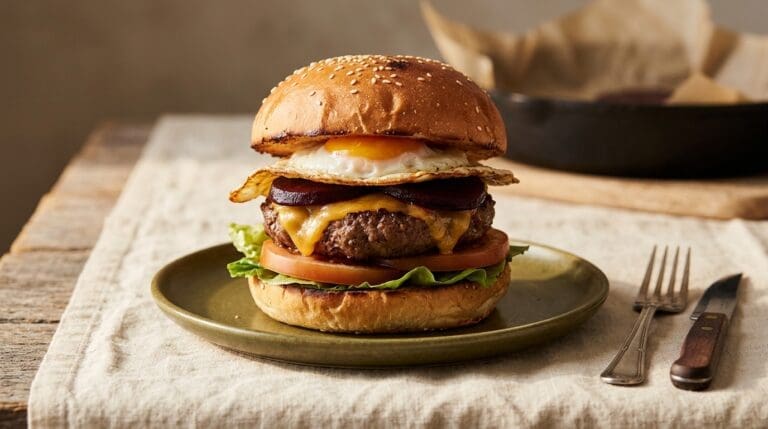
Why you should cook this The Aussie burger is the only burger format that openly admits to being a structural disaster. Beef pattie, melted tasty cheese, fried egg,…
Read the recipe →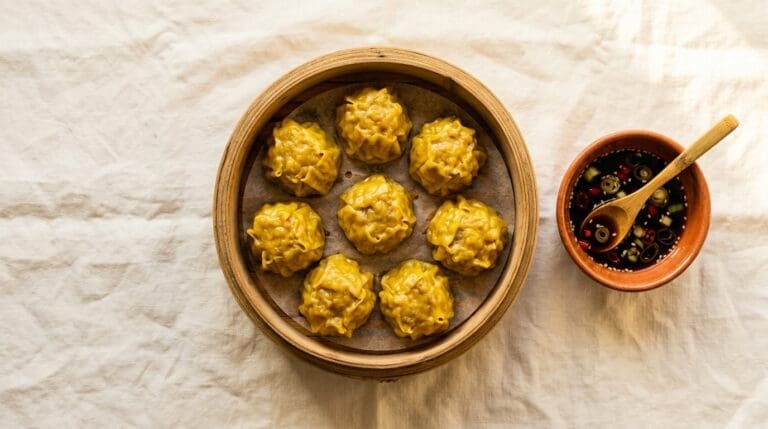
Recipe
Pork & Cabbage Dim Sims (Aussie Style)
The Australian-Chinese fish-and-chip-shop dim sim. Why you should cook this Dim sims are the Australian-Chinese fish-and-chip-shop classic that nobody outside Australia has heard of and that everyone inside…
Read the recipe →
Recipe · Baking
Vegemite & Cheese Scrolls
Why you should cook this The lunchbox classic that you remember as the highlight of grade four and that, when you make them yourself as an adult, you…
Read the recipe →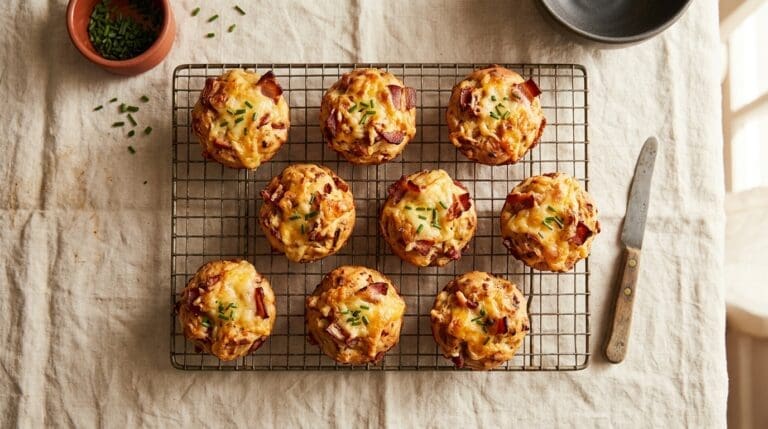
Recipe
Savoury Cheese & Bacon Muffins
School lunchbox classic, grown-up version. Why you should cook this The lunchbox muffin that actually holds together. Cheddar, crispy bacon, spring onion, a fold of self-raising and a…
Read the recipe →