

Three hours of slow extraction, an old parmesan rind, a few cheap vegetables. The soup the Italians have been quietly winning at since the fourteenth century.
Why you should cook this
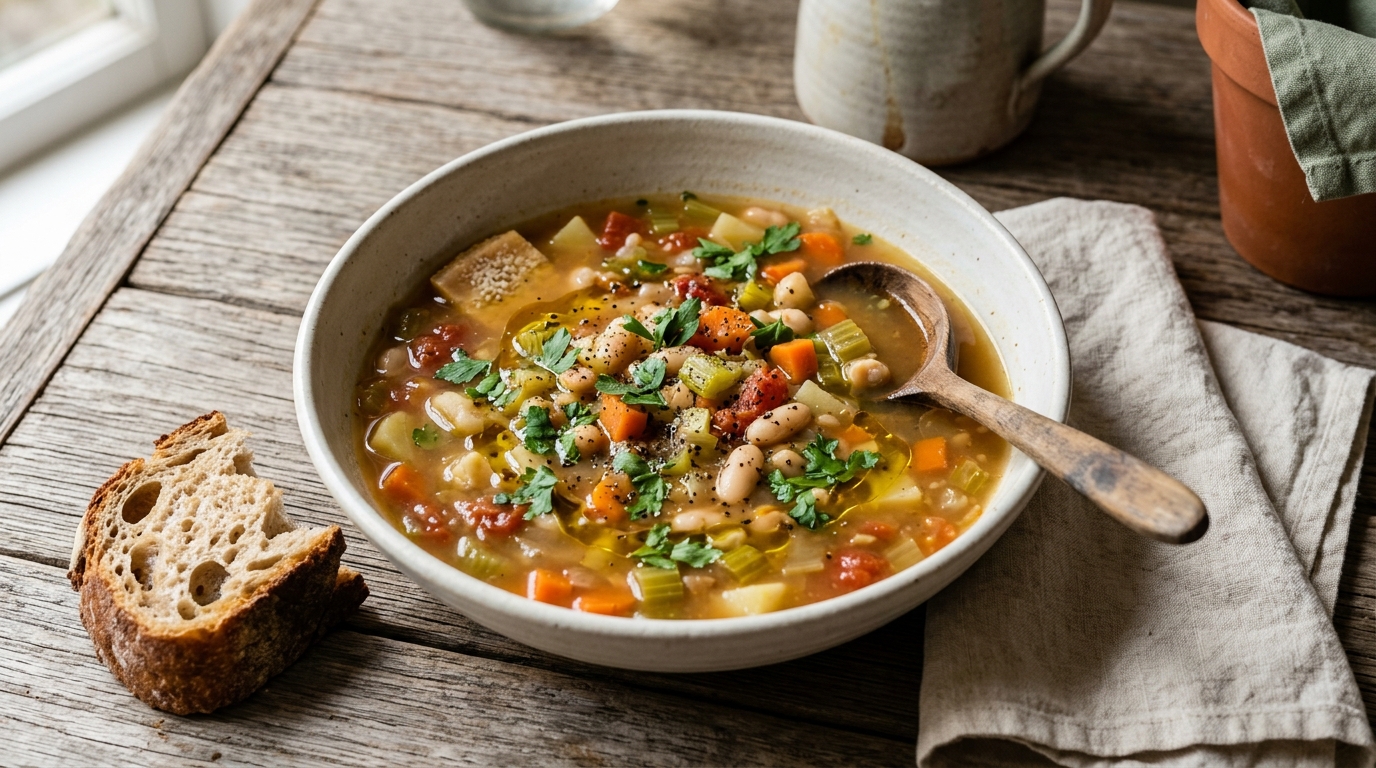
The Italians have a name for this kind of cooking. Cucina povera. Poor kitchen. The honest version of which is: cooks who knew how to make a perfectly good dinner out of three vegetables, an ageing piece of cheese, and the patient application of time. Winter vegetable soup is the dish where the trick is not the recipe; the recipe could fit on the back of a coaster. The trick is letting the pot do its slow work. Three hours, low heat, a parmesan rind dropped in for the second hour to release its umami like a guest who showed up late and stole the conversation.
Mirepoix is the spine. Onion, carrot, celery, leek, all diced small, all sweated in olive oil for ten minutes before any liquid touches the pot. A tin of cannellini beans for body. A sprig of rosemary, a bay leaf, three peeled garlic cloves left whole to mellow as the soup goes. The parmesan rind goes in once the simmer is steady; this is the secret ingredient nobody tells you about and the only thing that elevates a stock-and-vegetables pot into something with a depth Italian grandmothers would acknowledge with a grudging nod. Save your parmesan rinds in a zip-lock bag in the freezer. Use them for soup. The Italians have been doing this since fork-knife arrangements were a regional debate.
The soup is finished with a hard glug of olive oil at service, never in the cooking. The raw oil is the brightness; cooking it into the pot turns it into a flavour the soup did not order.
What to drink with it
A Vermentino from the Sardinian or Tasmanian coast, slightly chilled, in a wide white-wine glass. The wine’s salinity meets the soup’s broth and the whole table goes slightly Italian for the next hour. Drier and less reaching than a chardonnay. Provenance Lighthorse Vermentino at $24 from McLaren Vale is the local choice; a Tenuta Argentiera Villa Donoratico at $30 is the import option.

Recipe
Slow Cooker Beef Stew
Eight hours in the slow cooker turns chuck steak into the kind of beef that falls apart at the touch of a fork. Why you should cook this…
Read the recipe →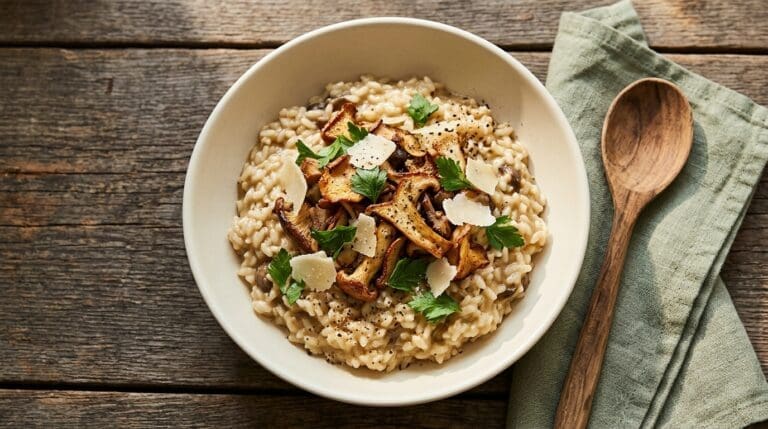
Recipe · Dinner
Wild mushroom risotto without the panic
Risotto has a reputation for being fussy and it does not deserve it. Thirty-five minutes of mostly standing and stirring while you sip a glass of white wine.…
Read the recipe →
Dolin Rouge Sweet Vermouth
Dolin Rouge is the lighter, more alpine cousin of Carpano Antica. Made in Chambery with mountain herbs, wormwood, and a gentler sweetness, it gives you a Negroni or…
Read more →Notes from the kitchen
Sweat the mirepoix slowly. No browning, no caramelising. Soup wants the vegetables to soften and surrender their water gently into the oil; brown them and the soup gets a roasted note that pulls it in a different direction. Add the stock cold, not boiling. Cold stock with a slow rise in temperature draws more flavour from the vegetables than a hot dump that locks them down. The parmesan rind goes in for the second hour, fishes out at service, gets eaten by whoever is paying the most attention. Salt at the end, not the start; the rind and the stock both bring salt and you cannot take it back out. Crusty bread, torn at the table by hand. A clean knife is for restaurants.
Two things that go wrong
Soup tastes flat and watery
You skipped the parmesan rind, or your stock was a stock cube and water. Use a real chicken stock or a vegetable stock with body. The rind is the difference between a soup people eat and a soup people remember.
Vegetables go to mush
You simmered too hot. The pot wants a bare blip simmer, not a rolling boil. Lid on, low flame, three hours. Stir every 20 minutes, not every 2.
Variations worth knowing
With pasta
Add a handful of small pasta (ditalini or broken spaghetti) in the last 12 minutes. The soup becomes a Pasta e Fagioli.
With pancetta
Render 100g diced pancetta in the pot before the mirepoix. The soup picks up a smoky base and shifts to a colder-month dish.
Vegan
Drop the parmesan rind, add a tablespoon of white miso at the end, and a heavy hand of nutritional yeast at service. Different soup, fully its own thing.
Leftovers and make ahead
Improves overnight. Reheats beautifully. Freezes for three months in a sealed container; defrost in the fridge overnight, reheat slow on the stove. The texture is the point; do not be tempted to blend the leftovers smooth, you will lose what you came for.
The recipe
[fd-wprm-placeholder]
Ingredients
Method
- Heat olive oil in a heavy stockpot over medium-low. Add onion, carrot, celery and leek. Cover and sweat slowly for 12 minutes, stirring occasionally.
- Add garlic, cook 1 minute. Add tomatoes, stir and cook 2 minutes.
- Pour in cold stock, add rosemary and bay leaf. Bring to a bare simmer.
- After 1 hour, add the parmesan rind and the cannellini beans.
- Continue at a bare simmer for another 90 minutes to 2 hours, stirring every 20 minutes.
- Fish out the parmesan rind, rosemary and bay leaf. Taste, season heavily with salt and pepper.
- Serve in warm bowls with a generous glug of raw olive oil over the top, scattered parsley, and a piece of warm crusty bread.