
One dish, one oven, four to six hungry people fed. The Australian guide to comfort-food casseroles, from tuna mornay to vegetable lasagne.
- The definitive section
- The 6 recipes
- Buying guide
- Frequently asked questions
What is a casserole, exactly?
The word casserole comes from the French “casserole”, a deep, ovenproof dish with two short handles. In English-speaking kitchens it now means both the dish and the meal you cook in it. A casserole is anything that bakes in a single deep dish, served from the dish itself: pasta bakes, mornays, gratins, cassoulets, lasagnes, shepherd’s pies, baked rice, baked beans. The defining feature is one-and-done. You assemble it, you bake it, you serve it.
In Australia we lean toward the British school: pasta bake, tuna mornay, shepherd’s pie, fish pie, lasagne. Slightly more saucy, slightly less crusty, generally cheesier on top. The American casserole school leans drier and more carb-heavy (rice, noodles, cream-of-mushroom soup); we mostly skip that road. The French equivalent is the cassoulet: long-cooked beans, sausage, sometimes confit. All of these are casseroles.
The four parts of a great casserole
The base. Pasta, rice, potato, polenta, or beans. The carb that catches the sauce and feeds the crowd. Whatever the base, undercook it slightly. It will finish cooking in the oven and over-boiled pasta becomes glue.
The protein. Mince, chicken thigh, sausage, tuna, lentils. Bone-in cuts work for slow casseroles; mince and tinned proteins for the fast ones. The protein is your flavour anchor.
The sauce. Béchamel for mornays and lasagnes. Tomato for ragu-style bakes. Stock-and-cream for cassoulet-style. The sauce binds everything and prevents drying out.
The top. Cheese, breadcrumb, mash, pastry, or all four. The top is where casseroles earn their reputation. Crank the oven up for the last ten minutes if you need more colour.
The casserole rules we cook by
Always cook in the dish you serve in. Casseroles never look right transferred. The oven dish goes from oven to table on a folded tea towel.
Roast the vegetables first if they’re going to release water. Pumpkin, zucchini, mushroom, onion. Raw vegetables make watery casseroles. Twenty minutes in a hot oven before they go into the bake fixes everything.
Rest before serving. Ten minutes minimum. The sauce thickens, the cheese sets, the layers hold together when you spoon it out. Rushing the rest is the difference between portions and slop.
Don’t skip the breadcrumb top. A buttered panko top is a textural transformation. Lazy versions are tolerable; the breadcrumb makes it dinner-party-worthy.
Casseroles by occasion
The Sunday lunch casserole is shepherd’s pie or chicken-and-leek. The Monday-night reheat is mac and cheese. The dinner-party trick is a vegetable lasagne (vegetarians say yes, meat eaters never notice the absence). The cold-weather warmer is a cassoulet (sausage and white bean). The kid-friendly winner is tuna mornay. The freezer back-up is beef shepherd’s pie portioned into individual ramekins.
The recipes
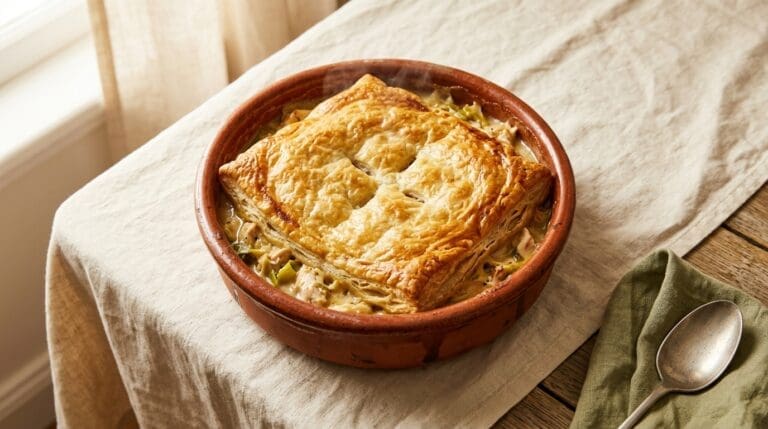
Recipe
Chicken & Leek Casserole
The English-Sunday-lunch casserole. Why you should cook this The English Sunday lunch in a casserole dish. Bone-in chicken thighs, three large leeks (white and pale green only, the…
Read the recipe →
Recipe
Tuna Mornay Casserole
The Australian school-night classic. Why you should cook this The Australian school-night classic that nobody quite wants to admit is the most-cooked dish in the country. Pasta, two…
Read the recipe →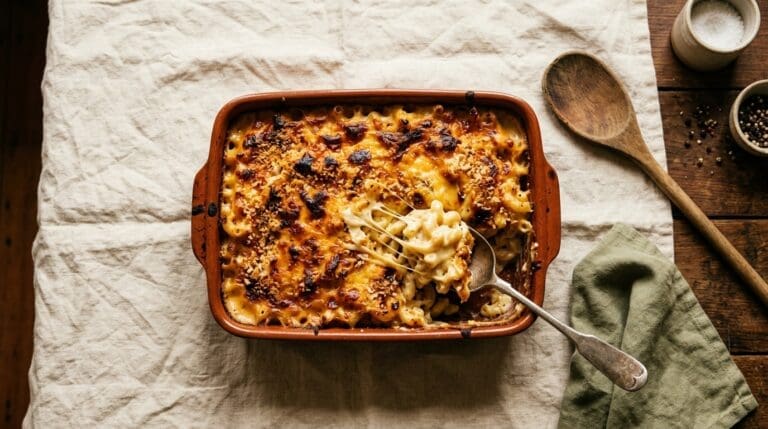
Recipe
Baked Mac & Cheese Casserole
The American baked mac and cheese. Why you should cook this The American baked mac and cheese, taken seriously. Three cheeses (sharp cheddar, Gruyère for the stretch, parmesan…
Read the recipe →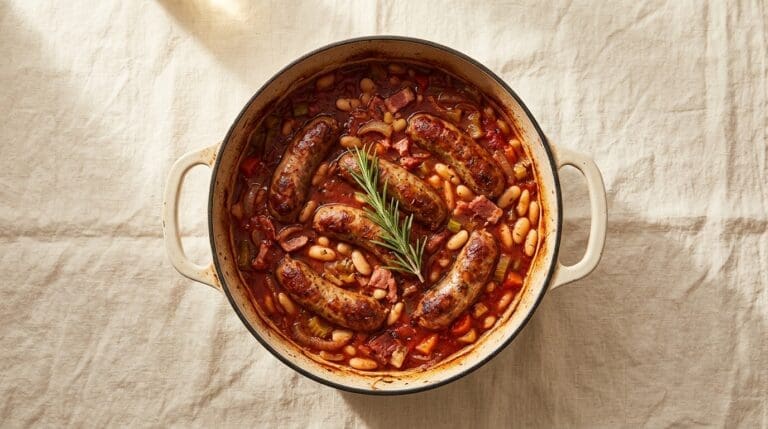
Recipe
Sausage & White Bean Casserole
The French cassoulet, simplified. Why you should cook this French cassoulet, simplified, weeknight-ised. Eight Italian pork sausages browned in a hot oven-safe pot. Soffritto of onion, carrot, celery…
Read the recipe →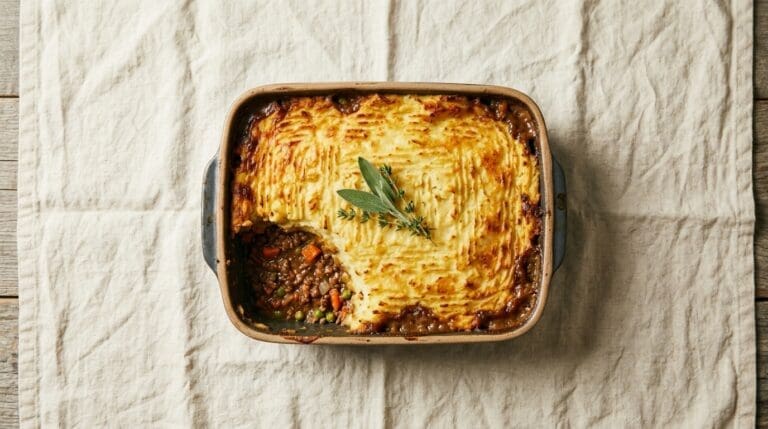
Recipe
Beef Shepherd’s Pie
Beef mince, vegetables, gravy, mash on top. Why you should cook this The Sunday-night classic. Beef mince (chuck mince, 20% fat, never lean), browned hard with onion, carrot…
Read the recipe →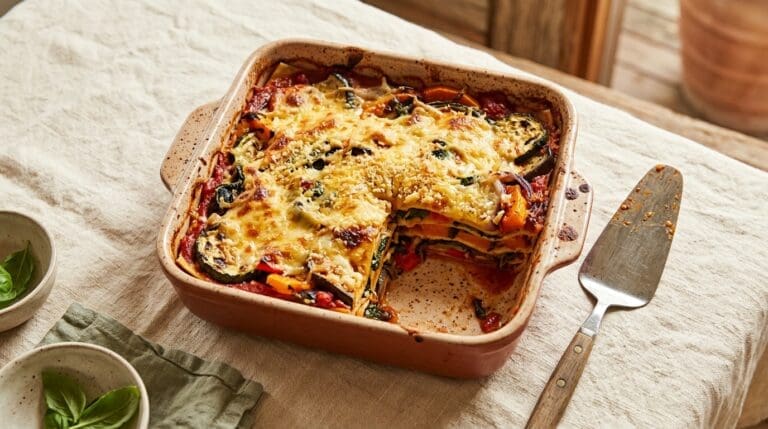
Recipe
Roasted Vegetable Lasagne
The vegetarian lasagne that doesn't taste vegetarian. Why you should cook this The vegetarian lasagne that doesn't taste vegetarian. Roasted pumpkin, capsicums and zucchini get a high-heat blast…
Read the recipe →Equipment worth buying for casseroles
One large oval baking dish (28cm × 22cm or so). Ceramic or enamelled cast iron. Le Creuset and Staub are the lifetime versions; Pyrex or Anolon will do you proud at a quarter the price. The shape feeds six and looks the part on the table.
One deep rectangular bake dish (33cm × 23cm). Same size as a standard lasagne pan. Used for mac and cheese, lasagne, shepherd’s pie, anything with layers.
A 4 to 6 litre oven-safe pot (Dutch oven). For brown-then-bake casseroles like cassoulet or osso buco. Enamelled cast iron is the move; Lodge does an excellent budget version.
Frequently asked questions
What is the difference between a casserole and a stew?
A stew is cooked on the stovetop or simmered in the oven submerged in liquid; a casserole is baked in the oven where the top of the dish is exposed and develops a crust. Stews stay wet throughout. Casseroles develop layers (sauce below, crisp top above).
Can you freeze casseroles?
Yes, almost any casserole freezes well except those with a pastry top or a fresh herb top. Cool fully, wrap tightly in foil and cling film, freeze for up to three months. Thaw overnight in the fridge before reheating at 180°C for 20-25 minutes.
How long do casseroles take to cook?
Most casseroles bake for 30 to 60 minutes at 180-200°C fan-forced. Slow-cooked ones (cassoulet, osso buco) go 2-3 hours at lower heat. Pasta-based casseroles are usually done in 25-35 minutes.
What’s the best dish for a casserole?
Ceramic or enamelled cast iron. They hold heat evenly, look attractive on the table, and double as serving dishes. Glass works fine but cools faster. Avoid metal-only dishes for acidic casseroles (tomato sauces) which can react with bare metal.
Why is my casserole watery?
One of three things: the vegetables released water (always pre-roast watery vegetables), the sauce was too thin to start (béchamel should coat the back of a spoon before going in), or you didn’t rest the casserole after baking (always 10 minutes minimum).
Can I make a casserole ahead of time?
Yes, almost all of them. Assemble the morning of, refrigerate, then bake just before serving. Add an extra 10-15 minutes to the bake time if it’s going in cold from the fridge.
What’s the easiest casserole for a beginner?
Tuna mornay or mac and cheese. Both use simple béchamel sauce, common pantry ingredients, and forgive overcooking. Both freeze and reheat well. Both feed four to six people for under twenty dollars.