Everything goes on one tray. Oven does the rest. The Australian guide to one-pan dinners that don’t compromise.
- The definitive section
- The 6 recipes
- Frequently asked questions
What makes a sheet-pan dinner work
The sheet-pan dinner is the format your future self will thank you for. One tray, one oven, twenty-five minutes, dinner. No washing-up empire, no juggling pans, no precision timing on multiple components. A protein, a vegetable, an oil, a salt, a hot oven, and a turn halfway through. That’s it.
The trick is the cut. Cut everything to roughly the same size and they cook at the same rate. Cut your potatoes thick and your broccoli small and the broccoli will burn before the potatoes are done. Two-centimetre chunks of potato need three-centimetre florets of broccoli to land at the same time.
Sheet-pan rules
Crank the oven hot. 220°C fan-forced minimum. Sheet-pan dinners are about caramelisation, the maillard reaction, charred edges. A medium oven gives you steamed-not-roasted. Hotter is better.
Don’t crowd the tray. Vegetables steam when they’re crowded. Use two trays for a kilo of food, not one. The oven copes fine. The crowded tray is the most common cause of sad sheet-pan dinners.
Pre-roast the dense vegetables. Potatoes, carrots, parsnip, pumpkin take longer than chicken thighs. Give them a 15-minute head start, then add the protein and the rest of the vegetables. Everything finishes together.
Toss with oil before cooking. Two to three tablespoons for a full tray. Less and you get dry; more and you get greasy. Olive oil for Mediterranean flavours, neutral oil for Asian, beef tallow or duck fat for the absolute showstopper roast vegetable tray.
Use parchment paper. Five seconds to lay it down at the start. Saves twenty minutes of scrubbing burnt-on bits afterwards.
Sheet-pan dinner formats that always work
Protein + roast vegetable + lemon: chicken thighs, baby potatoes, carrots, lemon halves. Mediterranean.
Sausage + peppers + onion: Italian or Spanish style. Sub roll on the side.
Salmon + asparagus + miso glaze: 18 minutes total. Done.
Chickpea + harissa + roast vegetable + yoghurt: Vegetarian, satisfying, fast.
Gnocchi + cherry tomato + mozzarella: 25 minutes from packet to plate. The crispy gnocchi trick.
Sheet pans worth buying
The 33cm × 46cm half-sheet pan. The standard restaurant size. Available at any kitchen shop for $20-$40. Heavy aluminium with a rolled rim. The pan that lives on your stovetop.
A second sheet pan. If you ever cook for more than two people, you need two trays. Not optional. The single-tray-crowded dinner is a kitchen tragedy.
Parchment paper. Twenty-pack for $5 at any supermarket. Lining is the cleaning hack. Don’t skip.
The recipes
Recipe
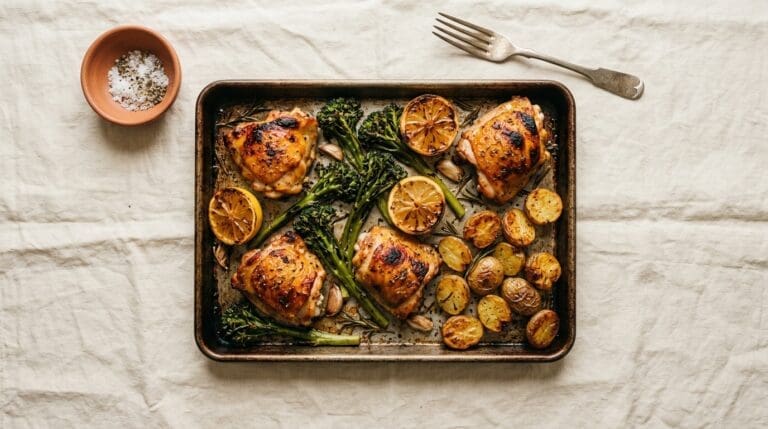
Sheet Pan Lemon Chicken & Vegetables
The weeknight workhorse. Why you should cook this The weeknight workhorse. Eight bone-in chicken thighs, a kilo of baby potatoes halved, two bunches of broccolini, two lemons cut…
Read the recipe →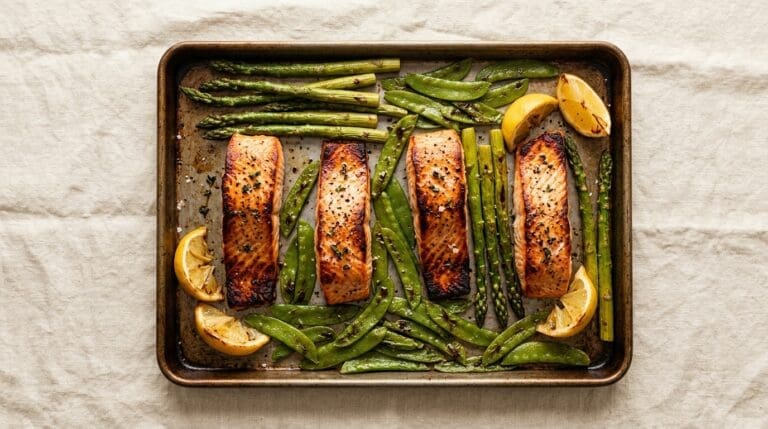
Recipe
Sheet Pan Salmon & Greens
Eighteen minutes, one tray. Why you should cook this Eighteen minutes. Start to finish. Four salmon fillets, two bunches of asparagus with the woody ends snapped off, a…
Read the recipe →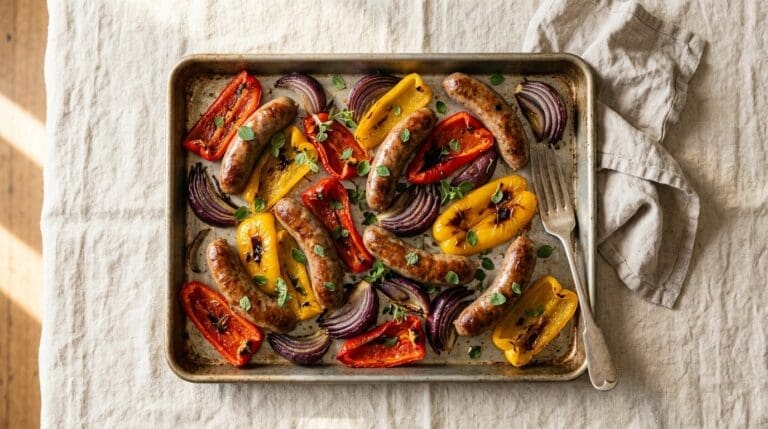
Recipe
Sheet Pan Italian Sausage & Peppers
Italian-American street food on a tray. Why you should cook this Italian street-food on a tray. Eight pork sausages from a butcher who has fennel seeds already in…
Read the recipe →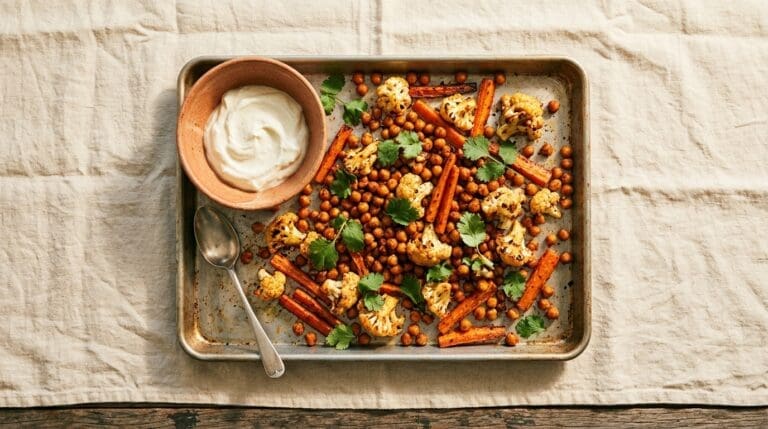
Recipe
Sheet Pan Harissa Chickpeas with Roast Veg
The vegetarian weeknight dinner that doesn't apologise. Why you should cook this The vegetarian dinner that doesn't apologise. Two tins of chickpeas (drained and dried on a tea…
Read the recipe →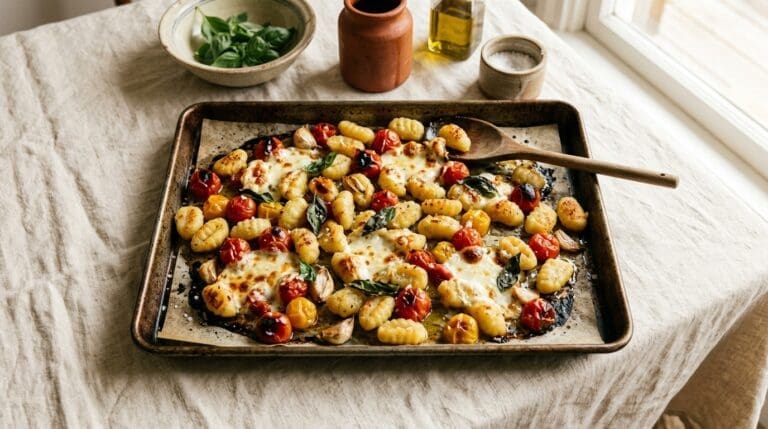
Recipe
Sheet Pan Crispy Gnocchi with Tomatoes & Mozzarella
Roasted gnocchi at high heat goes crispy outside, fluffy inside. Why you should cook this The lazy pasta bake that is not a pasta bake. Vacuum-pack potato gnocchi…
Read the recipe →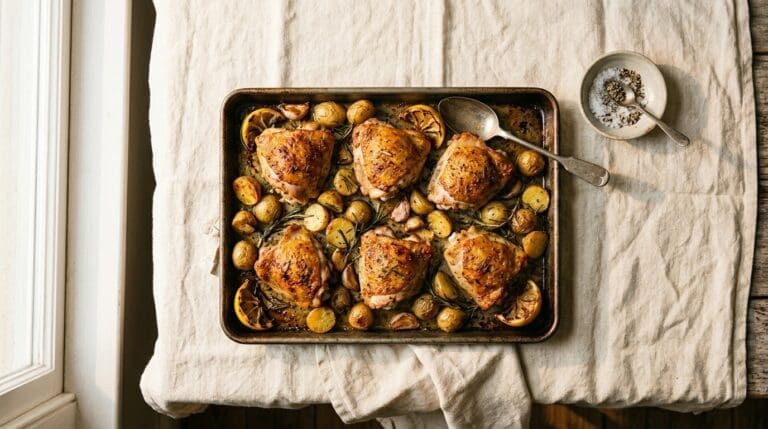
Recipe
Sheet Pan Rosemary Chicken Thighs with Roast Potatoes
Crispy-skin chicken thighs over potatoes that catch all the chicken fat. Why you should cook this The Sunday lunch you make when Sunday lunch is a concept rather…
Read the recipe →Frequently asked questions
What temperature should I cook a sheet-pan dinner at?
220°C fan-forced (240°C conventional) minimum. Sheet-pan dinners depend on caramelisation; medium ovens give you steamed-not-roasted. Crank it hot.
How do I stop my sheet pan from burning food?
Use parchment paper. Don’t crowd the tray. Pre-roast dense vegetables before adding lighter ones. Check at 15 minutes and toss if anything’s getting too dark on one side.
Can I use foil instead of parchment paper?
Foil works but doesn’t release as cleanly and can react with acidic foods like lemon or tomato. Parchment paper is the better choice for almost every sheet-pan dinner.
What’s the best sheet pan to buy?
The standard 33cm × 46cm half-sheet pan in heavy aluminium with a rolled rim. Available at any kitchen shop for $20-$40. Avoid the cheap thin trays that warp at high heat. Avoid non-stick coatings that fail above 230°C.
How long does a sheet-pan dinner take?
Most sheet-pan dinners take 25-45 minutes total, including 15 minutes of prep. Salmon trays are the fastest (18 minutes oven). Chicken thighs and root vegetables need 35-45 minutes.
Can I prep a sheet-pan dinner ahead?
Yes, you can chop everything the morning of and leave it covered in the fridge. Don’t dress with oil and salt until just before roasting; salt draws moisture out of vegetables and they’ll go limp.