
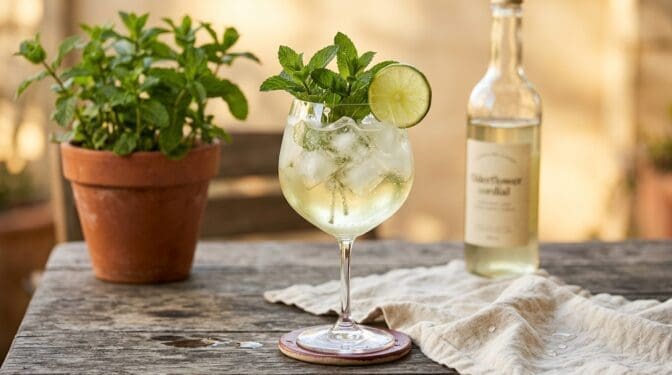
Why you are pouring this tonight
The Hugo is the Aperol Spritz’s quieter, more sophisticated cousin, and it is the drink that is slowly eating the afternoon-sundowner market in Melbourne, Sydney, and every vineyard restaurant between them. Prosecco, elderflower, mint, soda, lime. Lighter, softer, less aggressive than Aperol’s bitterness, and endlessly food-friendly.
It was invented in 2005 in South Tyrol by a bartender named Roland Gruber who wanted a spritz that did not rely on Campari or Aperol. It caught on in the Dolomites, then Venice, then everywhere. Order one in Trentino today and it will arrive before Aperol does.
Pair it with anything spring or summer and herb-forward. Caprese salad, tomato galette, grilled fish with lemon, prosciutto and melon, a bowl of buffalo mozzarella torn over basil. Light food, light drink, sunshine on the balcony. Done.
What you need
- 60 ml Prosecco. Brut or extra-dry. Dal Zotto Pucino, Brown Brothers, or a supermarket Prosecco DOC. Cold as you can get it. Cava or another dry sparkling works if Prosecco is out of stock, just skip anything on the sweeter side.
- 30 ml St-Germain elderflower liqueur. The benchmark. About $65 at Dan Murphy’s for 700 ml. A small bottle lasts a whole spring. Thatchers or Fentiman’s elderflower cordial (non-alcoholic) works at half the bill if you want a softer drink.
- Splash of soda water. About 30 ml. Cold and fresh. Capi or a SodaStream pour.
- Fresh mint. Six to eight leaves plus a big sprig to garnish. Use the whole sprig with stems, not a little sad leaf.
- Lime wheel (half a slice, fresh-cut).
- Ice. Big cubes. Fill the glass.
How to make it
-
Pack the glass with ice. Use a large wine glass or balloon-shaped Spritz glass. Fill it to the top with big cubes. Small ice melts too fast and waters out the drink.
-
Build directly in the glass. Pour the St-Germain over the ice, then the Prosecco, then the splash of soda. In that order. The elderflower goes in first so it settles and lifts gently through the bubbles.
-
Add mint. Slap the mint leaves hard between your palms to release the oils, then drop them into the glass. Do not muddle, do not crush. Slap and drop.
-
Stir once, gently. One slow lift from the bottom up with a bar spoon. No more. You are not making a smoothie.
-
Garnish and serve. Add a big mint sprig, a lime wheel, and serve with a short straw if you like. Straight to the table, glass already condensing.
Five dinners that make this drink sing
- Caprese salad with heirloom tomatoes, buffalo mozzarella, torn basil. The ur-pairing. Elderflower and basil play beautifully, and the cold fizz cuts the cream of the mozzarella.
- Prosciutto-wrapped melon with black pepper. The classic Italian aperitivo move. Hugo is what the local taverna pours with it, and the reason is obvious after one bite.
- Grilled prawns with lemon and garlic. The lime wheel in the drink mirrors the squeeze on the prawns. The mint cuts through the garlic. Put a big plate in the middle of the table and pour a jug.
- Smoked salmon and avocado toast. Brunch weapon. The floral sweetness balances the oily fish, the mint freshens the avocado. Saturday morning, sorted.
- A bowl of cold gazpacho with a drizzle of good oil. Unexpected but brilliant. Cold vegetable soup and cold floral spritz belong together on a hot summer day.
Three small variations worth knowing
Cocktail
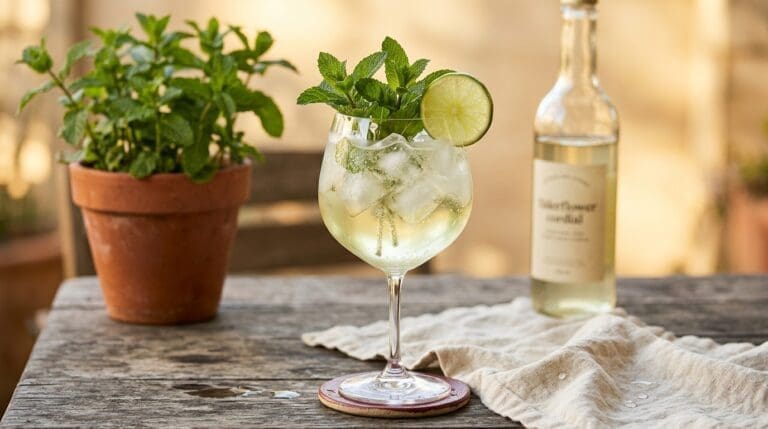
The Hugo Bianco
Replace the St-Germain with Italicus Rosolio di Bergamotto, an Italian bergamot liqueur at about $75. Slightly more bitter, more citrus-forward, still floral. Excellent with grilled fish, linguine with prawns, or a whole baked branzino.
Read the recipe →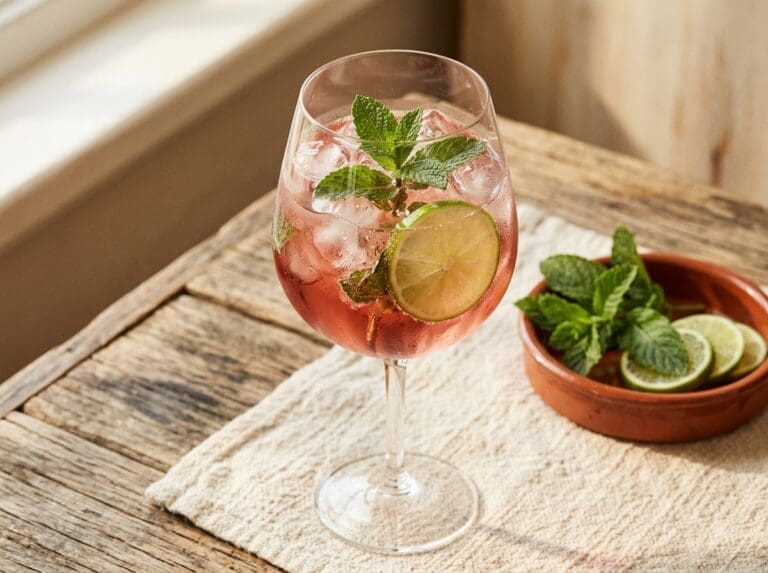
Cocktail
The Rose Hugo
Swap the Prosecco for a dry Provence-style rosé with good sparkle, or use a dry rosé Cava. Pink, pretty, a shade more savoury. Brilliant with charcuterie or a bowl of strawberries and cream at the end of a long lunch.
Read the recipe →
Cocktail
The Hugo Zero (Non-alcoholic)
Replace the St-Germain with elderflower cordial (Belvoir, Bottlegreen) and the Prosecco with a good non-alcoholic sparkling like Edenvale Cuvee Blanc. Keep the mint, lime, soda, and ice. A genuine non-alcoholic Spritz that stands on its own. Great for long summer lunches when someone is driving.
Read the recipe →Bottles worth buying for this
St-Germain is the bottle. Yes, $65 is a lot for a liqueur you use in 30 ml pours, but one bottle is roughly 23 Hugos at home, and if you replicated those at a bar it would cost you $350 minimum. The pay-back is fast. It also plays in Elderflower 75s, gin tonics, and a lovely splash in a glass of white wine.
Prosecco, same logic as always. Keep Brown Brothers or Dal Zotto Pucino in the fridge. A cold bottle is the difference between “shall we have a Hugo” and “let’s open something.” Remove friction, drink more Hugos.
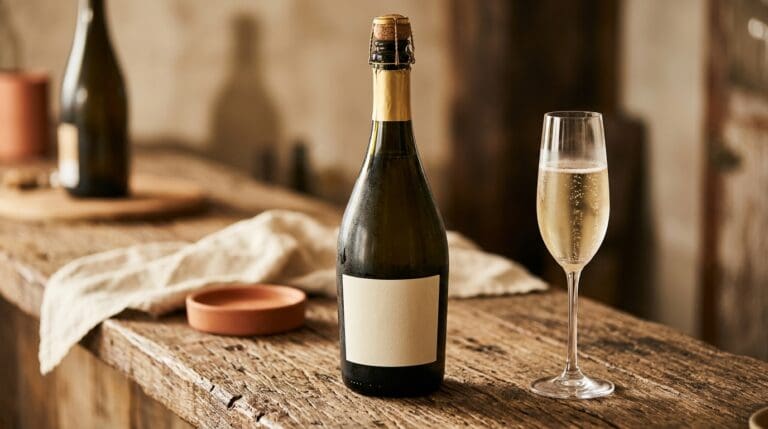
Dal Zotto Pucino Prosecco NV
Dal Zotto Pucino is the bottle that taught Australia that Prosecco could be serious. Slightly finer bubbles than Brown Brothers, a touch more citrus, and a longer, drier…
Read more →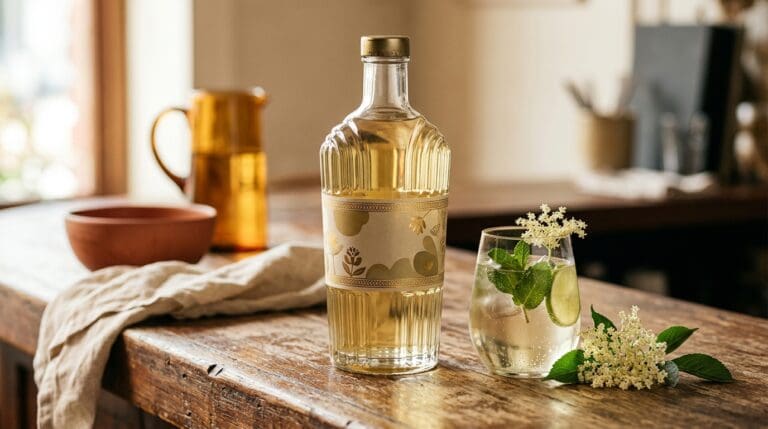
St-Germain Elderflower Liqueur
The Hugo's personality. Honey, pear and a whisper of lychee you can't put your finger on. One splash is the difference between a generic spritz and the drink you want to drink every afternoon from October through March.
Read more →You might also like
Cocktail
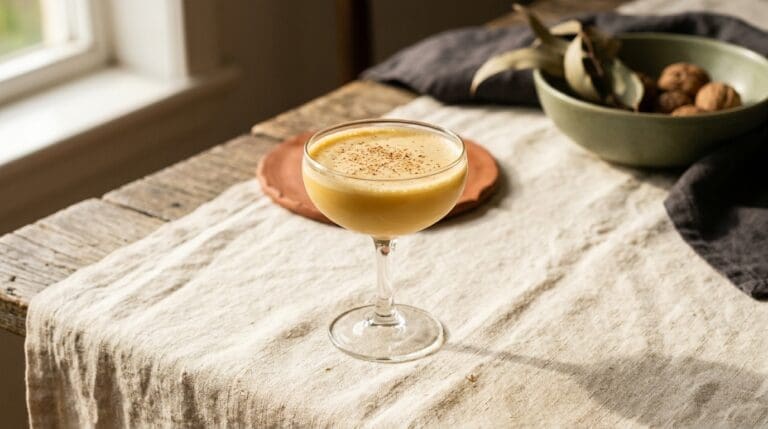
Rye Honey Flip
Why you are pouring this tonight The Rye Honey Flip is the old-school flip, which means whole egg, not just the white. Rye, honey syrup, whole egg, nutmeg…
Read the recipe →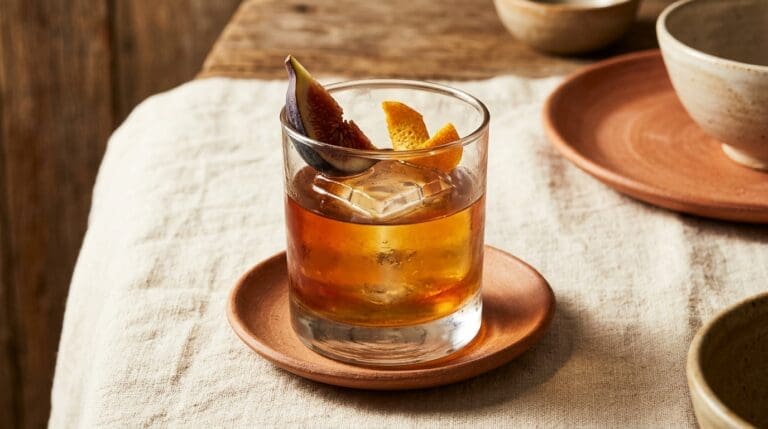
Cocktail
Fig & Honey Old Fashioned
Autumn Old Fashioned. Why you are pouring this tonight The Fig and Honey Old Fashioned is the Old Fashioned for the four weeks of autumn when fresh figs…
Read the recipe →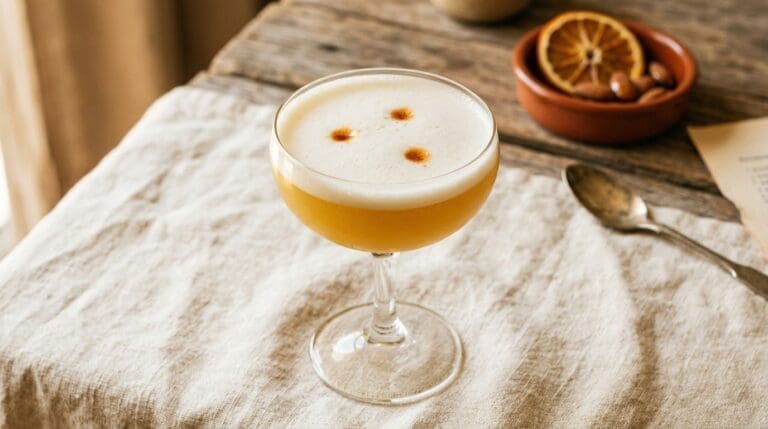
Cocktail
Honey Tequila Sour
The Whisky Sour template with reposado tequila and honey syrup. Why you are pouring this tonight I'd like to say this drink came from a bartender on Calle…
Read the recipe →
Cocktail
Honey French 75
The French 75 with honey syrup in place of simple. Why you are pouring this tonight The Honey French 75 is the French 75 with honey syrup in…
Read the recipe →
The Hugo Spritz
Ingredients
Method
- Pack a large wine or spritz glass with big ice cubes.
- Pour St-Germain, then Prosecco, then soda water over the ice.
- Slap mint leaves between your palms to release the oils and drop into the glass.
- Stir once gently from the bottom up with a bar spoon.
- Garnish with a mint sprig and a lime wheel. Serve immediately.