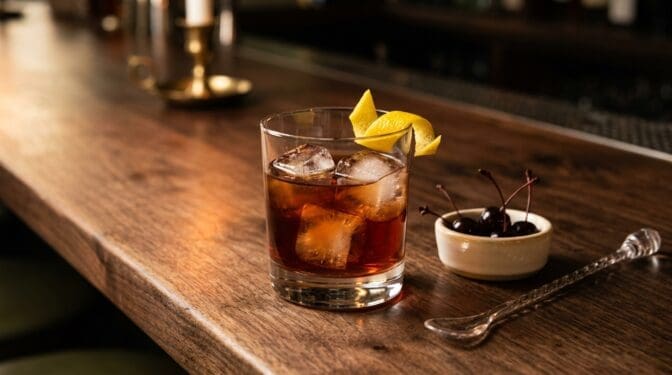
Rye, cognac, sweet vermouth, Bénédictine, two bitters. Built in a rocks glass over ice. The drink that says New Orleans without saying New Orleans.
Why you are pouring this tonight
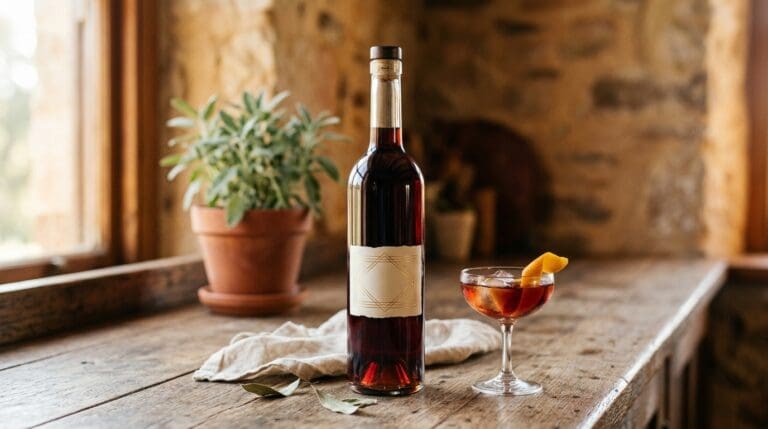
The Vieux Carré was invented at the Carousel Bar in the Hotel Monteleone in New Orleans in the 1930s and has been quietly sitting in the corner of cocktail history ever since, while the Sazerac stands on a table waving its arms. Both come from the same bar. Both belong on the same list. The Vieux Carré gets less attention because it is built in the glass over ice rather than stirred into a coupe, which means it does not photograph as well, which in 2026 is the only reason most people skip a cocktail. Their loss. Half an ounce each of rye, cognac and sweet vermouth, plus a quarter ounce of Bénédictine and a dash each of Peychaud’s and Angostura, built straight into a rocks glass over ice, stirred, lemon twist. The result is a drink that tastes like four spirits had a brief, productive committee meeting and arrived at a unanimous decision.
The cognac brings stone fruit and warmth, the rye brings the bone, the vermouth brings the structure, the Bénédictine brings the herbal note nobody else can. The two bitters do the work of a third bartender. Use Pierre Ferrand 1840 if you can find it for the cognac, Bulleit Rye for the rye, Carpano Antica for the vermouth, and the actual D.O.M. Bénédictine, which has been made by Benedictine monks since 1510 (allegedly) and is the only herbal liqueur worth the bottle space.
Built in the glass means easier to make and forgiving of imprecision. The Vieux Carré is the cocktail equivalent of a casserole; the technique tolerates a rough day at the office.
What to pour it alongside
A board of pâté, cornichons, slices of warm baguette, and something a little blue. The Bénédictine plays with the herbal notes in any aged hard cheese. Also works with anything Cajun, anything braised, anything that took longer than it should have. Skip with seafood; the cognac will eat it.
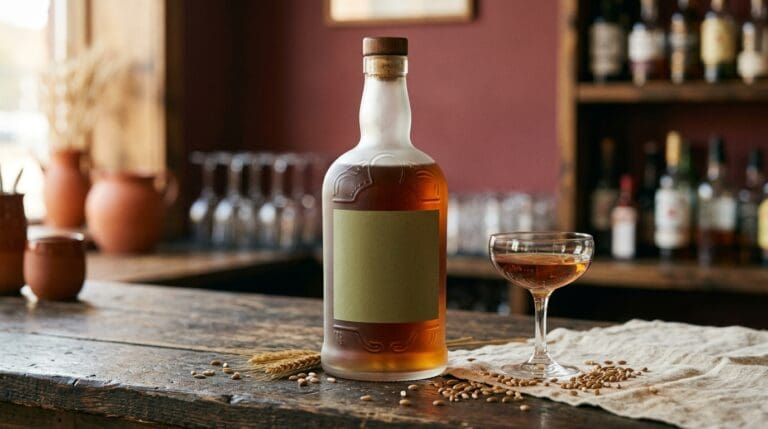
Bulleit Rye
Bulleit Rye is the bottle that makes a Manhattan taste the way a Manhattan should taste: spicy, dry, slightly bitter, unapologetically American. 95 percent rye in the mash…
Read more →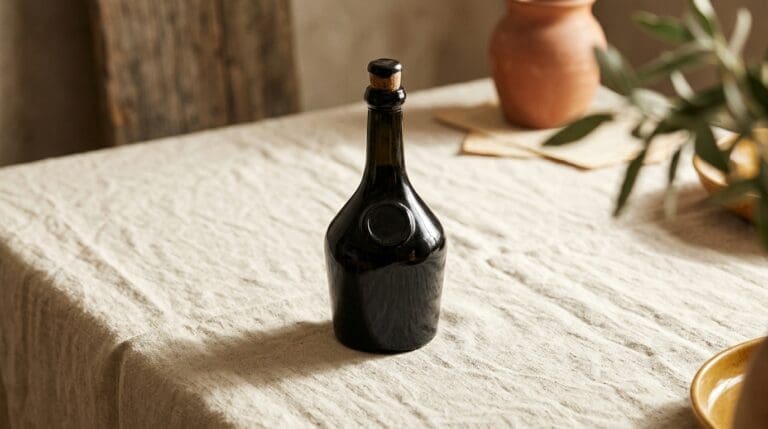
Dolin Rouge Sweet Vermouth
Dolin Rouge is the lighter, more alpine cousin of Carpano Antica. Made in Chambery with mountain herbs, wormwood, and a gentler sweetness, it gives you a Negroni or…
Read more →Notes from the kitchen
Build straight into a rocks glass over fresh ice. Stir for ten seconds with a long bar spoon, no shaker. The glass is the mixing vessel. The drink wants to dilute slightly as you go, which is why the New Orleans original is always served on the rocks rather than up. Express the lemon peel over the surface, not the orange. Lemon is correct. Orange will tilt the drink toward the Manhattan, which is a different cocktail wearing a different jacket. The bitters go in first, before the spirits, so they sit at the bottom and rise as you stir.
Two things that go wrong
Drink tastes flat and sweet
You went heavy on Bénédictine. A quarter ounce only. Half an ounce turns the drink into a herbal sweet wine and the rye gets shoved out of the room.
Cognac dominates
You used a young VS cognac. Reach for a VSOP or better. A Pierre Ferrand 1840 is the price-quality move at around $80; Hennessy VS at $55 is the budget option that just about gets there.
Variations worth knowing
Sazerac sibling
Replace the cognac with absinthe-rinse rye, drop the Bénédictine, lose the vermouth. You have made a Sazerac. Different drink, same neighbourhood.
Without Bénédictine
Use Yellow Chartreuse, slightly less. The drink goes brighter and slightly less aromatic; some prefer it.
With orange bitters
Replace the Angostura with orange bitters. The drink gets a softer top note. The traditionalists will tell you this is wrong. They are sometimes right.
Leftovers and make ahead
Like the Manhattan, the Vieux Carré can be batched. Combine in equal parts in a clean glass bottle and store in the fridge up to three weeks. Pour over ice, stir, twist, drink. The bitters can go in either at batch or at service; at service is better for clarity, at batch is better for evenings when you cannot face holding the dasher bottle straight.
The recipe
[fd-wprm-placeholder]