
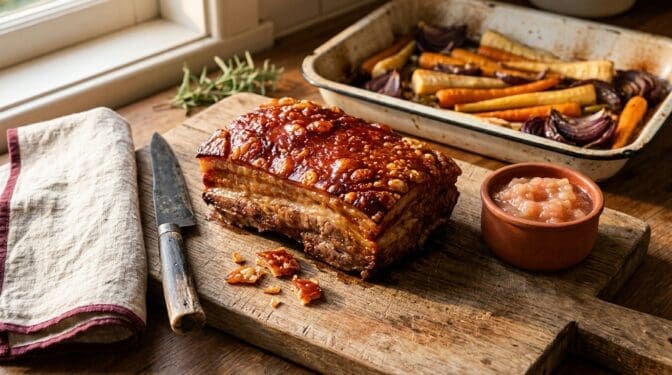
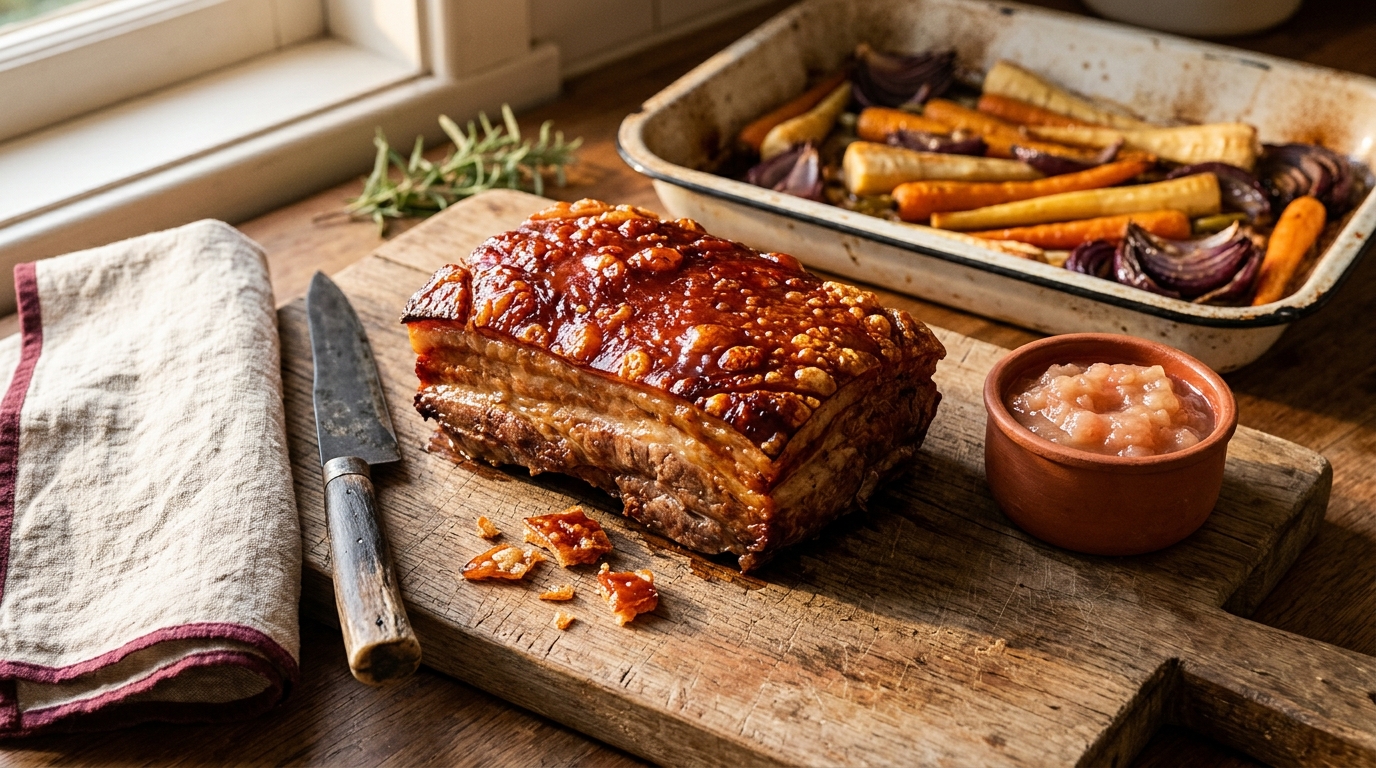
Pork belly with proper glass crackling, a quick chunky apple sauce, roast vegetables in the same pan. The Sunday lunch flagship and a benchmark for the rest of the year.
Why you should cook this
The crackling is the whole job. Anybody can roast a pork belly. Producing the kind of crackling that breaks under a knife with the sound of a small porcelain dropping is a skill, and the skill is largely about how the skin gets handled in the twelve hours before the roast goes in. Three rules. One: the skin must be bone dry on the surface. Two: the skin must be heavily salted. Three: the skin must hit the highest heat your oven has, in the first twenty minutes, and then stay in a moderate heat for the rest. Get those three things right and the crackling will be glass. Get any of them wrong and the crackling will be that depressing grey-pink rubber that nobody at the table will mention but everybody will quietly leave on the plate.
Use a pork belly with the skin on, around 1.5kg, from a butcher who can score the skin for you in straight parallel lines about a centimetre apart. Pat it dry. Salt the skin heavily with flaky sea salt the night before. Leave it uncovered in the fridge overnight. Pull out an hour before cooking, blot dry again, oil the skin lightly, salt again. 240°C for the first twenty minutes. Drop to 180°C for the next ninety. The crackling will tell you when it is ready by the noise it makes when you tap it with the back of a knife. If it taps back like dropped cutlery, you are there.
The apple sauce is the cheap ingredient that punches above its weight. Three Granny Smiths, peeled, cored, chopped rough, into a pan with a tablespoon of butter, a tablespoon of brown sugar, a splash of cider vinegar, a pinch of salt. Twelve minutes on low until they collapse. Mash with a fork, leave chunks. The sauce is finished. Do not buy the jarred apple sauce from the supermarket. The jarred apple sauce is the worst thing in the condiments aisle and that aisle has a lot of competition.
What to drink with it
An off-dry Eden Valley Riesling, slightly chilled. The acid cuts the pork fat, the residual sugar holds hands with the apple, and the whole table goes quiet for a moment. Pewsey Vale 1961 at $32 from any decent bottle shop is the move. If white is not on the table, a Tasmanian pinot noir does the same job from the red side; Tolpuddle Pinot is generous and Mac Forbes is the price-quality winner.
Recipe
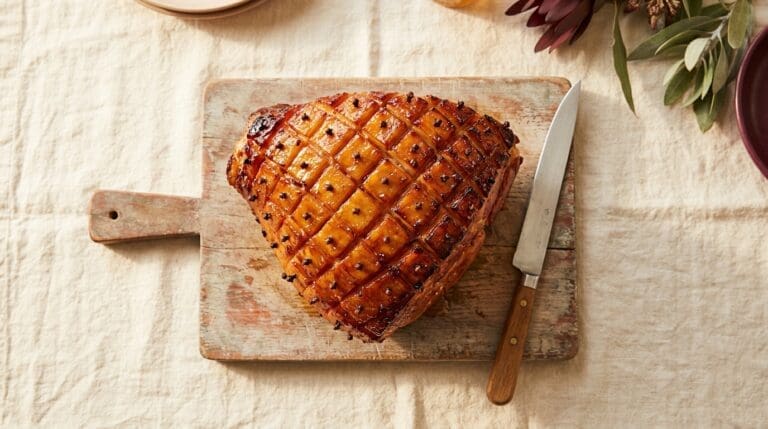
Honey & Brown Sugar Glazed Christmas Ham
The Christmas centrepiece. Why you should cook this The Christmas centrepiece. Sticky, sweet-savoury, sliced thin, eaten cold for the next four days. The glaze is honey, brown sugar,…
Read the recipe →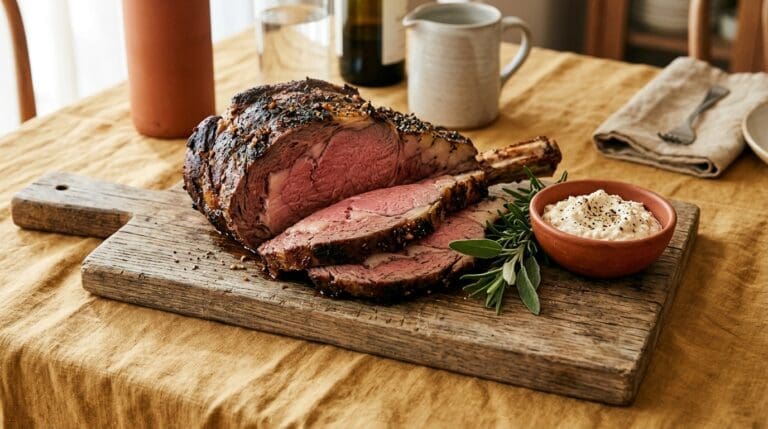
Recipe
Reverse-Seared Prime Rib
Reverse-searing is the only way to cook a prime rib at home and not blow $200 on a grey, overcooked roast. Why you should cook this Reverse-searing is…
Read the recipe →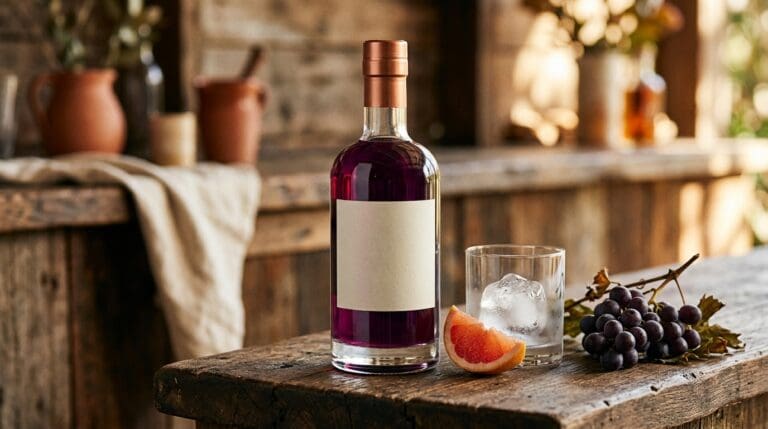
Four Pillars Bloody Shiraz Gin
Our takeFour Pillars Bloody Shiraz Gin is the Australian gin that broke every rule: steep Yarra Valley shiraz grapes in Rare Dry Gin for eight weeks, strain, bottle.…
Read more →Notes from the kitchen
The salt is the variable. Flaky sea salt only; table salt will draw water on contact and turn the skin into a wet mess. Leave the salt-dried pork uncovered in the fridge overnight; the cold air wicks moisture out and you cannot fake this step with a hairdryer. The skin must be bone dry. If you are pressed for time, salt at least three hours ahead and rest in the fridge uncovered. The high-heat blast at the start is what blisters the skin into glass; the dropoff to moderate is what cooks the meat through without burning the crackling. Rest the cooked pork on a board for fifteen minutes, skin-up, before carving; carving early lets the meat juices flood out and the crackling go softer in the steam.
Two things that go wrong
Crackling stays soft and rubbery
The skin was wet, or the oven was not hot enough at the start. Pat the skin until dry as a piece of paper. Use the highest temperature your oven can reach for the first 20 minutes. Some ovens cannot manage 240°C; in that case use the grill function for the last 5 minutes to push it over the line.
Meat is dry under perfect crackling
You left the pork in too long, or your belly was too lean. A good belly is at least 30 to 40 percent fat. Cooking time is 90 minutes at 180 after the initial blast for a 1.5kg belly; bigger bellies need more, but always rest properly to redistribute the juices.
Variations worth knowing
With fennel
Tuck whole fennel bulbs and red onion into the pan in the last hour. The vegetables roast in the rendered pork fat and become unreasonable.
Asian-style
Replace the apple sauce with a hoisin-and-garlic dipping sauce, swap the salt for a Chinese five-spice salt rub. The same belly, a different dinner.
Sunday roll
Slice cold leftover pork into a soft white roll with apple sauce, butter, sharp cheddar and rocket. The lunch the next day is the secret reason to make it.
Leftovers and make ahead
Pork belly cools well, slices cold for sandwiches, reheats in a low oven (140°C, 12 minutes) without losing the crackling if you store the meat and the crackling separately. Apple sauce keeps a week in the fridge in a jar, takes on more depth overnight, is excellent on a piece of toast with sharp cheddar at 11pm on a Wednesday. The roast vegetables reheat in a hot oven for ten minutes; the small charred edges are the best part and only get better.
The recipe
[fd-wprm-placeholder]
Ingredients
Method
- Pat the pork skin completely dry with paper towel. Rub heavily with the flaky salt. Place uncovered on a tray in the fridge overnight.
- Remove pork from fridge 1 hour before cooking. Pat the skin dry again with paper towel. Brush the skin with the oil, then sprinkle a fresh layer of salt and pepper.
- Preheat oven to 240°C fan-forced (or as hot as it goes).
- Place pork skin-up on a rack over a roasting tray. Roast 20 minutes for the crackling blast.
- Reduce oven to 180°C. Toss the carrots, parsnips and onions with olive oil, salt and pepper. Add to the tray under the rack.
- Roast another 90 minutes, tossing the vegetables once at the halfway mark.
- Tap the crackling with the back of a knife. It should sound brittle and give resistance. If still soft, give it 5 minutes under the grill.
- Rest the pork on a board, skin-up, for 15 minutes.
- Combine apples, butter, sugar, vinegar and salt in a small saucepan over low heat.
- Cover and cook 12 minutes, stirring twice, until the apples collapse.
- Mash with a fork to a chunky consistency. Cool slightly.
- Carve the pork by separating the crackling from the meat first, then slicing the meat. Break the crackling into shards.
- Serve with the roast vegetables and the apple sauce on the side.