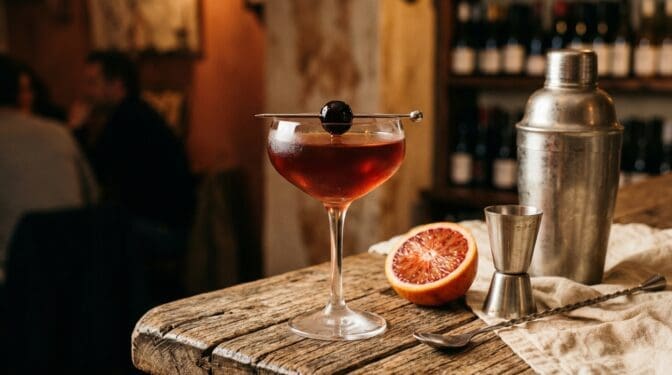
Scotch, sweet vermouth, cherry brandy and fresh blood orange juice in equal parts. 1922, Rudolph Valentino-era, served in a coupe with a single cherry. The cocktail that tastes like a small old-Hollywood evening.
Why you are pouring this tonight
The Blood and Sand was invented in 1922 to honour Rudolph Valentino’s film Blood and Sand, in which Valentino played a Spanish bullfighter who comes to a no-good end. The cocktail outlived the film, the actor, and several decades of cocktail-history rewriting that briefly tried to bury it as old-fashioned and obscure. The drink came back in the 2000s when bartenders rediscovered its magic, and it is now the kind of cocktail you order in a bar that has a printed menu but no Wi-Fi, in a small Carlton wine bar or a back-of-house Surry Hills cocktail room. It is one of the few cocktails that uses Scotch in a non-aggressive way; it is also one of the few that requires fresh orange juice (blood orange if you can find it, regular orange if you cannot) and benefits from it.
The four ingredients are equal parts: 22.5ml each of Scotch, sweet vermouth, cherry brandy and fresh blood orange juice. The proportions are unusual; most cocktails are 60ml spirit plus modifiers, but the Blood and Sand splits the spirit role across the Scotch and the cherry brandy, with the orange and vermouth giving body. The result is a drink with the structure of a Manhattan but the brightness of a Rob Roy, with the citrus lift that turns the whole thing into something easier to drink than it looks. It is also low-ABV by classical standards, around 22% by volume, which means you can have two without losing the day.
The Scotch should be a gentle blended (Monkey Shoulder at $55 from Dan Murphy’s, Famous Grouse at $40), not a peated single malt; the smoke will kill the cherry and the orange and the drink will collapse into a confused mess. The cherry brandy is the tricky ingredient: most Australian bottle shops only stock Heering Cherry Liqueur ($45), which is the correct ingredient, or Bols Cherry Brandy at $30, which is acceptable. Avoid the bright-red sweet supermarket cherry liqueurs; they are not the same drink.
The blood orange is the seasonal hero. Australian blood oranges are at peak in July (Mildura growers, available at Harris Farm, IGA fruit shops, decent Sydney greengrocers). They have a richer, slightly raspberry-tinged juice that lifts the cocktail into something quietly remarkable. If the season has passed, regular oranges work; the colour is duller but the flavour is still there.
What to pour it alongside
Before dinner, with marinated olives, a piece of jamon, a wedge of aged manchego. The drink’s slight sweetness wants something salty to push against. After dinner, with a small piece of dark chocolate or a slice of orange-and-almond cake. The Blood and Sand is also the right serve for an early-evening hour-spent-on-the-couch with the partner you have decided to start the night with rather than the friends you are going to meet at 8.30pm.
Recipe · Dessert
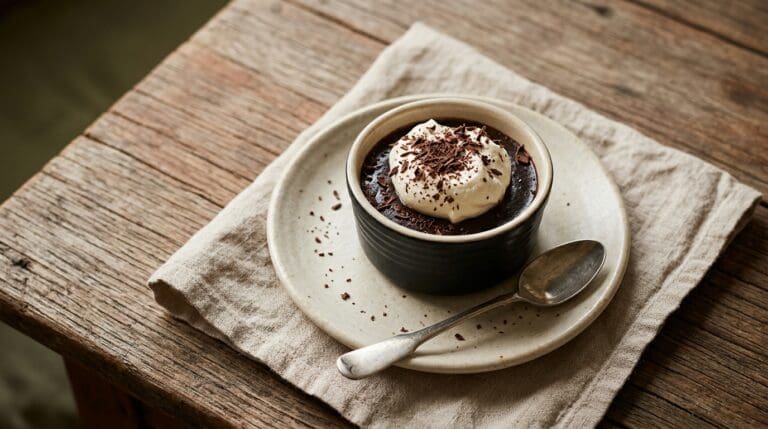
Dark Chocolate Mousse
The chocolate mousse is the dinner party dessert that makes people think you went to a cooking school in Paris. Why you are cooking this tonight The chocolate…
Read the recipe →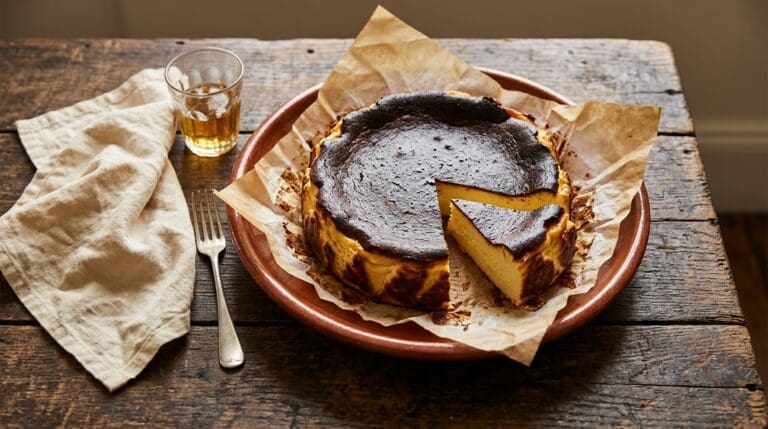
Recipe · Dessert
Burnt Basque Cheesecake
The Basque burnt cheesecake is the laziest dessert that looks the most impressive. Why you are cooking this tonight The Basque burnt cheesecake is the laziest dessert that…
Read the recipe →
Notes from the kitchen
Shake, do not stir. The fresh orange juice needs to be aerated and integrated; stirring will leave the juice as a separate layer at the bottom of the drink. Hard shake with cold ice for 12 seconds, double-strain through a fine sieve into a chilled coupe. The double-strain gets rid of the small ice chips that come off a hard shake; the drink should arrive crystal-clear and bright ruby-amber.
Use fresh orange juice. A bottled orange juice will give you a flat drink with a slight cooked-orange note. Squeeze the orange right before shaking, strain through a fine sieve to remove the pulp, measure 22.5ml. The juice loses brightness within an hour; do not pre-batch the citrus. Same rule for any citrus-forward cocktail.
The Luxardo Maraschino cherry garnish is non-negotiable. Use a real Luxardo (the dark Italian cherry in dark syrup, not the bright red supermarket cocktail cherry). One cherry, on a silver pick, across the rim. The cherry is the visual hook and the final flavour note. Eat the cherry last. It will be the best part of the drink.
Two things that go wrong
Drink is too sweet and tastes like cherry cough syrup
You used too much cherry brandy, or your sweet vermouth was too sweet. Try a drier sweet vermouth (Dolin Rouge instead of Carpano Antica) and reduce the cherry brandy to 18ml while keeping the rest at 22.5ml. The drink should be balanced: sweet, bitter, smoky, citrus, in equal voice.
Drink is dull and the colours have gone muddy
Stale orange juice, or your cherry brandy was the wrong kind. Use freshly squeezed blood orange (or regular orange) right before shaking; use a real Heering or Bols cherry brandy, not a supermarket cherry liqueur. The colour should be a clear ruby-amber, not a brown-orange sludge.
Variations worth knowing
Mezcal blood and sand
Replace the Scotch with a smoky mezcal (Del Maguey Vida at $90). The drink becomes deeper and smokier; the orange and cherry hold up against the smoke. Garnish with a chilli-salt rim. The 2020s update to a 1922 classic.
Bourbon blood and sand (the easier one)
Use Wild Turkey 101 or Maker’s Mark instead of Scotch. The drink becomes sweeter and rounder, the version for someone who is not a Scotch drinker but is curious about the cocktail. The proportions stay the same.
Blood and sand sour
Add a teaspoon of fresh lemon juice and an egg white. Shake hard (dry shake first, then with ice). Double-strain into a chilled coupe. The drink becomes a foam-topped sour, brighter, more cocktail-bar; the version for someone who has decided this is now a brunch drink.
Leftovers and make ahead
There are no leftovers. The drink is built fresh, served immediately, and does not survive sitting on the counter for more than five minutes (the citrus oxidises, the foam from the shake settles, the colour goes flat). The Blood and Sand is the rare cocktail that you make one at a time, even when you are making four; the four-at-a-time batch will not be as good as four single-build versions.
If you have leftover blood orange juice from the squeeze (you will, oranges yield more juice than 22.5ml each), use it the next morning in a sparkling water with a pinch of salt for an Italian-leaning hangover cure, or in a half-strength mimosa with a Tasmanian sparkling. Both extend the orange and both are reasonable Sunday morning drinks.
The recipe
[fd-wprm-placeholder]