
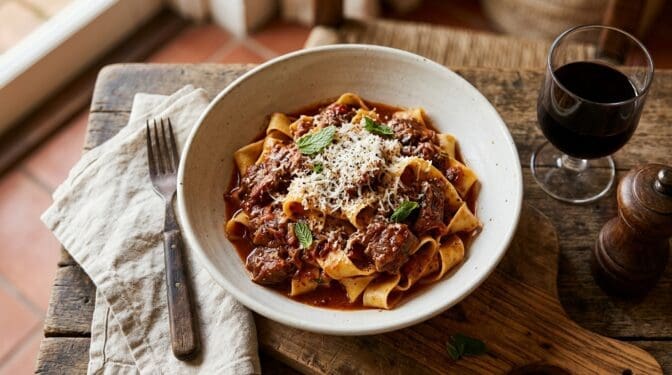
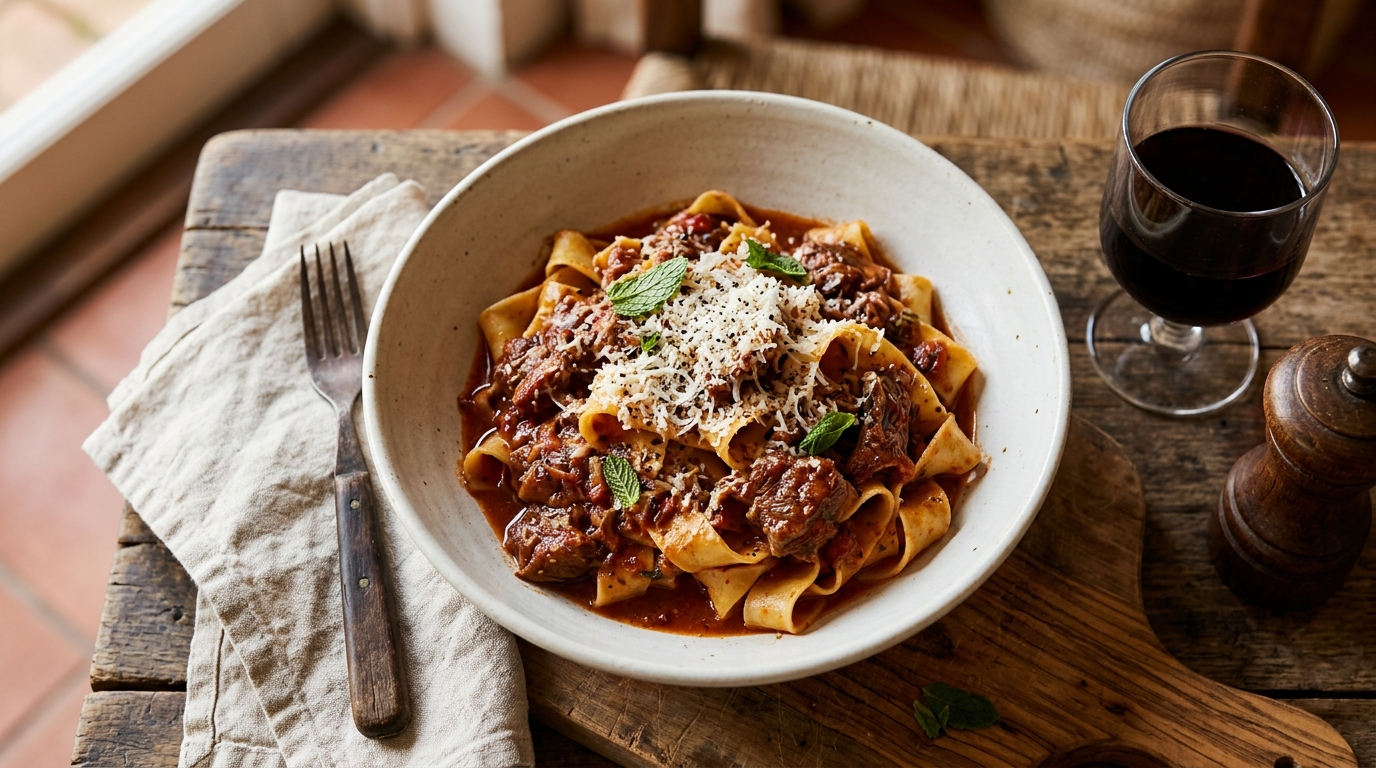
Slow-cooked lamb shoulder, pulled into ragu, tossed through wide ribbons of pappardelle. Beef ragu’s rangy older cousin who left town for a while.
Why you should cook this
Lamb ragu is the cooked version of every argument you have ever had with a beef-ragu purist. Beef ragu is the textbook. Lamb ragu is what happens when somebody’s nonna gets bored of the textbook and starts running the kitchen on her own terms. The technique is identical, the time is identical, but the lamb brings a gaminess and a depth that rolls over the beef version like a slow news day. The shoulder is the cut. The leg is for roasts. The neck is for showing off. The shoulder is for the ragu and the only acceptable answer to anyone asking which cut to use.
Brown 1.5kg of lamb shoulder hard in a heavy pot. Mirepoix, garlic, anchovies (yes, anchovies, you will not see them, you will only feel that the dish has more weight than it should), tomato paste, red wine. Let the wine reduce until the kitchen smells like a Saturday. Add tinned tomatoes, stock, a sprig of rosemary, a bay leaf, and slide the pot into a 150°C oven for two and a half hours. Pull the meat with two forks while still in the pot. Reduce the sauce slightly. Toss through fresh pappardelle, finish with mint and parmigiano. Mint is the difference. Without mint you have a heavier beef ragu wearing a costume. With mint you have lamb ragu, which is a different dish.
Buy the pappardelle fresh from a delicatessen, or make it on a Saturday morning when you have done nothing else with the day. Dry pappardelle from a packet is fine and slightly defeats the point.
What to drink with it
A McLaren Vale Shiraz with a couple of years on it. The dark fruit takes on the lamb fat, the pepper meets the ragu’s pepper, and the wine sits comfortably at the table. Penny’s Hill Cracking Black Shiraz at around $28 is the move. If a Shiraz is not on the shelf, a Mornington Peninsula Pinot Noir does the same job in a more elegant suit.
Recipe
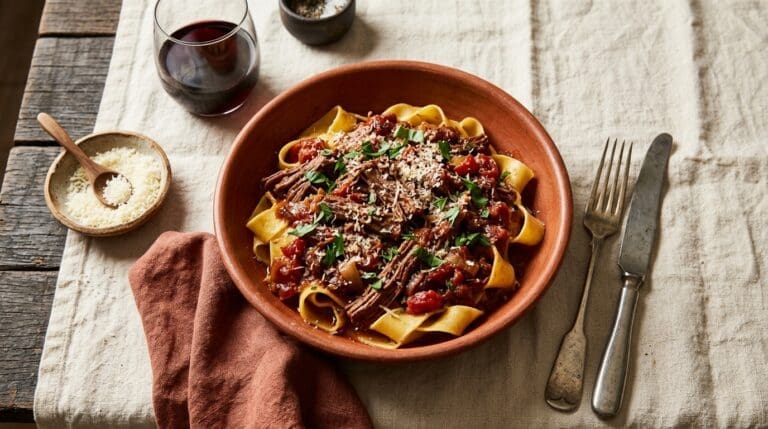
Slow Cooker Beef Ragu (Pappardelle Sauce)
The proper Italian-American Sunday gravy. Why you should cook this Sunday gravy, the proper Italian-American version. A kilo and a half of beef chuck in five-centimetre pieces, browned…
Read the recipe →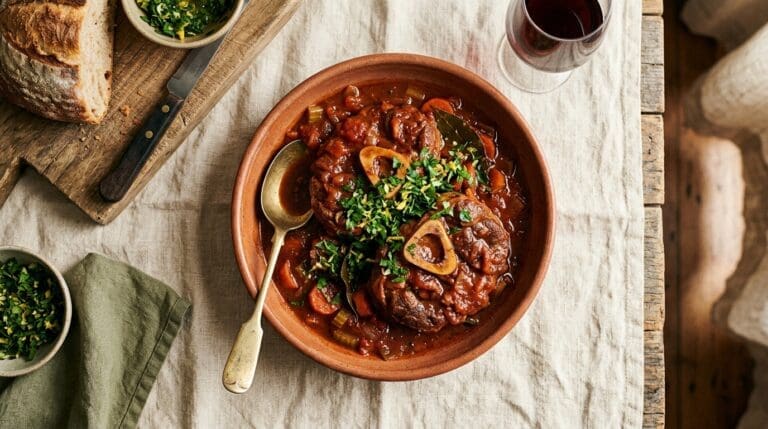
Recipe
Slow Cooker Osso Buco
The Milanese masterclass, simplified. Why you should cook this The Milanese masterclass made hands-off. Four veal shanks, each tied with kitchen twine so they hold their shape through…
Read the recipe →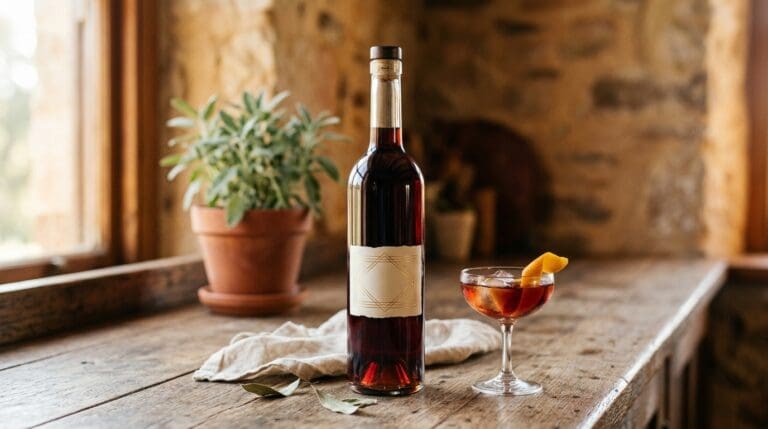
Dolin Rouge Sweet Vermouth
Dolin Rouge is the lighter, more alpine cousin of Carpano Antica. Made in Chambery with mountain herbs, wormwood, and a gentler sweetness, it gives you a Negroni or…
Read more →Notes from the kitchen
Brown the lamb in batches, never crowded. Crowded pans steam, dry pans brown. Two anchovy fillets melted into the soffritto are non-negotiable; nobody will identify the anchovy and everybody will identify that the dish has a backbone the lamb alone could not provide. Add the tomato paste before the wine and cook it for 90 seconds in the dry pan; the paste needs to caramelise to lose the tinny edge. Use a robust red wine you would actually drink, not the cooking wine in the cabinet that has been there since the year 2009. Reduce by half before adding the tomatoes. Pull the meat in the pot, not in a separate bowl; the meat reabsorbs the sauce as it cools and the dish gets richer for it.
Two things that go wrong
Sauce is thin and watery
You did not reduce. After the lamb is pulled, simmer the sauce uncovered for 15 minutes to drive off water. The ragu should coat the back of a spoon, not pool on the plate.
Lamb tastes muttony and heavy
Old shoulder, or under-trimmed. Trim the heaviest fat caps off before browning. A little fat is the dish; thick yellow fat is mutton territory and not what we are after.
Variations worth knowing
With harissa
Stir a tablespoon of harissa into the soffritto. The ragu goes North African and works extraordinarily well over couscous.
Slow cooker
Sear lamb on the stove, transfer to a slow cooker on low for 8 hours. Same dish, slightly less depth, fully delegable.
Lamb shank version
Use four bone-in lamb shanks instead of shoulder. Same braise, more drama at the table, you have to fish the bones out before serving.
Leftovers and make ahead
Improves overnight. Reheat gently in a wide pan with a splash of stock. The cooked ragu freezes for three months in a sealed container; defrost in the fridge overnight and reheat slow. Do not freeze with the pasta; the pasta turns into a sad regret. Cook fresh pasta to order, every time.
The recipe
[fd-wprm-placeholder]
Ingredients
Method
- Preheat oven to 150°C. Pat lamb dry, season heavily.
- Heat olive oil in a heavy oven-safe pot. Brown lamb in 3 batches, 4 minutes per batch. Set aside.
- Reduce heat to medium. Add onion, carrot, celery, cook 8 minutes. Add garlic and anchovies, mash anchovies into the soffritto. Cook 2 minutes.
- Add tomato paste, stir into the dry pan for 90 seconds until darkened.
- Pour in wine, scrape the base, reduce by half. Add tomatoes, stock, rosemary, bay leaf and the lamb.
- Cover and braise in the oven for 2.5 hours until the lamb falls apart at the suggestion of a fork.
- On the stovetop, pull the lamb into rough strands using two forks directly in the pot. Simmer uncovered for 15 minutes to reduce.
- Cook pappardelle in heavily salted boiling water for 3 minutes. Reserve a cup of pasta water. Drain.
- Toss pasta through the ragu in the pot, adding pasta water as needed to loosen. Off the heat, fold through half the parmigiano and most of the mint.
- Serve in warm bowls topped with the remaining parmigiano and mint, and a hard crack of pepper.