

Kimchi takes ten minutes of work and two weeks of waiting.
Why you should cook this
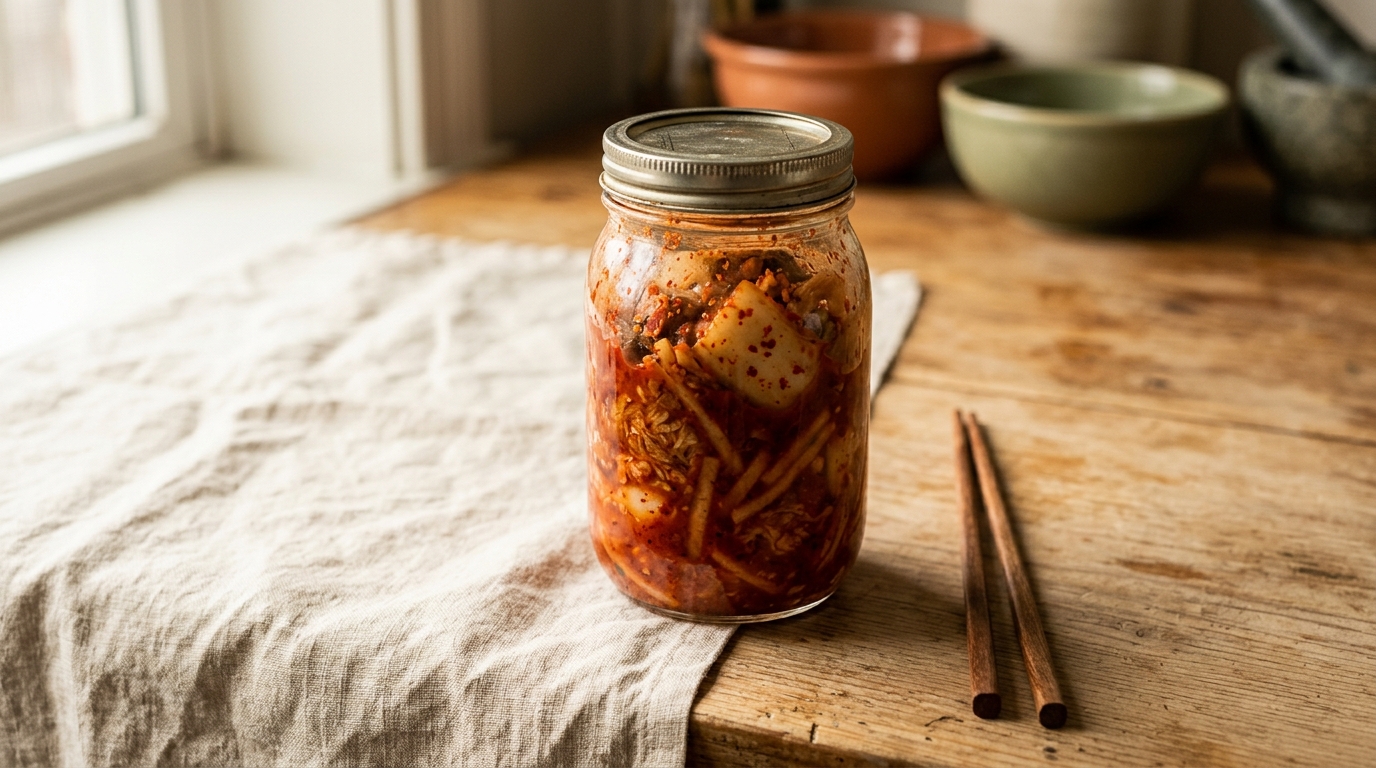
Korean fermented cabbage. Two weeks of patience in exchange for six months of jar-in-the-fridge magic. Napa cabbage salt-cured to extract the water, then massaged in gloved hands with a paste of gochugaru (Korean chilli flakes, available at any Korean grocer or H Mart in Sydney), fish sauce, garlic, ginger, sugar, glutinous rice flour cooked into a slurry, daikon julienned, spring onion. Packed into a sterilised jar, weighed down so the brine rises above the cabbage, left at room temperature for three to five days, then refrigerated.
Use Korean gochugaru, not generic chilli flakes. The flavour profile is completely different and you cannot fudge it. Kimchi made with cayenne tastes like cayenne and not like kimchi. The salt-and-rinse step on the cabbage is not optional; without it the cabbage stays wet and the kimchi mushes out. Glutinous rice flour cooked into a slurry helps the paste cling to the cabbage and gives the ferment something to chew on. Press the cabbage down daily during the room-temperature phase so the brine covers it. Older kimchi is better for cooking (kimchi jjigae, kimchi fried rice). Fresher is for eating raw.
What to drink with it
Eat with rice, eggs, dumplings, BBQ, or straight from the jar. Drink a cold beer. Or a soju. Or a tequila martini. Kimchi makes everything taste better.
Notes from the kitchen
Use Korean gochugaru, not generic chili flakes. Different flavour, different heat profile. Buy at a Korean grocer or online. Salt the cabbage thoroughly. The salting step is what makes kimchi crunchy not mushy. Don’t skip the rinse. Ferment at room temperature 3-5 days, then refrigerate. Taste daily. When it tastes funky-sour-good, into the fridge.
The recipe
Ingredients
Method
- Cut cabbage in half lengthwise, then quarter, then chop into 4cm pieces. Place in a large bowl. Sprinkle with salt, massaging to coat.
- Cover with cold water. Weigh down with a plate. Leave 2 hours, tossing every 30 minutes.
- Drain. Rinse cabbage 3 times in cold water. Squeeze gently to remove excess water.
- In a separate bowl, combine gochugaru, fish sauce, garlic, ginger, sugar and rice paste. Mix into a chunky red paste.
- Add cabbage, daikon and spring onions to the paste. Wear gloves — massage thoroughly until everything is coated.
- Pack tightly into a clean glass jar, pressing down so the brine rises above the cabbage. Leave 3cm headspace.
- Cover loosely (it will bubble). Leave at room temperature 3-5 days, pressing down daily.
- When it tastes funky and sour, refrigerate. Will keep 6 months. Tastes best at week 3.
You might also like

Recipe
The Proper Aussie Beetroot Burger
Why you should cook this The Aussie burger is the only burger format that openly admits to being a structural disaster. Beef pattie, melted tasty cheese, fried egg,…
Read the recipe →
Recipe
Pork & Cabbage Dim Sims (Aussie Style)
The Australian-Chinese fish-and-chip-shop dim sim. Why you should cook this Dim sims are the Australian-Chinese fish-and-chip-shop classic that nobody outside Australia has heard of and that everyone inside…
Read the recipe →
Recipe · Baking
Vegemite & Cheese Scrolls
Why you should cook this The lunchbox classic that you remember as the highlight of grade four and that, when you make them yourself as an adult, you…
Read the recipe →
Recipe
Savoury Cheese & Bacon Muffins
School lunchbox classic, grown-up version. Why you should cook this The lunchbox muffin that actually holds together. Cheddar, crispy bacon, spring onion, a fold of self-raising and a…
Read the recipe →What to pour with it

Cocktail
Michelada
The Michelada is a Mexican beer cocktail. Why you are pouring this tonight The Michelada is the Mexican beer cocktail and the only cocktail that improves a Modelo.…
Read the recipe →
Cocktail
Honey Tequila Sour
The Whisky Sour template with reposado tequila and honey syrup. Why you are pouring this tonight I'd like to say this drink came from a bartender on Calle…
Read the recipe →Two things that go wrong
Mushy kimchi
You skipped the salting step or didn’t rinse properly. The salt-and-rinse extracts water that would otherwise turn the cabbage soggy.
Mouldy jar
Brine wasn’t above the cabbage. Press down daily. The cabbage must be fully submerged in its own brine.
Variations worth knowing
Radish kimchi (kkakdugi)
Replace cabbage with cubed daikon radish. Same paste, same method. Crunchier, tangier.
Cucumber kimchi (oi sobagi)
Slit Lebanese cucumbers lengthwise, stuff with the paste. Ferments in two days, eat fresh.
White kimchi (baek kimchi)
Skip the gochugaru. Same ingredients otherwise. Mild, refreshing, kid-friendly version.
Leftovers and make ahead
Six months in the fridge. Older kimchi is better for cooking (kimchi jjigae stew, kimchi fried rice). Fresher is for eating raw.