

One template, three winters. Classic, truffle, and porcini-and-thyme. The risotto that pays for the second bottle of wine.
Why you should cook this
The first risotto I ever made was in a sharehouse in Newtown, in 2009, on a stove that had two working burners and one that lit on the third try if you held the gas button down and whispered an apology to it. I used arborio rice from the Aldi middle aisle and dried porcini I had bought from a deli on King Street that smelled like a forest floor that had seen things. It was the best risotto I have ever made. I have been chasing it ever since.
What follows is the master risotto template plus three winter variations. The base is the same: butter, shallot, rice, white wine, hot stock added a ladle at a time, finished with parmesan and butter and a hard mantecatura beating that turns the whole thing creamy without any cream involved.* The difference between the three versions is which mushrooms go in, when they go in, and what gets added at the end. Pick the one that matches what is in your kitchen and how much money you feel like spending tonight. All three take about thirty-five minutes start to finish.
(*Mantecatura is the Italian word for the final beating-in of butter and parmesan, off the heat, that takes the rice from cooked-but-loose to creamy-and-glossy. Skip it and you have rice in stock. Do it properly and you have a risotto. There is no in-between.)
The rice matters. Use carnaroli if you can find it (Riso Vignola at $14 a kilo from Harris Farm), arborio if you cannot. Vialone nano is the third option and the most forgiving. Long-grain rice is not risotto rice. Brown rice is also not risotto rice. The starches are what make it creamy, and only short-grain Italian rice has the right starch profile.
What to drink with it
The classic risotto wants a cool-climate Australian chardonnay with some restraint. Yabby Lake Single Vineyard at $48 is the premium pour. A Yarra Valley pinot noir works for the porcini version, where the earth wants earth back: try Giant Steps Yarra Valley Pinot Noir at $42. The truffle version is when you reach for the bottle you have been saving. A Mornington Peninsula pinot or, if you want to be reckless, a Burgundy under the same price tag.
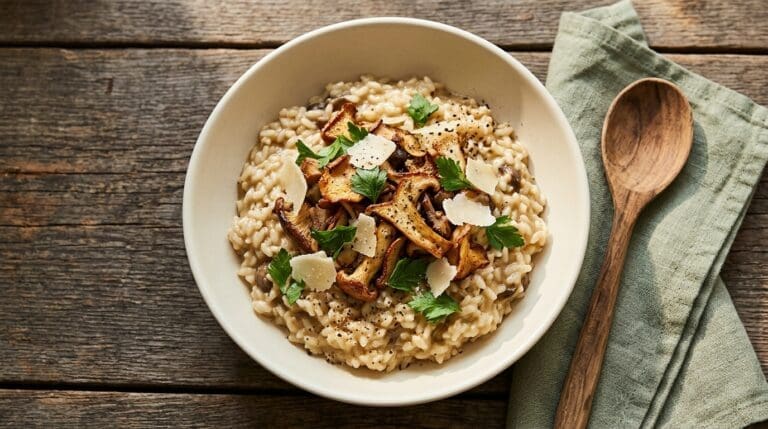
Recipe · Dinner
Wild mushroom risotto without the panic
Risotto has a reputation for being fussy and it does not deserve it. Thirty-five minutes of mostly standing and stirring while you sip a glass of white wine.…
Read the recipe →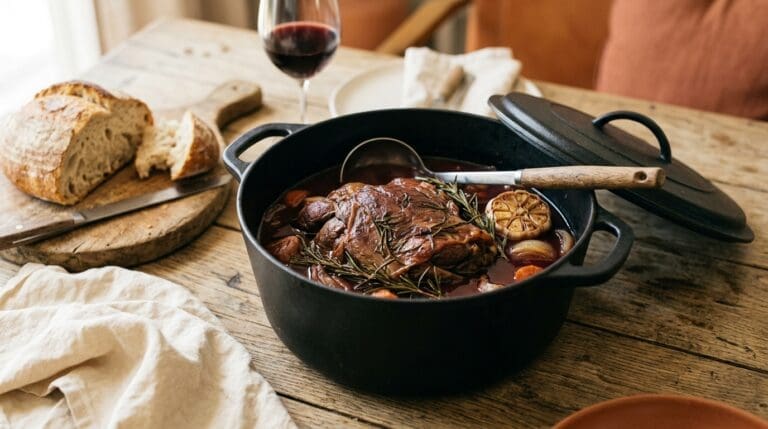
Recipe · Dinner
Slow-braised lamb shoulder with red wine and rosemary
There is a category of dinner where you accept that you are going to lose six hours of your Saturday and gain a house that smells like the…
Read the recipe →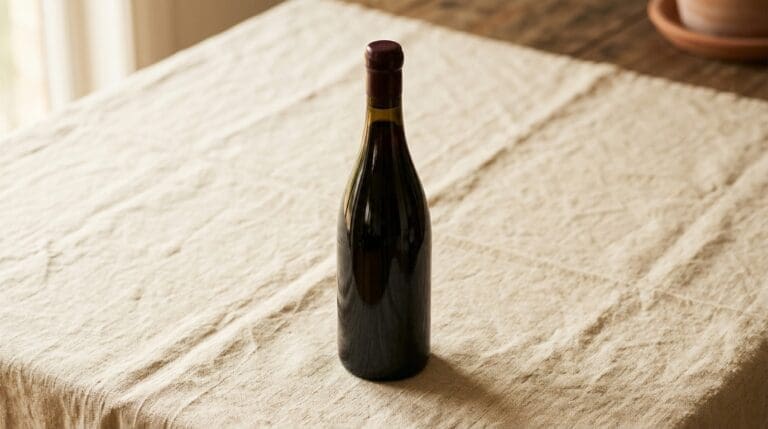
Notes from the kitchen
Stock temperature matters. Hot stock added to hot rice keeps the cook even and the starch happy. Cold stock added to hot rice shocks the grains and gives you a gluey, uneven finish. Keep a saucepan of stock at a low simmer beside the risotto pan. Ladle, stir, ladle, stir. Twenty minutes. Set a timer if you cannot stop checking your phone, but do not walk away.
The shallot must be soft before the rice goes in. Cook it gently in butter for five minutes, until translucent and slightly sweet. Toast the rice in the butter for two minutes before any liquid hits it, until the edges of the grains turn pearly. The wine goes in next, stirred until evaporated. Then the stock, ladle by ladle, until the rice is al dente. Eighteen to twenty minutes, depending on the rice. Test a grain at sixteen minutes. The centre should still have the slightest bite. The texture should pour like lava, not stand up like rice.
Two things that go wrong
Risotto is gluey and gummy
You stirred too much, or used long-grain rice, or did not toast the rice before adding stock. Stirring releases starch, but constant violent stirring releases too much. A gentle, regular stir every fifteen seconds is the move, not a continuous beat. Switch to carnaroli next time.
Rice is undercooked but the liquid is gone
You ran out of stock too fast. Top up with hot water (not cold) and keep cooking. The risotto does not care if the last ladle is water rather than stock. It cares that the heat stays even and the cooking continues.
Variations worth knowing
Classic field mushroom
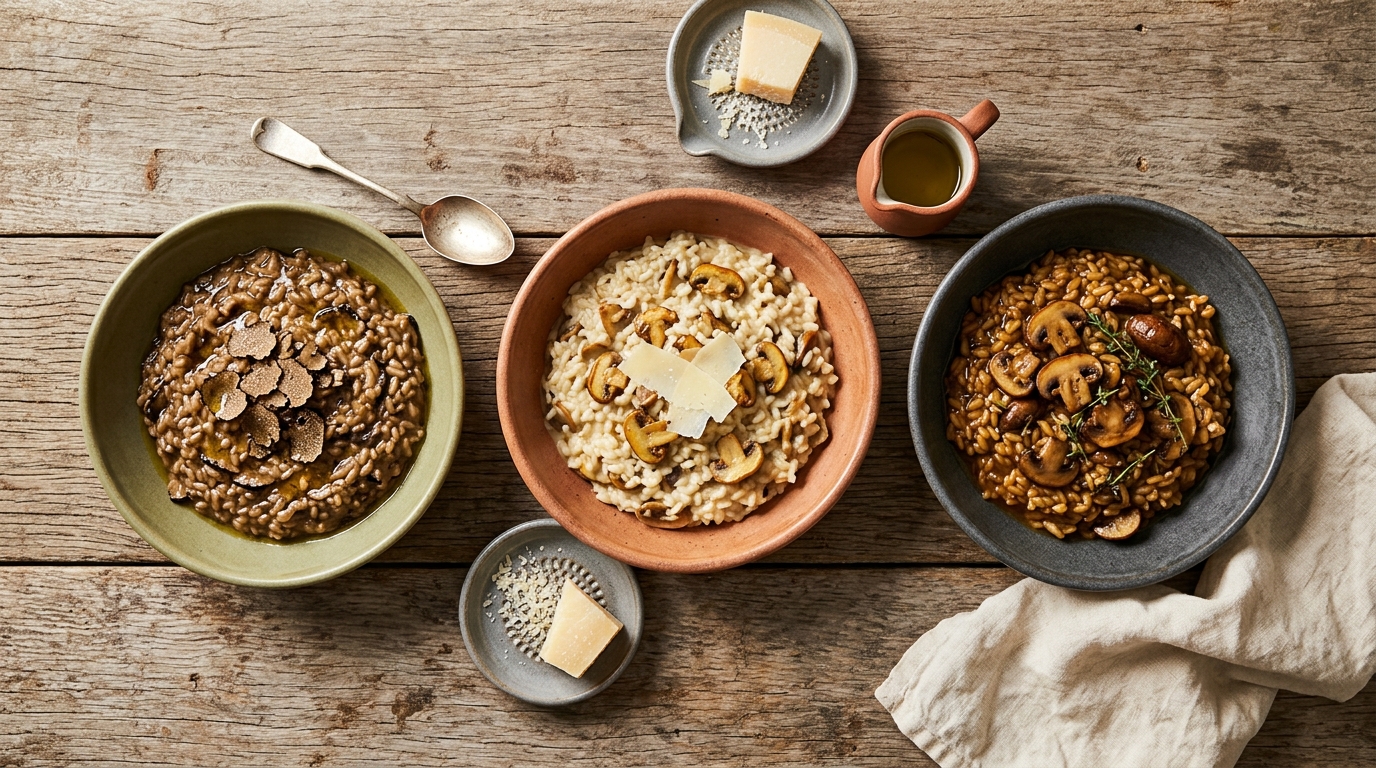
300g sliced field or button mushrooms, browned hard in butter at the start, set aside, stirred back in at the final mantecatura. Finish with parmesan, parsley, lemon zest. The everyday Tuesday version.
Truffle (the show-off)
Make the classic version. At the mantecatura, fold in a teaspoon of truffle paste (TruffleHunter at $35 a jar) or 5 grams of fresh truffle finely shaved. Finish with another shaving on top. Do not use truffle oil. Truffle oil is a chemical impersonating a mushroom.
Porcini and thyme
Soak 30g dried porcini in 250ml hot water for 20 minutes. Strain (keep the liquid, add to your stock), chop the porcini, brown with the shallot. Add 200g halved chestnut mushrooms with the rice. Finish with fresh thyme and an extra knob of butter. The deep-winter version.
Leftovers and make ahead
Leftover risotto becomes arancini the next night. Form into golf-ball-sized rounds, push a cube of mozzarella into the centre, roll in flour, egg and panko, deep-fry at 180°C until amber. The greatest second-day food in any cuisine, and the only acceptable use for risotto that has gone past its peak. Eat with a glass of the same wine that started this whole exercise. Tell nobody what last night’s dinner was.
Refrigerate any leftovers in a flat container, covered, for up to two days. Do not microwave. Reheat in a wide pan with a splash of stock or water, stirring, until loosened. The texture will not be quite the same as fresh, but it will still be a Tuesday lunch you tell your colleagues about.
The recipe
[fd-wprm-placeholder]
Ingredients
Method
- Bring the stock to a low simmer in a saucepan. Keep it warm beside the risotto pan throughout.
- Heat the butter and olive oil in a wide heavy pan over medium heat. Add the shallot and cook 5 minutes until translucent and soft.
- Add the rice and toast for 2 minutes, stirring, until the edges turn pearly.
- Pour in the wine and stir until completely evaporated.
- Add hot stock one ladle at a time, stirring gently. Wait until each ladle is absorbed before adding the next. Continue for 18 minutes until the rice is al dente and the texture pours like lava.
- While the rice cooks, melt 30g butter in a separate frying pan and brown the sliced mushrooms hard for 6 minutes. Set aside.
- When the rice is ready, fold in the mushrooms, parmesan and cold butter off the heat. Beat hard with a wooden spoon for 30 seconds (mantecatura).
- Finish with parsley, lemon zest, salt, pepper. Serve immediately.
- At the mantecatura step, fold in the truffle paste or finely shaved fresh truffle alongside the parmesan and butter.
- Plate immediately. Shave more truffle on top. Do not photograph it. The smell is the show, not the picture.
- Soak the dried porcini in 250ml hot water for 20 minutes. Strain the liquid into the simmering stock. Chop the rehydrated porcini.
- Brown the porcini and chestnut mushrooms in butter. Add the porcini to the rice with the shallot in the base step; stir the chestnut mushrooms in halfway through the cooking.
- Finish with fresh thyme alongside the parmesan and butter at mantecatura. Serve with extra thyme on top.