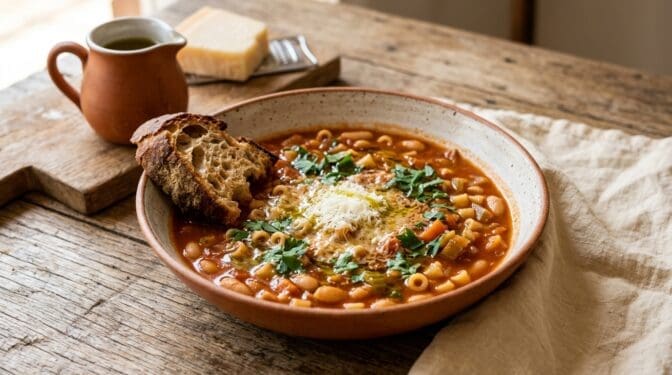
Pasta, beans, soffritto, tomato, a parmesan rind simmered in for two hours. The Italian peasant soup that is somehow worth more than half the things you have paid actual money for.
Why you should cook this
Pasta e fagioli (or pasta fazool, if you want to do the Italian-American thing) is the soup that defends Italian cuisine against any accusation of being precious or expensive. Five-dollar ingredients. Two hours of slow simmer. A meal that feeds four with leftovers and tastes like the kind of food a Roman nonna would feed you while telling you, very gently, that you are too thin. The trick is the parmesan rind. The trick is also the time. The trick is also that there are no real tricks, only ingredients given the respect they deserve.
Use a parmesan rind, not just grated parmesan on top. The rind goes in the pot at the start of the simmer and slowly releases umami, salt, and a rich nutty depth that no amount of stock cubes can replicate. Save your parmesan rinds in the freezer. Every time you finish a wedge of parmesan, the rind goes into a labelled bag in the freezer marked “rinds.” This is not optional. This is what the kitchen does. Within three months you will have enough rinds for an entire winter of soups.
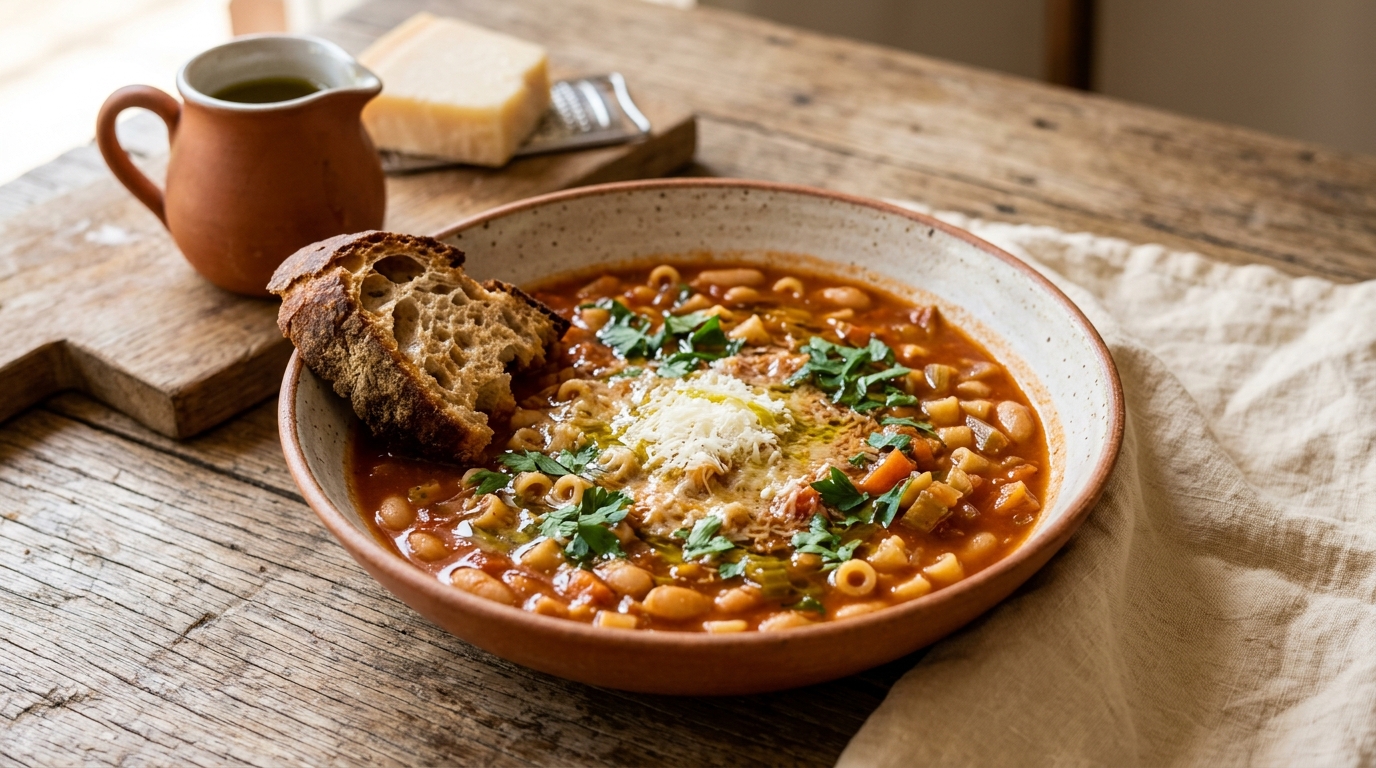
The soffritto is the other foundation. Onion, carrot, celery, finely diced and slowly sweated in olive oil for ten to fifteen minutes until soft and slightly sweet. Garlic at the end, two cloves, finely chopped. Tomato paste, tinned tomatoes, beans (canned cannellini or borlotti, do not be a hero with dried beans on a Tuesday), stock, the parmesan rind, a bay leaf. Simmer slow for ninety minutes. Add the pasta in the final twelve minutes. Serve hot in shallow bowls with grated parmesan, olive oil, and torn parsley. Toast the bread separately.
What to drink with it
An Italian red with rusticity, no shame and no oak. A Chianti Classico or a young Sangiovese under $30 from Vinomofo. A Yarra Valley pinot noir also works if you want the Australian equivalent of restraint. For non-alc, a tomato shrub and soda water, or a chilled tea like a barley tea (mugicha) which has the nutty toasted note that pairs beautifully with the parmesan-rich broth.
Recipe · Dinner
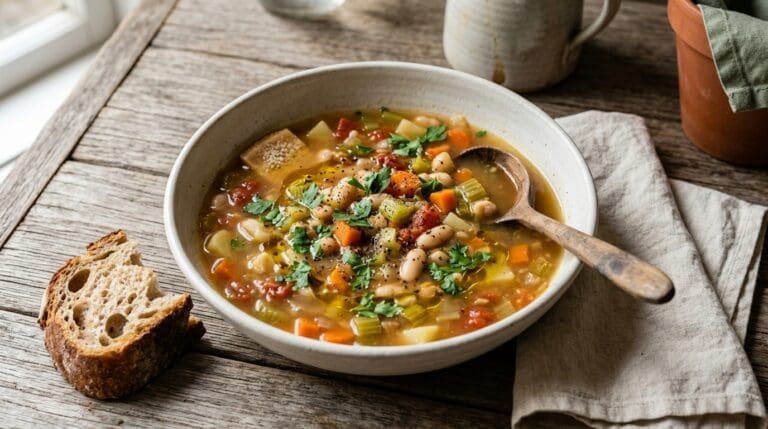
Winter Vegetable Soup
Three hours of slow extraction, an old parmesan rind, a few cheap vegetables. The soup the Italians have been quietly winning at since the fourteenth century. Why you…
Read the recipe →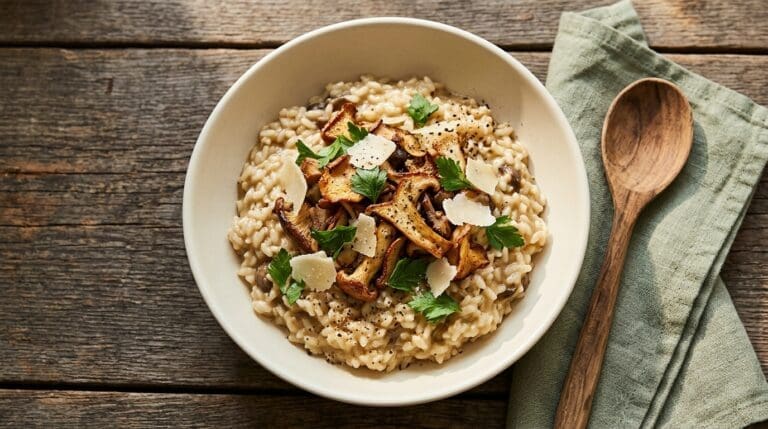
Recipe · Dinner
Wild mushroom risotto without the panic
Risotto has a reputation for being fussy and it does not deserve it. Thirty-five minutes of mostly standing and stirring while you sip a glass of white wine.…
Read the recipe →
Notes from the kitchen
Crush a third of the beans before they go in the pot. Take a fork, mash a third of the cannellini against the side of a bowl. The crushed beans dissolve into the broth and thicken it; the whole beans give the soup texture and bite. This is the difference between a thin, watery pasta-and-beans-in-broth and a proper creamy pasta e fagioli. The texture should be thick enough that the spoon stands up briefly when pushed in, then slowly leans.
Cook the pasta in the soup, not separately. The pasta releases starch into the broth, which thickens the whole thing further. Use a small shape (ditalini, tubetti, broken spaghetti, even small shells). Twelve minutes in the simmering soup is enough. If you cook the pasta separately and add it at the end, the soup is thinner and the pasta is blander. The pasta wants to be cooked in the broth it will be served in.
Two things that go wrong
Soup is thin and watery
You did not crush any of the beans, or you used too much stock. Mash a third of the beans before they go in. Reduce the stock to 1L if you want a thicker soup. The broth should coat the back of a spoon.
Pasta is overcooked and gluey
Cooked too long, or the soup sat too long after the pasta went in. Cook the pasta for the time on the packet (usually 12 minutes for ditalini). Serve immediately. If you are reheating leftovers, expect the pasta to be softer.
Variations worth knowing
With pancetta or guanciale
Brown 100g of cubed pancetta at the start, before the soffritto. Use the rendered fat to cook the soffritto. The soup picks up a smoky, salty depth that brings it closer to a stew than a soup.
Borlotti and rosemary version
Use borlotti beans instead of cannellini, add a sprig of rosemary alongside the bay leaf. Slightly more rustic, slightly more Tuscan. Excellent with a lump of Parmigiano on top.
Vegan version
Skip the parmesan rind, add a sheet of dried kombu seaweed for umami, finish with nutritional yeast. Surprisingly close to the original. Use vegetable stock and finish with a generous slug of olive oil.
Leftovers and make ahead
Better the next day. The broth thickens, the pasta absorbs more flavour, and the whole thing turns into something between a soup and a stew. Reheat gently with a splash of water if it has gone too thick. Freezes well for three months if you do not mind softer pasta. To be safe, freeze the soup before adding the pasta. Add fresh pasta at reheating. Will keep refrigerated for four days. The third-day version is, controversially, better than the first-day. Serve at room temperature with crusty bread for an actually excellent lunch the next day at work that will make a colleague ask what that smells like.
The recipe
[fd-wprm-placeholder]
Ingredients
Method
- Heat the olive oil in a large heavy pot over medium heat. Add the onion, carrot and celery. Sweat slowly for 12 minutes, stirring, until soft and slightly sweet. Do not brown.
- Add the garlic and tomato paste, cook 1 minute.
- Crush a third of the beans against the side of a bowl with a fork. Add all the beans (crushed and whole) to the pot.
- Add the tinned tomatoes, stock, parmesan rind and bay leaf. Bring to a gentle simmer.
- Simmer uncovered for 90 minutes, stirring occasionally, until the broth thickens and tastes deep.
- Discard the parmesan rind and bay leaf. Bring back to a strong simmer.
- Add the pasta. Cook 12 minutes (or to packet time) until al dente.
- Season with salt and pepper. Ladle into shallow bowls. Top with parmesan, parsley, a drizzle of olive oil. Serve with crusty bread.