

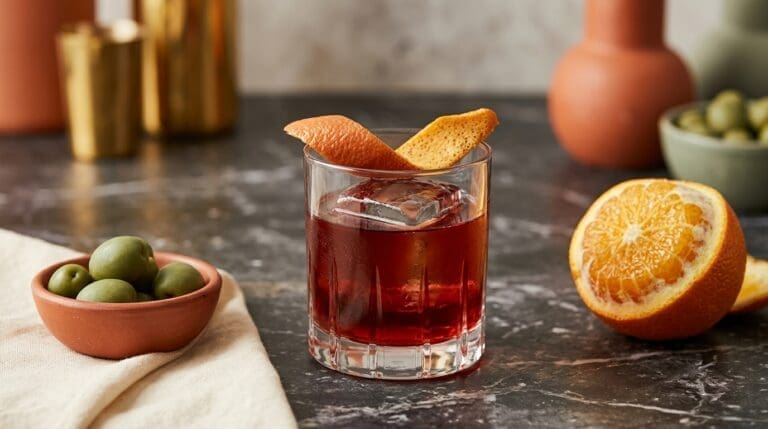
Equal parts gin, Campari, sweet vermouth, with a splash of fresh blood orange juice and a wide expressed peel. The Negroni for an Australian winter when the bloods are at their best.
Why you are pouring this tonight
The Negroni is the cocktail you are not allowed to mess with, and the cocktail people mess with constantly. We have all the variations on this site already: Tequila, White, Coconut, Sbagliato. Add this one to the pile. The Blood Orange Negroni is not a major rebuild. It is the regular Negroni with a splash of fresh blood orange juice and an expressed blood orange peel instead of regular orange. That is the whole change. The drink takes on a darker, slightly more dessert-leaning fruit character that pairs beautifully with the bitter Campari, and it looks gorgeous in the glass, which (let’s be honest) is a meaningful part of why anyone makes a Negroni at home.
Blood oranges are at their peak in Australia from late May through August. The arils (the red pigments) develop in colder weather, which is why a Mildura blood orange in mid-June is darker, sweeter, and more dramatic-looking than the same fruit picked in March. Use a real blood orange, the dark cara cara is a related but different fruit and behaves slightly differently in cocktails. The dark crimson flesh and the bright bitter peel are both important. The juice goes in the drink. The peel goes over the top.
For the gin, a London Dry with juniper backbone holds up better against the Campari than a botanical gin. Tanqueray London Dry at $58 from Dan Murphy’s is the workhorse. Four Pillars Rare Dry at $90 is the local upgrade. Avoid sweet, floral gins (Hendrick’s, Roku) which compete with the orange instead of supporting it. Sweet vermouth: Carpano Antica Formula at $60 is the premium pour. Dolin Rouge at $30 is the everyday. Punt e Mes at $35 is the move if you want the drink slightly more bitter and aggressive, which a winter Negroni can absolutely afford.
What to pour it alongside
Before dinner, with a small dish of olives and a wedge of aged parmesan or pecorino. The bitterness of the Campari needs salt to balance, and salty cheese is the most efficient way to deliver it. Also pairs beautifully with prosciutto and a fresh fig. Or with a slice of focaccia and a flat tin of anchovies if you have decided to commit to the bit. Not a dessert drink. Pour at 6pm, drink slowly, do not have a second one or you will not eat dinner.
Cocktail
The Negroni
The Negroni is the cocktail for people who think they do not like cocktails. Three ingredients, equal parts, stirred over ice. No shaking, no fruit juice, no sugar.…
Read the recipe →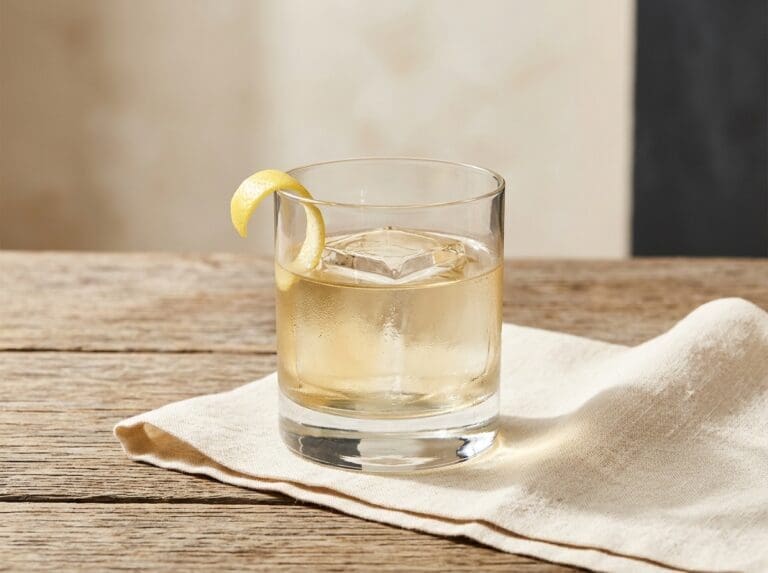
Cocktail
White Negroni
The White Negroni swaps Campari for Suze (French gentian liqueur) and sweet vermouth for Lillet Blanc. Why you are pouring this tonight The White Negroni swaps Campari for…
Read the recipe →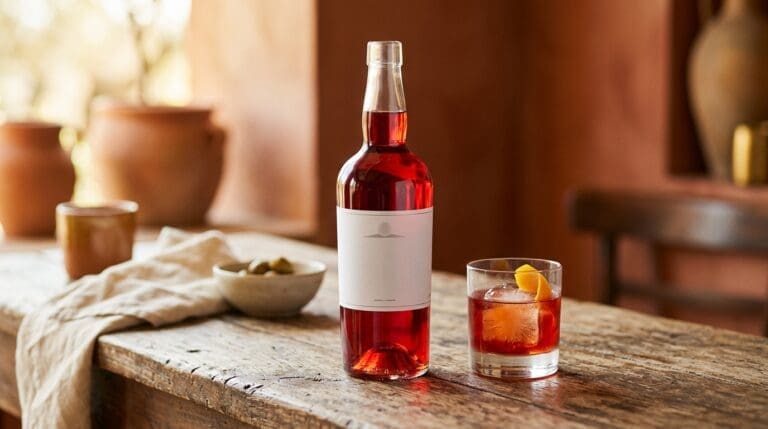
Campari
Campari is the bottle that tastes like the first time you tried Campari: slightly alarming, deeply red, bitter in a way that announces itself. Then something happens around…
Read more →Notes from the kitchen
Stir, do not shake. A Negroni shaken in a tin develops a frothy top that nobody asked for and looks like a beer. Stirred for thirty seconds over hard ice, the drink stays clear, the texture stays silky, and the dilution is correct. The big single ice cube in the serving glass is for slow dilution and visual drama. A handful of small cubes melts too fast and waters the drink down by the third sip.
The peel is expressed, not garnished. Hold a wide strip of peel skin-down over the surface of the drink, pinch sharply to release the oils. You will see a fine mist hit the surface. Then drape the peel over the rim. The drink should smell like blood orange before the first sip. If the smell is not there, you have not expressed it properly. Do it again. The drink is patient.
Two things that go wrong
Drink is too sweet
Too much blood orange juice. Half a teaspoon is the maximum. The juice is a flavour accent, not the body of the drink. The drink should taste like a Negroni that has met a blood orange, not a blood orange that has met some Negroni.
Drink looks pink, not red
Used a regular orange or cara cara, not a true blood orange. The dark arils give the drink the deep crimson glow. If your blood oranges look pale inside, refrigerate the cut fruit for an hour before squeezing. The cold develops the colour slightly.
Variations worth knowing
Blood orange Boulevardier
Bourbon instead of gin. Same proportions, same blood orange juice and peel. Smokier, deeper, more autumnal.
Sbagliato version
Replace the gin with a dry Italian sparkling wine. Built in a wine glass. Lighter, fizzy, more brunch-friendly. The Mr Anthony Stanley Tucci internet-famous variation, with blood orange added.
Frozen Negroni granita
Make a double batch, freeze in a shallow tray for 4 hours, scrape with a fork to make granita. Serve in a coupe. Surprisingly elegant, slightly summer-leaning, completely worth doing once.
Leftovers and make ahead
Leftover blood orange juice freezes well in ice cube trays. Use the cubes in the next round of Negronis or in a glass of soda water. Leftover peels make a solid candied peel if you simmer them in equal parts water and sugar for thirty minutes, then dry. Serve dipped in dark chocolate after dinner. The drink itself does not survive long. Make to order. The ice melts faster than you would think.
The recipe
[fd-wprm-placeholder]