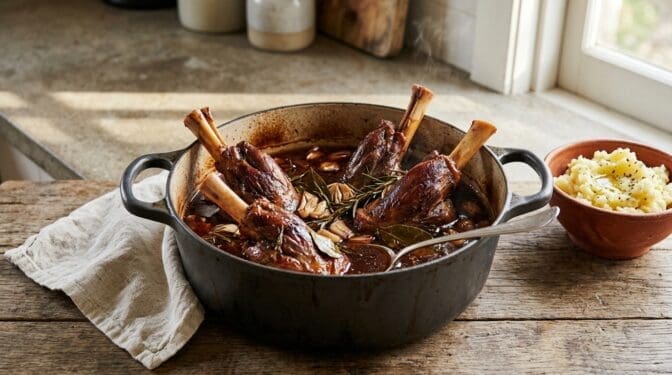
Bone-in shanks, half a bottle of shiraz, three hours in a low oven. The dinner that turns Friday into a small event.
Why you should cook this
The first time I cooked lamb shanks I had read four recipes back-to-back, none of which agreed on temperature, time or whether the wine was meant to be Australian or French, and I made an executive decision to do all of it at once. I browned them in too small a pan, deglazed with a Coonawarra cabernet a friend had brought over and forgotten about, added a tin of crushed tomatoes I had been carrying through three house moves, and shoved the whole thing into a 160°C oven. Four hours later I lifted the lid and the kitchen briefly smelled like a small Italian funeral. The shanks fell apart at the suggestion of a fork. My wife said “you can’t make this on a Tuesday, I will leave you,” in the warm tone usually reserved for things she loves and slightly resents.
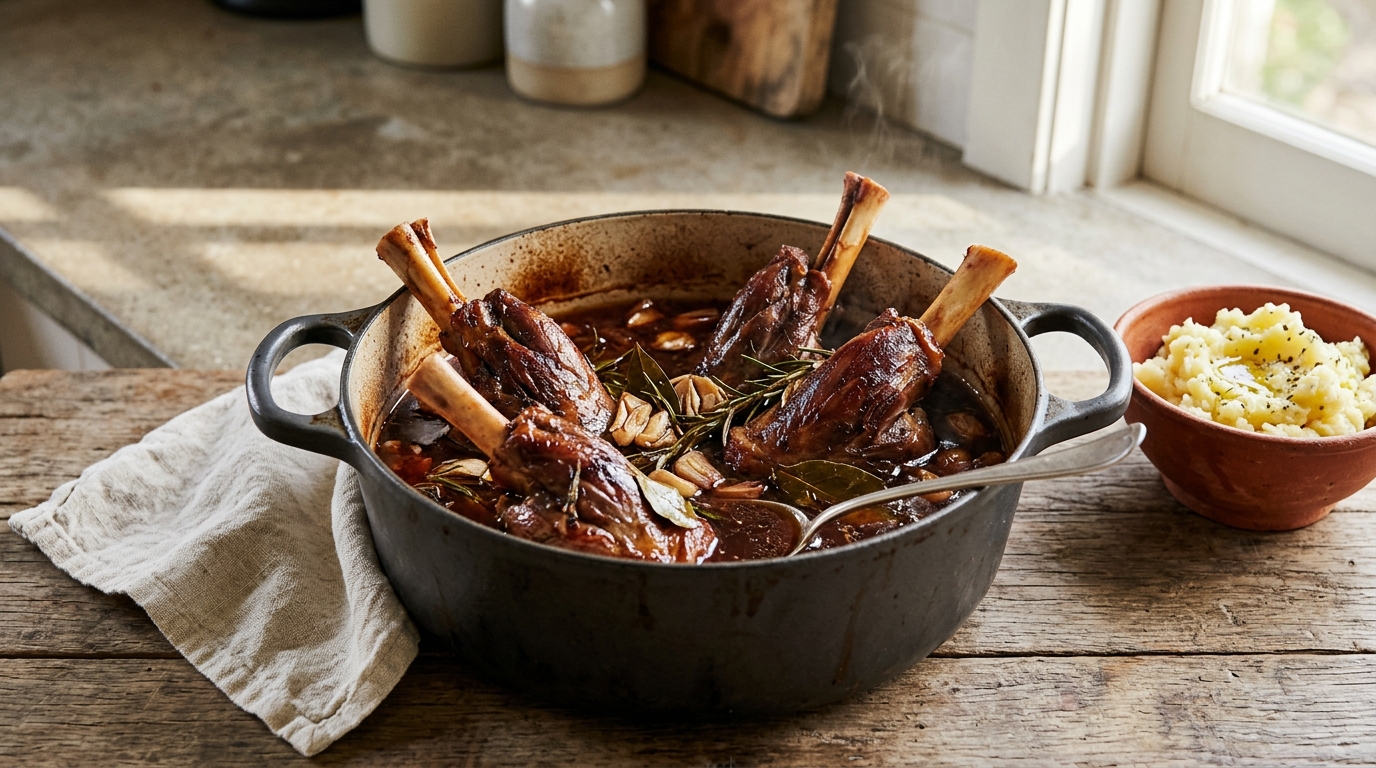
That is the dish. Bone-in lamb shanks, browned hard in a heavy pot, deglazed with half a bottle of cheap red, then submerged in stock with rosemary and garlic and a couple of anchovies* and left in a low oven for three hours until the meat surrenders entirely. The bones release their gelatin into the sauce, the rosemary perfumes the whole thing, and what comes out the other side is the kind of dinner that makes a guest pause mid-conversation and look down at their plate like they have just received an unexpected text from someone they used to date.
(*Two anchovies dissolved into the braise. Nobody will know they are there. Nobody will be able to explain why this lamb tastes deeper than every other lamb they have ever eaten. The anchovies are the trick. Some truths belong to the kitchen.)
Use shanks from a butcher, not the supermarket. The butcher will French-trim them so the bone shows clean, which costs nothing extra and looks like you have made an effort. Pick shanks that are roughly the same size so they cook at the same rate. Two hundred to three hundred grams each is the sweet spot. Smaller and they overcook. Larger and they refuse to give up.
What to drink with it
The wine in the pot becomes the wine on the table, more or less. Use a cheap shiraz to braise (Wynns Coonawarra Estate at $18 will do), drink something better with it. A Barossa shiraz is the conventional move, and conventional is correct here. Hentley Farm The Beauty at around $45 is the upgrade pour. If you want to step sideways into a GSM, the Yangarra Shiraz Grenache Mourvèdre at $30 from Dan Murphy’s does the work without making a fuss about it.
Recipe · Dinner
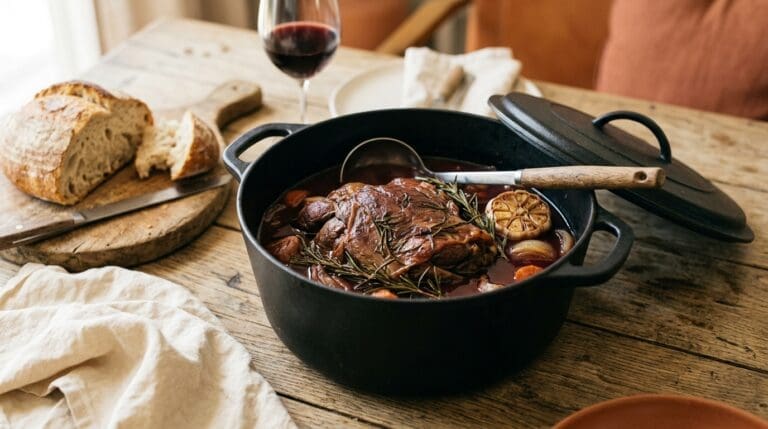
Slow-braised lamb shoulder with red wine and rosemary
There is a category of dinner where you accept that you are going to lose six hours of your Saturday and gain a house that smells like the…
Read the recipe →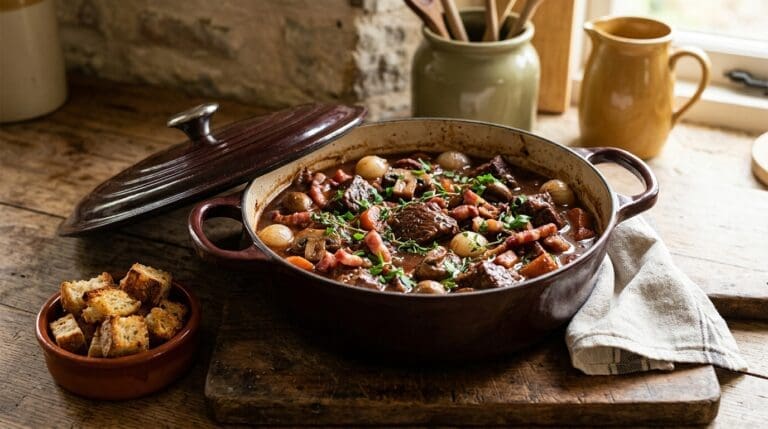
Recipe · Dinner
Boeuf Bourguignon
Beef chuck, half a bottle of red, three hours of nothing to do but check on it twice. The dish that justifies winter. Why you should cook this…
Read the recipe →
Notes from the kitchen
Brown the shanks dry, in a hot pot, in batches. Crowd them and they steam, and steamed shanks come out grey, which is not the colour we are after. Four to five minutes per side, all four sides, until they have a hard mahogany crust everywhere they meet the pan. The browning is what makes the sauce taste like a sauce instead of a wine soup. Wipe the pot if the fond starts to burn between batches. Burnt fond turns bitter and the bitterness will follow you all the way to the table.
Once the shanks are out, soften the mirepoix in the rendered fat. Onion, carrot, celery, fine dice. Garlic at the end. Tomato paste in for two minutes until it darkens. Then the wine, scraping the bottom hard with a wooden spoon. Reduce the wine by half over high heat. Then the stock, the anchovies, the herbs. Bring to a simmer, slip the shanks back in (the liquid should come about two-thirds up the meat), lid on, into a 160°C fan-forced oven for three hours minimum. Check at two hours and again at three. The meat should peel back from the bone at the touch of a spoon.
Two things that go wrong
Sauce is thin and watery
You did not reduce the wine before adding stock, or you added too much stock to start with. Lift the shanks out, set aside under foil, and reduce the sauce on the stove for fifteen minutes until it coats the back of a spoon. Slide the shanks back in to warm through. Do not thicken with cornflour. We are not running a pub kitchen at the end of a long shift.
Meat is tough and refuses to fall off the bone
Not cooked long enough or oven was too hot. Lid on, back into a 150°C oven for another forty-five minutes. Tough lamb is just lamb that has not yet been beaten into submission. Time fixes everything in this dish, except the wrong cut.
Variations worth knowing
Moroccan lamb shanks
Same braise, different aromatics. Swap the rosemary for a tablespoon of ras el hanout, a teaspoon of ground cumin and a cinnamon stick. Add a tin of chickpeas in the final thirty minutes. Serve over couscous with a scatter of fresh coriander.
Slow-cooker lamb shanks
Brown the shanks and soften the mirepoix on the stove first, then everything into a 6L slow cooker on low for 8 hours. Reduce the sauce on the stove at the end if it is too loose. The shanks will be falling-off-the-bone tender. Set it before work, eat it when you get home.
Pressure-cooker lamb shanks
Brown in the pressure cooker. Build the braise. Lock the lid and cook at high pressure for 50 minutes, natural release. Reduce the sauce on sauté mode for ten minutes. The full Sunday dinner from a Tuesday weeknight.
Leftovers and make ahead
Better the next day, like every braise. Pull the meat off the bones, shred it into the sauce, and you have a pasta sauce that will outdo any ragù you have ever been served at a wine bar. Toss with pappardelle, finish with parmesan and gremolata. Tell nobody what it used to be.
Refrigerate for up to four days, or freeze for three months. Reheat gently on the stove with a splash of stock, lid on, until just hot through. Do not microwave the bones in. The microwave is for emergencies, not for lamb that took three hours to cook.
The recipe
[fd-wprm-placeholder]
Ingredients
Method
- Preheat oven to 160°C fan-forced. Pat shanks dry with paper towel and season generously all over with salt and pepper.
- Heat olive oil in a large heavy Dutch oven over medium-high heat. Brown the shanks in batches, 4 minutes per side, until deeply mahogany. Set aside.
- Reduce heat to medium. Add onion, carrot and celery, cook 6 minutes until softened. Add garlic and anchovies, cook 1 minute, mashing the anchovies into the vegetables.
- Stir in tomato paste, cook 2 minutes until it darkens. Pour in the wine, scraping the bottom of the pot. Reduce by half over high heat (about 8 minutes).
- Add the stock, crushed tomatoes, rosemary and bay. Bring to a simmer. Slip the shanks back in; the liquid should come two-thirds up the meat.
- Lid on. Transfer to the oven for 3 hours, undisturbed. Check at the 3-hour mark; the meat should peel from the bone at the touch of a spoon. If not, give it another 30 minutes.
- Lift the shanks out and rest under foil. Skim any fat from the surface of the sauce. If the sauce is loose, reduce on the stove over high heat for 10 minutes until it coats the back of a spoon.
- Serve the shanks on a generous puddle of mashed potato or polenta, the sauce spooned over, a scatter of gremolata on top.