
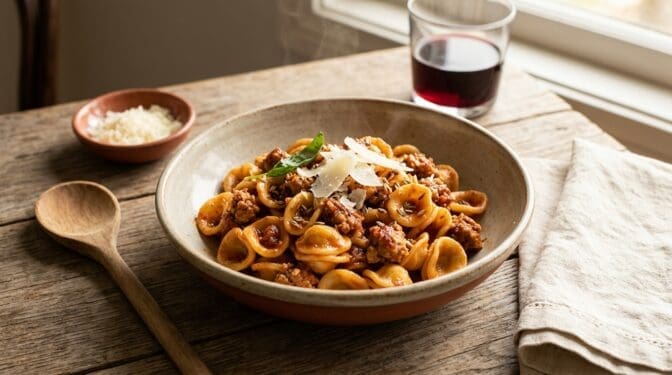
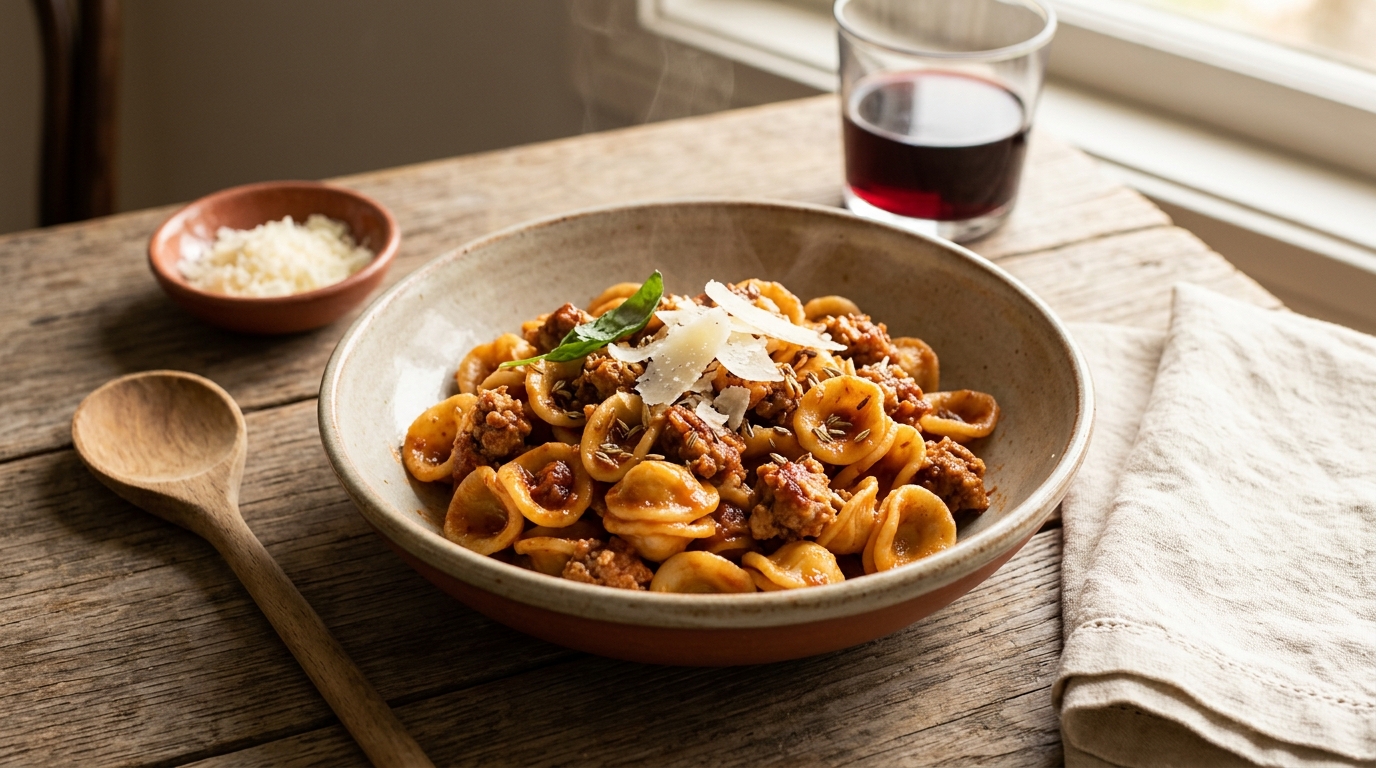
Italian pork sausages crumbled into a tomato sauce, fennel seeds toasted in, tossed with orecchiette. Thirty minutes from packet to plate, the dish you cook on a Tuesday and remember on a Friday.
Why you should cook this
Italian sausage pasta is the dish I cook when I have decided I cannot be bothered to cook but I also cannot be bothered to order a Menulog that takes 47 minutes to arrive cold from a place I have never heard of. The hands-on time is twelve minutes. The total time is thirty. The result is a pasta dish that tastes like it took an hour and is the kind of thing you would happily order in a small restaurant in Surry Hills for $32 plus a fifteen percent service charge. You are making it at home for the cost of a pack of sausages and a tin of tomatoes.
The dish is built around a simple substitution: instead of mince, you use a good Italian pork sausage with the casing stripped off. The sausage already contains all the seasoning a mince needs, plus a higher fat content that gives the sauce body. The fennel seed in a Toulouse or pork-and-fennel sausage adds the aniseed-ish warmth that makes the dish recognisable as a sausage pasta and not just a bolognese. Use a butcher’s sausage if you can. Coles and Woolies sell a pork-and-fennel that is acceptable; the IGA in any Italian neighbourhood (Haberfield, Norton Street, Lygon Street) sells one that is significantly better.* Cost difference: about three dollars per kilo. Flavour difference: the difference between “fine” and “again, please.”
(*The other move is asking your butcher to grind a 50/50 mix of pork shoulder and pork belly, season it with fennel seed, garlic, salt, chilli flakes and a splash of white wine. They will think you are mildly unhinged. They will also do it, and the resulting sauce is genuinely a thing.)
The pasta shape matters. Orecchiette is the classical pair (the little ear-shapes catch the sausage crumbs in their concave centres), but rigatoni works, casarecce works, even a short fusilli works. Avoid spaghetti or linguine; the long strands shed the sausage and you end up with crumbs at the bottom of the bowl. The dish is about the marriage of pasta and crumb. The shape has to give the crumb somewhere to sit.
What to drink with it
An Italian sangiovese is the conventional pair, and the conventional pair is correct. Banfi Centine at $20 from Dan Murphy’s is the everyday bottle; a Castello di Ama Chianti Classico at $45 is the upgrade. If you want to stay Australian, a McLaren Vale grenache (Yangarra Old Vine at $25) does the same job, swapping the Italian acidity for Australian fruit. Avoid heavy shiraz; the dish is about brightness as much as richness, and a big shiraz will smother it.
Recipe · Dinner
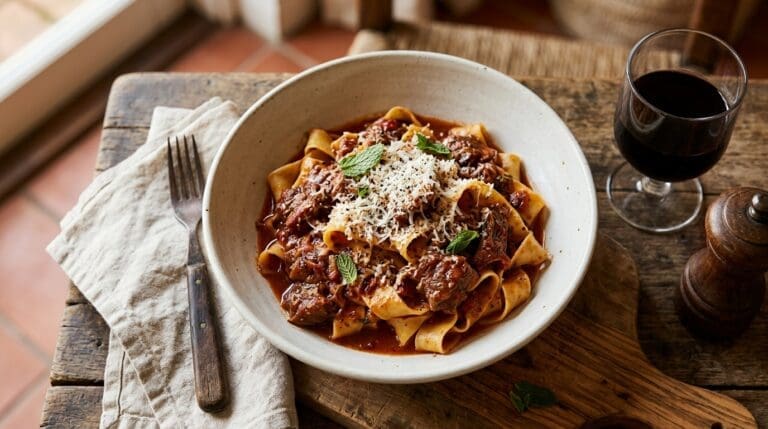
Lamb Ragu with Pappardelle
Slow-cooked lamb shoulder, pulled into ragu, tossed through wide ribbons of pappardelle. Beef ragu’s rangy older cousin who left town for a while. Why you should cook this…
Read the recipe →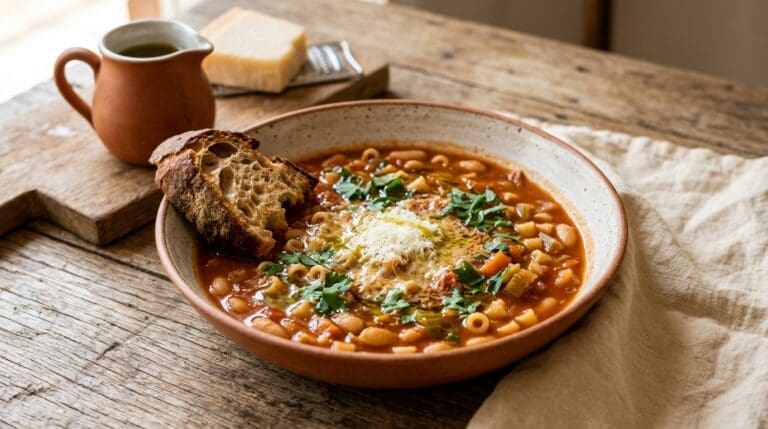
Recipe · Dinner
Pasta e Fagioli
Pasta, beans, soffritto, tomato, a parmesan rind simmered in for two hours. The Italian peasant soup that is somehow worth more than half the things you have paid…
Read the recipe →
Notes from the kitchen
Strip the casings. Squeeze the sausage meat out of its casing into a hot pan, then break it up with a wooden spoon as it browns. Do not be gentle. The sausage should end up in a mix of crumb sizes (some pea-sized, some larger), all deeply browned, with a layer of dark fond stuck to the bottom of the pan. The fond is the dish. Deglaze with a splash of dry white wine (something you would happily drink, not a cooking wine, which is a real category that should not exist), scrape the fond up.
Toast the fennel seeds first in the dry pan before any oil goes in, for thirty seconds, until they smell like a pizza place at the end of a busy Friday. Then add the oil, the garlic (sliced, not crushed), the chilli flakes, and the sausage. The fennel oil released by the toasting clings to everything that follows. Skip this step and the dish tastes flat. The fennel is the differentiator; the toasting is the trick.
Reserve a cup of pasta water before you drain. The starchy water is what marries the sauce to the pasta. Add a quarter cup at the end with the cheese, toss vigorously over the heat for a minute, and the sauce becomes glossy and clings to the pasta instead of sitting underneath it. This is the only step that separates a home pasta from a restaurant pasta.
Two things that go wrong
Sauce is dry and the pasta is sticking together
Not enough pasta water. Add another quarter cup, off the heat, and toss vigorously. The starch in the water emulsifies with the fat in the sausage and gives you a glossy sauce. If still dry, a splash of olive oil at the end. Never add more tomato; the sauce was the right consistency before the pasta went in.
Sausage is grey and steamed, not browned
You crowded the pan or the heat was too low. Brown in batches over medium-high, do not move the sausage for the first 90 seconds so a crust forms, then break it up. Grey sausage is sad sausage. The browning is half the dish.
Variations worth knowing
Sausage and rapini (cime di rapa)
Add a bunch of broccoli rabe or kalettes (broccoli x kale, available at most decent Sydney greengrocers in winter), blanched and chopped, in the final two minutes. The bitterness of the green plays against the richness of the sausage. The northern Italian classic.
Cream and sausage (the indulgent one)
Skip the tomato. Build the sauce with the sausage, garlic, fennel seed, deglaze with wine, then add 200ml of thickened cream and a generous handful of parmesan in the final minute. Toss with rigatoni. The dish you cook for someone who has had a hard week.
Spicy sausage arrabbiata
Use a hot Italian sausage instead of the standard. Add an extra teaspoon of chilli flakes plus a chopped fresh long red chilli. Tossed with penne. The dish that justifies a second beer.
Leftovers and make ahead
Refrigerate any leftover sauce (without the pasta) for up to four days, or freeze for three months. The sauce holds well, gets richer the next day, and pairs with any short pasta shape. Reheat gently in a wide pan with a splash of pasta water; do not reheat with the pasta together because the pasta will overcook.
Day-two sauce is also extraordinary as a base for a baked rigatoni: layer in a baking dish with mozzarella and parmesan, bake at 180°C for 20 minutes until the top is amber. The dish that started as a Tuesday weeknight becomes a Thursday traybake without you doing any extra work.
The recipe
[fd-wprm-placeholder]
Ingredients
Method
- Bring a large pot of generously salted water to the boil for the pasta.
- Heat a wide heavy frying pan over medium heat. Toast the fennel seeds in the dry pan for 30 seconds until aromatic. Add the olive oil, then the garlic and chilli flakes. Cook 1 minute.
- Add the sausage meat in chunks. Do not move for 90 seconds, then break up with a wooden spoon. Cook 6 to 8 minutes until deeply browned with a layer of fond on the pan.
- Pour in the white wine, scraping the fond. Reduce by half, about 2 minutes.
- Add the crushed tomatoes. Season with salt and pepper. Simmer 10 minutes while the pasta cooks.
- Cook the pasta in the boiling water for 1 minute less than packet directions. Reserve 1 cup of pasta water before draining.
- Drain the pasta, transfer to the sauce. Add a quarter cup of pasta water and the pecorino. Toss vigorously over medium heat for 1 minute until the sauce clings glossily.
- Serve immediately in warm bowls, scattered with extra pecorino, torn fresh basil and a final twist of black pepper.