
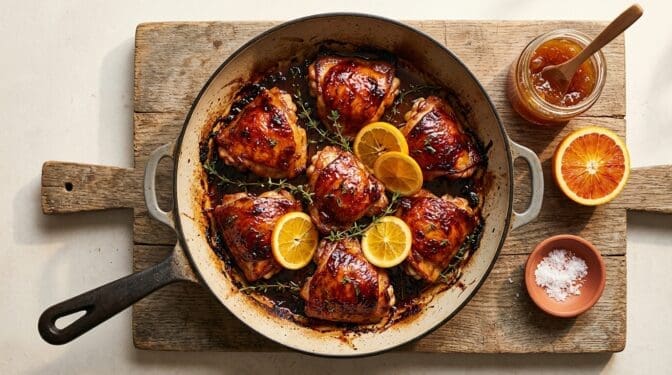
Bone-in thighs, bitter Seville marmalade, soy, mustard, garlic. Sticky, sweet, savoury, the kind of one-tray Sunday roast that solves dinner and lunch.
Why you should cook this
Bitter Seville marmalade is one of the great cooking-pantry items hiding in plain sight on a hundred thousand Australian shelves, almost always being used wrong. People put it on toast like jam and then wonder why they don’t love it.* Toast is not the dish for Seville marmalade. The dish for Seville marmalade is a chicken thigh. Specifically a bone-in skin-on chicken thigh, browned hard, then glazed with marmalade thinned with soy and mustard and a slug of cheap white wine, then baked until the skin lacquers into a glossy sticky mahogany the colour of a polished hallway floor in Carlton.
(*Seville orange is the bitter type, the one that grows on trees that flowered in Australian backyards from 1880 onward and now mostly survives in the gardens of people who have inherited a Federation house and not yet pulled out the citrus. It is too bitter to eat fresh, perfect for marmalade, and possesses a flavour profile that pairs with savoury food in a way Meyer or Valencia simply cannot.)
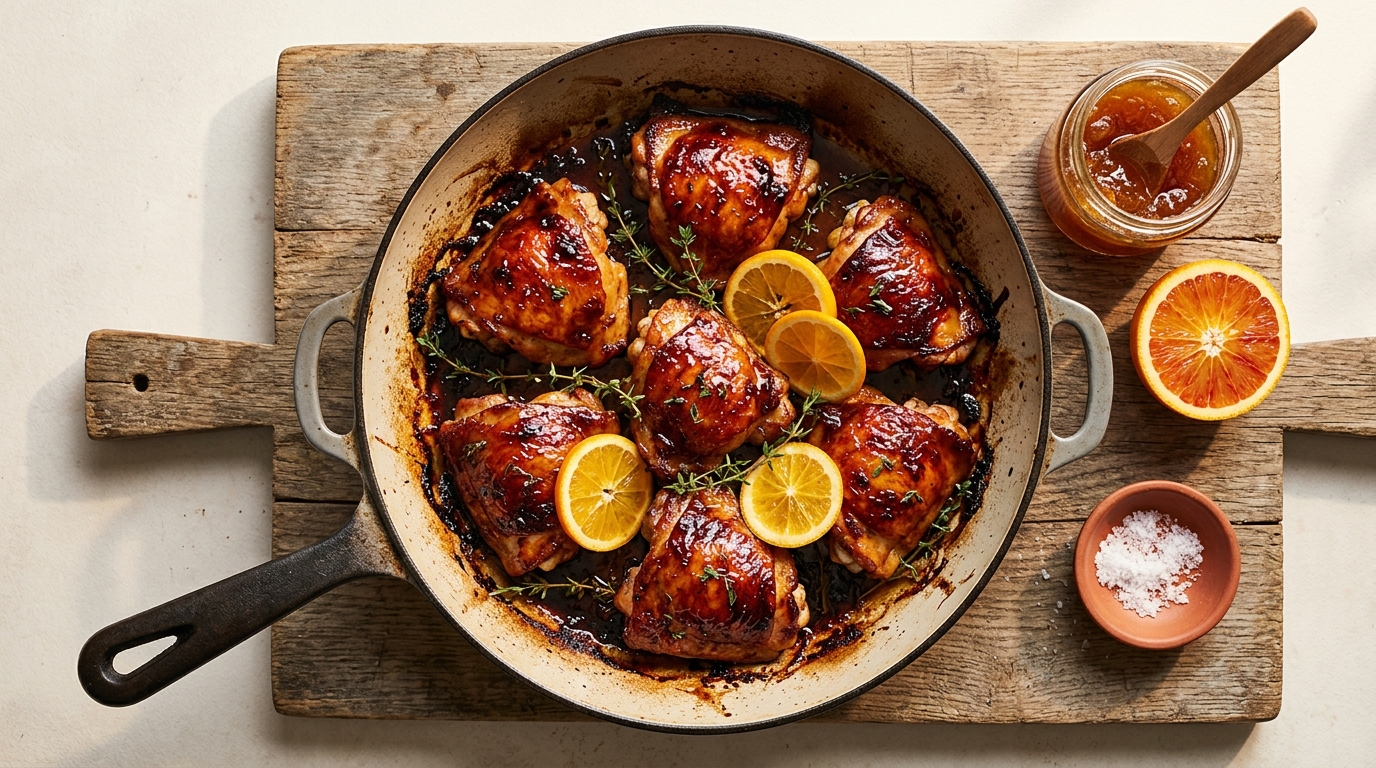
The dish is simple. Six bone-in skin-on chicken thighs, brined briefly in salty water (30 minutes is enough; an hour is better), patted dry, browned skin-side-down in a hot cast-iron pan for six minutes until the skin is the colour of an old penny. Flip, brush the skin generously with the marmalade glaze (Seville marmalade thinned with soy sauce, dijon mustard, a glug of dry white wine, a clove of crushed garlic), tuck a few thyme sprigs and orange rounds between the thighs, transfer the whole pan into a 200°C oven for 25 minutes. The marmalade caramelises onto the skin into a glossy lacquer; the soy adds savoury depth; the mustard gives the dish its grown-up bite.
Use a Mr Mason’s Seville marmalade or a Beerenberg Bitter Seville from a deli or a David Jones gourmet shelf, around $11 a jar. The supermarket Frank Cooper’s Oxford Vintage at $12 is the everyday alternative; the Stonewall Kitchen Three Fruit at $18 is the upgrade. Avoid the bright sweet orange marmalades of the supermarket cake aisle; they have no bitterness left to contribute and the dish goes flat.
What to drink with it
An off-dry Riesling or a lightly oaked Chardonnay. The Riesling matches the citrus and the bitterness; the Chardonnay matches the rich skin and the soy umami. Pewsey Vale Eden Valley Riesling at $25 from Dan Murphy’s is the everyday Riesling pour; Mac Forbes RS3 Yarra Valley Chardonnay at $30 is the everyday Chardonnay. A Tasmanian Pinot Noir (Tolpuddle at $70) also works as a contrast pair, the wine’s acidity cutting through the lacquer. Avoid heavy reds; the Shiraz will smother the citrus and you will have wasted a glass of perfectly good wine.
Recipe · Dinner
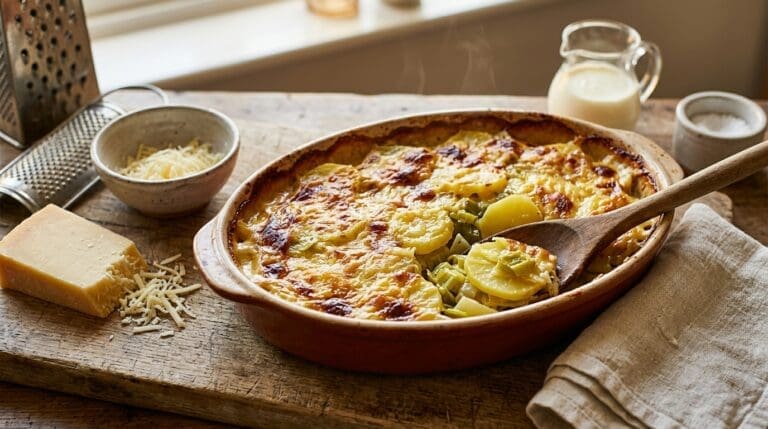
Leek and Potato Gratin
Sliced potato, soft leek, cream and gruyere, baked until the top is amber and the inside is the kind of soft you can spoon. The side that pretends…
Read the recipe →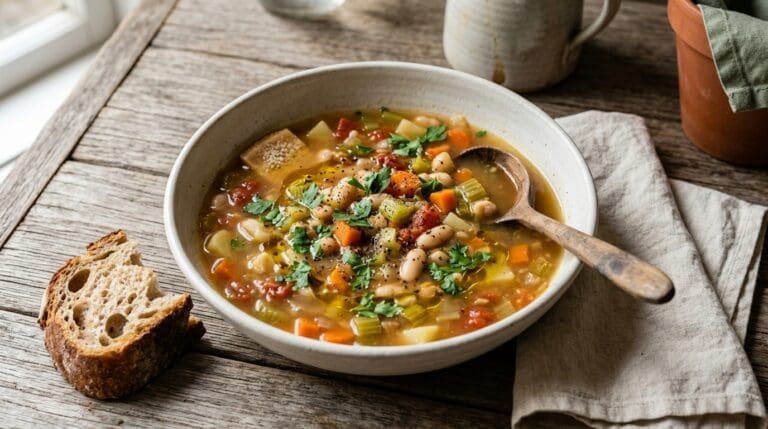
Recipe · Dinner
Winter Vegetable Soup
Three hours of slow extraction, an old parmesan rind, a few cheap vegetables. The soup the Italians have been quietly winning at since the fourteenth century. Why you…
Read the recipe →
Notes from the kitchen
Brown the thighs hard before they go into the oven. Heat a tablespoon of olive oil in a wide cast-iron pan over medium-high. Pat the chicken dry (wet skin steams; steamed skin goes grey instead of golden). Skin-side-down, salt-and-pepper-side-up. Six minutes without moving them, until the skin lifts cleanly from the pan and is deep mahogany. Flip, brush with the glaze, into the oven. The browning is the dish. Skipping the browning is how you end up with a pale lacquered chicken that tastes good but looks anaemic.
Make the glaze in a small bowl while the chicken browns. Three tablespoons of Seville marmalade, one tablespoon of dark soy sauce, one tablespoon of dijon mustard, two tablespoons of dry white wine, one crushed garlic clove, a pinch of black pepper. Whisk together. The mixture should pour easily off a spoon; if too thick, add another splash of wine; if too loose, add another teaspoon of marmalade. Brush onto the chicken in two coats: once when it goes into the oven, once at the 15-minute mark when the first coat has set into the skin.
Tuck the orange rounds and the thyme between the thighs before they go in. The orange rounds caramelise in the heat, the thyme infuses the pan juices, and what comes out the other side is a tray of chicken sitting in a pool of dark amber sauce that wants to be spooned over rice or mash or a hunk of ciabatta. Rest the chicken for five minutes after it comes out; the juices redistribute and the skin firms up into a final crisp shatter.
Two things that go wrong
Skin is pale and tacky instead of glossy mahogany
You did not brown the chicken hard enough before the oven, or the oven was not hot enough. Push the temperature to 220°C for the last 8 minutes, or finish under a hot grill for 3 minutes (watch it; the marmalade burns fast). The skin should be glossy and slightly cracked, not pale and damp.
Glaze has burnt black around the edges of the pan
The marmalade caught at the edges where there was no chicken. This is the right kind of mistake; scrape the burnt edges off, deglaze the pan with two tablespoons of hot water, scrape the dark fond into the sauce. The bitter caramel adds depth. Do not throw out the pan juice. The pan juice is the reward for cooking on the stove and not in a pyrex dish.
Variations worth knowing
Marmalade and miso chicken
Replace the soy sauce with two tablespoons of white miso. The dish becomes deeper, funkier, slightly more umami. The Japanese-leaning version. Serve with steamed rice and a quick cucumber pickle.
Chicken thighs with grapefruit marmalade
Swap the Seville for a pink grapefruit marmalade (Beerenberg or homemade). The dish becomes brighter, more bitter, slightly more tropical. Goes with a Vermentino instead of a Riesling. The summer-leaning version of an essentially winter dish.
Marmalade-glazed chicken wings (the snack)
Same glaze, swap the thighs for two kilos of chicken wings. Toss raw with the glaze, spread on a tray, bake at 220°C for 35 minutes turning halfway. The Friday-night beer-snack that solves the “what do I make for the footy” question for the next four weeks.
Leftovers and make ahead
Refrigerate covered for up to four days. The chicken keeps its lacquer beautifully; reheat in a 180°C oven for 10 minutes, uncovered, to crisp the skin again. Avoid the microwave; the marmalade glaze goes from glossy to gluey in 90 seconds and there is no recovering from gluey. The pan juices will set into a soft jelly in the fridge; warm gently with the chicken to bring them back to a sauce.
Pull the cold chicken off the bones the next day; shred into a bowl, dress with the warmed pan juices, pile onto a piece of toasted sourdough with a fistful of rocket and a smear of dijon. The sandwich becomes the lunch you will text the kitchen about. The bones go straight into a stockpot for a chicken stock that carries the marmalade and citrus into your next risotto. Nothing is wasted. The chicken paid for itself.
The recipe
[fd-wprm-placeholder]
Ingredients
Method
- Preheat oven to 200°C fan-forced. Brine the chicken thighs in 1L of cold water mixed with 30g of salt for 30 minutes. Drain and pat very dry.
- Heat the olive oil in a wide cast-iron pan over medium-high. Season the chicken with pepper. Place skin-side-down in the pan.
- Brown for 6 minutes without moving, until the skin is deep mahogany. Flip the thighs.
- Whisk the marmalade, soy, mustard, wine, garlic and pepper in a small bowl until pourable. Brush half over the chicken skin.
- Tuck the thyme sprigs and orange rounds between the thighs. Transfer the pan to the oven.
- Bake 15 minutes. Brush with the remaining glaze. Bake another 10 minutes until the skin is glossy mahogany and the juices run clear when a thigh is pierced at the bone.
- Rest 5 minutes in the pan. Sprinkle with flaky salt. Serve with the pan juices spooned over, on a generous puddle of mash, polenta or steamed rice.