
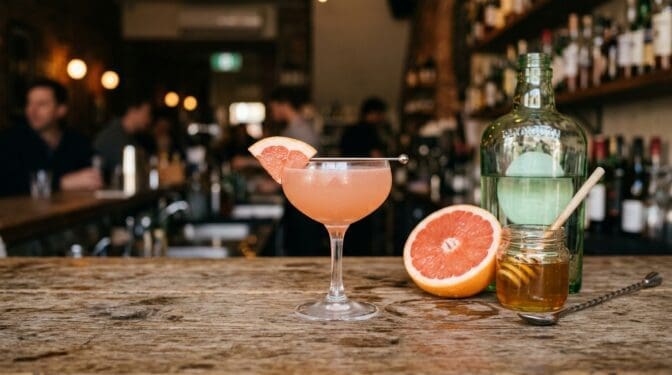
Sam Ross’s Business cocktail (gin, honey, lime) with pink grapefruit standing in for the lime. Brunch-friendly, slightly bitter, the drink that explains why Saturdays were invented.
Why you are pouring this tonight
The Business is a Sam Ross cocktail (the same Sam Ross who created the Penicillin and Paper Plane), invented at Milk and Honey in New York in the early 2000s and now part of the modern bar canon. The original is gin, honey syrup and fresh lime in a 60-22.5-22.5 ratio, shaken with ice, strained into a coupe. The drink is brilliant. The drink is also entirely at the mercy of the lime, which means in the southern hemisphere it has a problem: limes in Australia are imported, expensive, and frequently the flavourless waxed Mexican variety that costs $1.50 each at Coles. The Pink Grapefruit Business is the local solution. Use a pink grapefruit instead, in the 60-22.5-22.5 ratio. The drink becomes sweeter, more bitter, more breakfast-coded.
The substitution works because the citrus is doing structural work, not flavour work. In the original Business, the lime provides acid and aromatic citrus oil. The pink grapefruit provides the same acid (slightly less, so you tip the proportions toward 30ml of grapefruit instead of 22.5ml of lime) and a different aromatic profile: deeper, more bitter, more pink-flesh-fruit than green-zest-fruit. The honey syrup ties everything together. The gin sits underneath, lifted by the citrus.
Use a London Dry gin with a clean juniper backbone. Plymouth Gin at $55 from Dan Murphy’s is the everyday pour; Tanqueray at $58 is the alternative. Australian options that work: Four Pillars Rare Dry at $80, Archie Rose Signature Dry at $80. Avoid the heavily flavoured contemporary gins (Hendrick’s rose, Monkey 47); the cucumber and the spice fight with the grapefruit. The classical gin is the right call for this drink.
Use a real honey syrup at 2:1 ratio (200g of clover or wildflower honey, 100ml of warm water, stirred until dissolved, refrigerated). The 2:1 ratio is critical; a 1:1 ratio is too thin and the drink loses body. The honey gives the cocktail its silky weight; without it the drink reads like a gin and grapefruit juice. Avoid the supermarket honey-flavoured syrups marketed as cocktail mixers; they are corn syrup with caramel colouring and they will not behave like real honey.
What to pour it alongside
Brunch. Specifically a Sunday brunch on the back deck, with a slice of sourdough toast under a softly poached egg and a heap of smoked trout. Or with a wedge of frittata and a piece of buttery shortbread. The drink’s sweet-bitter-citrus profile is one of the most food-friendly cocktails in the canon; it pairs with eggs, with smoked fish, with cured meats, with anything that has lemon or chilli in it. Two per person across a long brunch is the right pace. The drink is deceptively strong; the honey hides the gin.
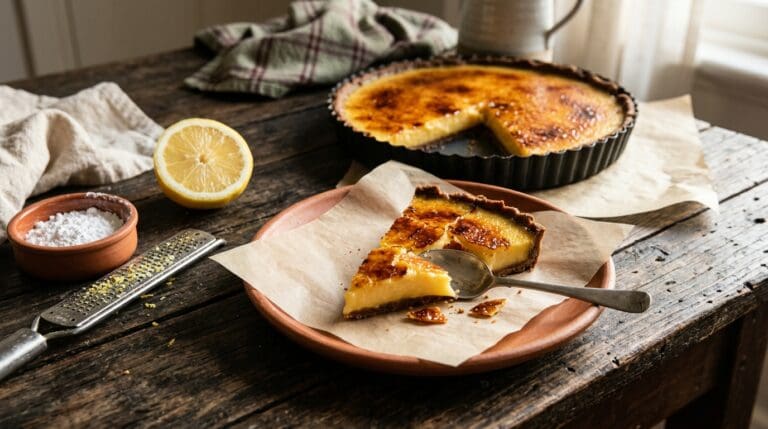
Recipe · Dessert
Lemon Tart with Burnt Sugar Top
Shortcrust, lemon curd that hits sharp and lands soft, a glassy brûlée top you crack with a spoon. The August dessert when the lemons finally taste like lemons.…
Read the recipe →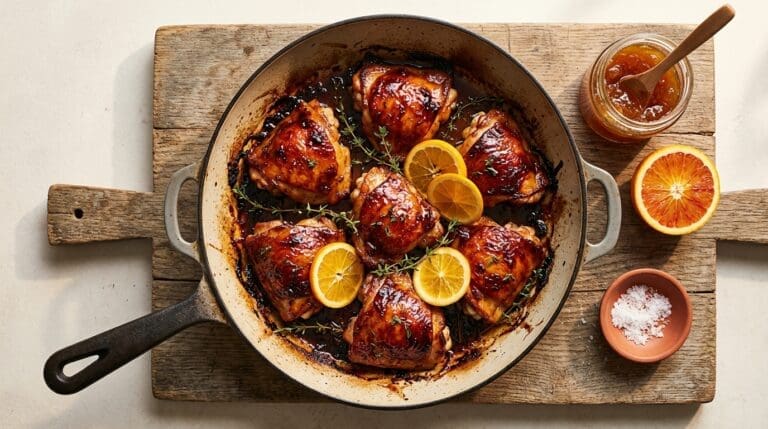
Recipe · Dinner
Marmalade-Glazed Chicken Thighs
Bone-in thighs, bitter Seville marmalade, soy, mustard, garlic. Sticky, sweet, savoury, the kind of one-tray Sunday roast that solves dinner and lunch. Why you should cook this Bitter…
Read the recipe →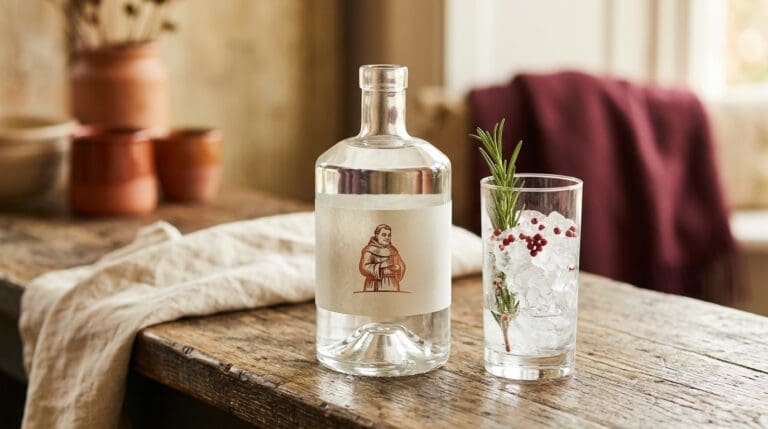
Plymouth Gin
Plymouth is the Goldilocks gin. Softer and earthier than a proper London Dry, nowhere near as aggressive as the new-wave Australian botanicals, but unmistakably juniper-forward in a way…
Read more →Notes from the kitchen
Make the honey syrup in advance. 200g of honey (clover or wildflower; not manuka, which is too medicinal for this drink), 100ml of just-warm tap water (not boiling; boiling water destroys some of the aromatic compounds). Stir in a clean jar until fully dissolved. Refrigerate; keeps for a month. The syrup is the secret; pre-made it sits in the fridge ready for any cocktail that wants honey (Bee’s Knees, Penicillin, Gold Rush, this Business).
Squeeze the grapefruit fresh. A medium pink grapefruit yields about 80ml of juice; one fruit makes two drinks with juice to spare. Strain through a fine sieve to remove the pulp; pulp in the shaker means a cloudy drink. The juice loses brightness within an hour; squeeze right before mixing. Australian pink grapefruit is in season from June through October; Riverland grapefruit (South Australia) is the best, available at fruit shops and at the better farmer’s markets.
Shake hard with cold ice for 10 seconds. Strain through a Hawthorne strainer (no fine sieve needed; the drink is supposed to be slightly cloudy from the citrus). Pour into a chilled coupe. Garnish with a thin wedge of pink grapefruit on the rim, or with a wide twist of grapefruit peel expressed over the surface. The garnish is the final flavour layer; the drink without it reads incomplete.
Two things that go wrong
Drink is too sweet and the gin has disappeared
Your honey syrup ratio is too rich, or your honey is too light. Use a 2:1 ratio (not 1:1, which thins it; not 3:1, which thickens it too much). If still too sweet, reduce the syrup to 18ml and increase the grapefruit juice to 35ml. The drink should taste of gin first, citrus second, honey third.
Drink is bitter and the citrus is overpowering
Your grapefruit was a particularly bitter ruby variety, or you over-poured the juice. White grapefruit is too bitter for this drink; pink or ruby is the call, but red ruby grapefruit can lean intense. Reduce the juice to 22.5ml (the original lime ratio) and add 7.5ml of fresh lemon juice for a brighter acid profile.
Variations worth knowing
The classic Business
Use 22.5ml of fresh lime juice instead of 30ml of pink grapefruit. The original Sam Ross build. Brighter, sharper, more zest-forward. The version for someone who has good limes.
Bee’s Knees with grapefruit
Add 15ml of fresh lemon juice on top of the grapefruit. The drink becomes a sour-leaning crossover between a Business and a Bee’s Knees, brighter and more acidic. The brunch version that works better in March.
Tequila Business
Replace the gin with a quality blanco tequila (Patron Silver at $90, Cazcabel at $55). The drink becomes a Paloma cousin, sweeter, slightly more savoury. Garnish with a chilli salt rim.
Leftovers and make ahead
There are no leftovers. The drink is built fresh, served immediately. The grapefruit juice oxidises within two hours; the honey syrup keeps for a month refrigerated. If you have squeezed a whole grapefruit and made only one drink, freeze the rest of the juice in an ice-cube tray for next weekend’s round.
The honey syrup, once you have it on the shelf, opens up the entire honey-cocktail repertoire. Bee’s Knees (60ml gin, 22.5ml fresh lemon, 22.5ml honey syrup, shaken). Gold Rush (60ml bourbon, 22.5ml fresh lemon, 22.5ml honey syrup). Penicillin (60ml blended Scotch, 22.5ml fresh lemon, 22.5ml honey syrup, ginger, peated float). One $9 jar of honey gets you twenty-five drinks across four cocktails.
The recipe
[fd-wprm-placeholder]