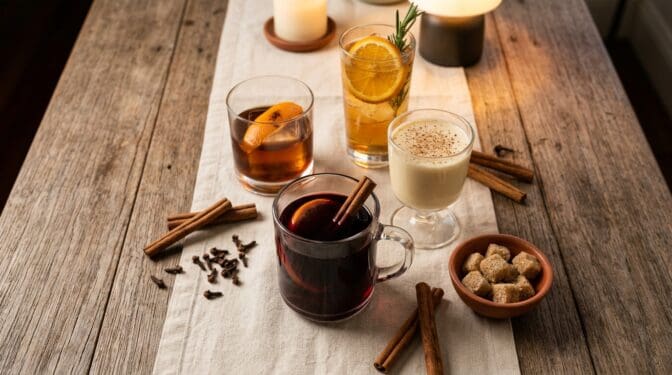
Twelve cocktails for the Australian winter Christmas table. Hot, cold, smoky, sweet, low-ABV and high-ABV, all of them tested in a Sydney terrace in July when the radiator clanks and the wine glasses clink and someone has just put a vinyl on for the third time tonight.
- The case for Christmas in July as a cocktail night
- How to plan the bar for 6 to 12 guests
- The 12 cocktails (in serving order)
- The bottles you actually need
- Frequently asked questions
The case for Christmas in July as a cocktail night
Christmas in July is an Australian invention, a quiet rebellion against the geographic absurdity of celebrating Christmas in 38°C heat with a roast turkey while the air-conditioning struggles to keep the prawns from going off. In July, in a Sydney terrace or a Melbourne weatherboard or a Perth backyard, the temperature drops, the dinner gets longer, and the cocktail menu finally aligns with the food. Hot toddies, mulled wine, eggnog, smoked Old Fashioneds: drinks that make no sense in December heat make perfect sense in July chill. The fire (real or imagined) wants a brandy. The roast wants a Negroni. The pavlova wants a coffee with whiskey in it.
The Christmas-in-July cocktail night does not require a turkey. It does not require tinsel. It does not require a soundtrack featuring Mariah Carey. What it requires is six to twelve people, a heater, a stocked bar, a long table, and three cocktails per person across the night. The food is whatever you have decided to cook (a slow-roast lamb shoulder, a beef bourguignon, a pavlova or a pudding, your call), but the cocktails are the spine. Plan them well and the night runs itself.
How to plan the bar for 6 to 12 guests
Three cocktails per person across the night is the working ratio. For eight guests, that is twenty-four drinks. The mistake every cocktail-night host makes is trying to offer all twelve options to all guests; the result is a bartender (you) running for four hours with no time to eat or talk. The right move is the menu approach: pick three or four cocktails, stage them across the night, and tell guests what they are.
The classic structure is: an aperitif (one cocktail before dinner), a paired drink (one with dinner), and a long sipper (one or two after dinner). For a Christmas-in-July night, that looks like an Amaro Tonic or a Blood Orange Negroni before the meal, a Mulled Wine or a Hot Buttered Rum during, and an Eggnog or an Irish Coffee after. Three cocktails, twenty-four servings, three hours of pacing. The night runs.
Batch what you can. Eggnog batches beautifully (make in the morning, refrigerated). Mulled wine batches beautifully (simmer in advance, hold warm). Old Fashioneds and Negronis batch in jugs (build the proportions, no water added, pour over fresh ice). The drinks that do not batch well are the ones that need fresh citrus or fresh shake (Blood and Sand, Whisky Sour). Save those for a small audience or skip them.
The twelve cocktails (in serving order)
Recipe
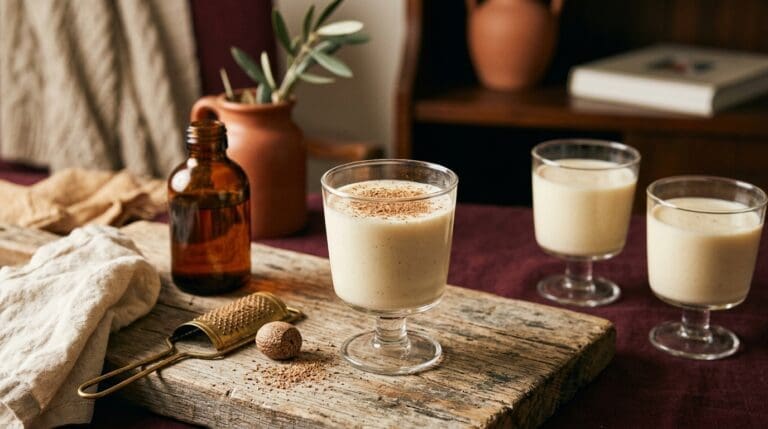
Eggnog
The whole-egg, brandy and dark rum classic. Made the morning of, refrigerated, drunk after dinner with fresh nutmeg.
Recipe
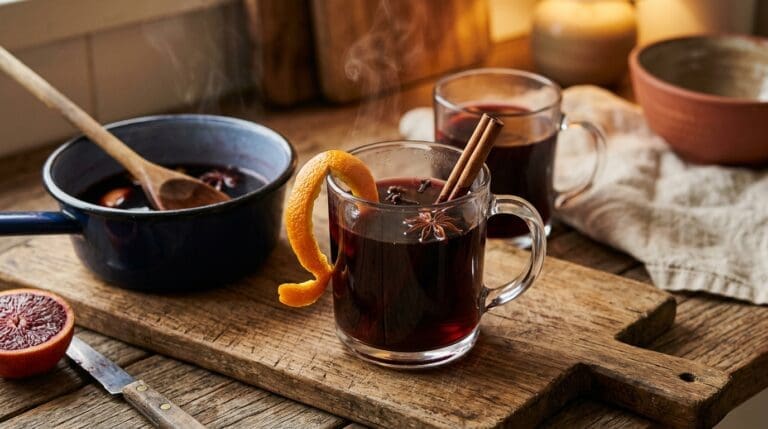
Mulled Wine
Slow-simmered red wine with orange, cinnamon, clove and a slug of brandy. The drink that turns dinner into a small ceremony.
Recipe
Hot Toddy
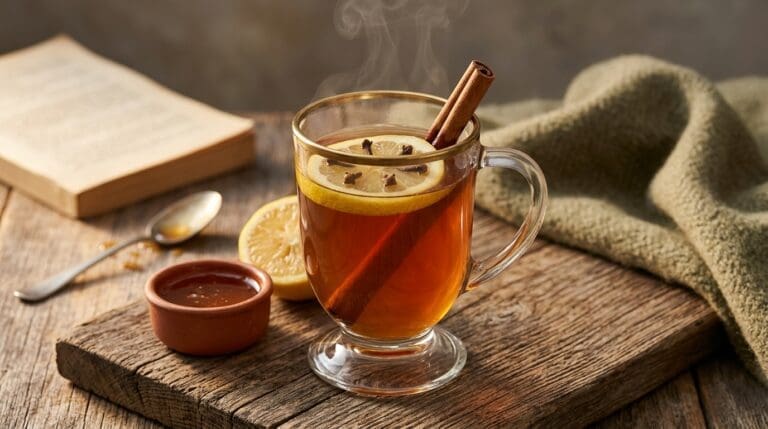
Whisky, hot water, honey, lemon studded with cloves, cinnamon stick. The drink for a head cold or a winter night.
Recipe
Irish Coffee
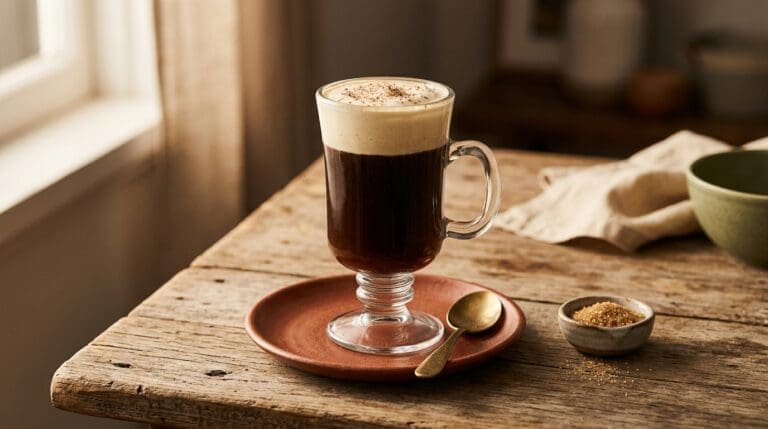
Whiskey, hot black coffee, brown sugar, lightly whipped cream. Invented at Foynes Airport in 1942 for cold transatlantic passengers.
Recipe
Hot Buttered Rum
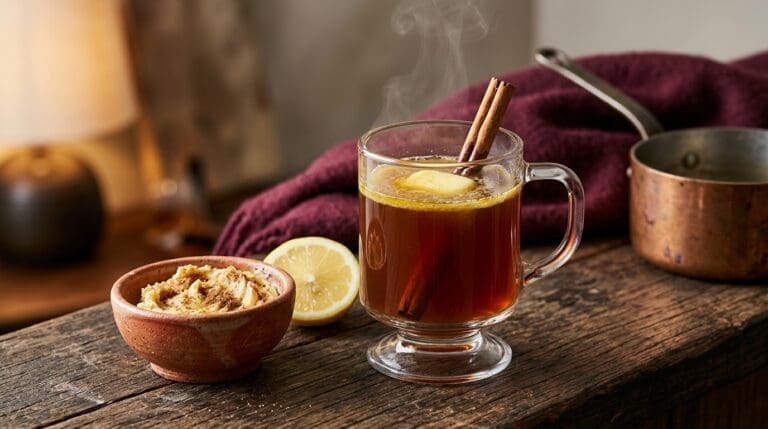
Dark rum, hot water, brown sugar, cinnamon, butter. The cocktail that warms you from the inside out.
Recipe
Smoke and Orange Rye Old Fashioned
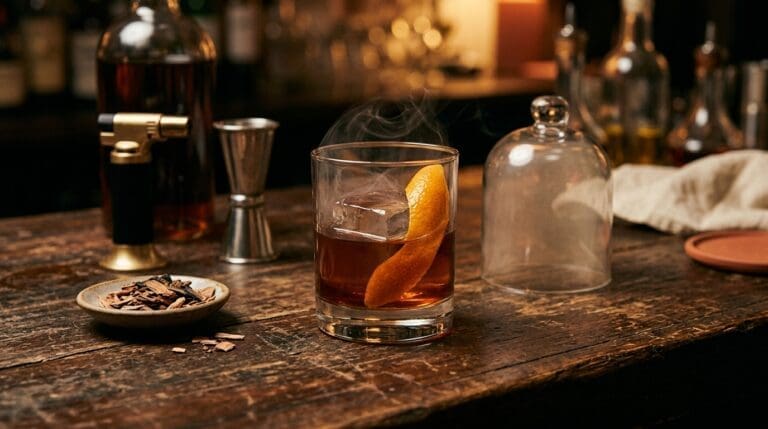
Rye smoked under a glass cloche of applewood, finished with an expressed orange. Theatrical, smoky, the cocktail bars charge $32 for.
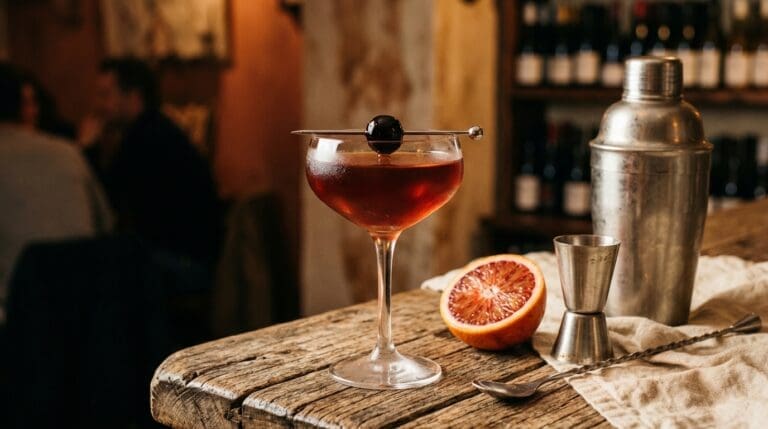
Recipe
Blood and Sand
Scotch, sweet vermouth, cherry brandy, fresh blood orange juice. Equal parts, 1922, the cocktail that tastes like an old-Hollywood evening.
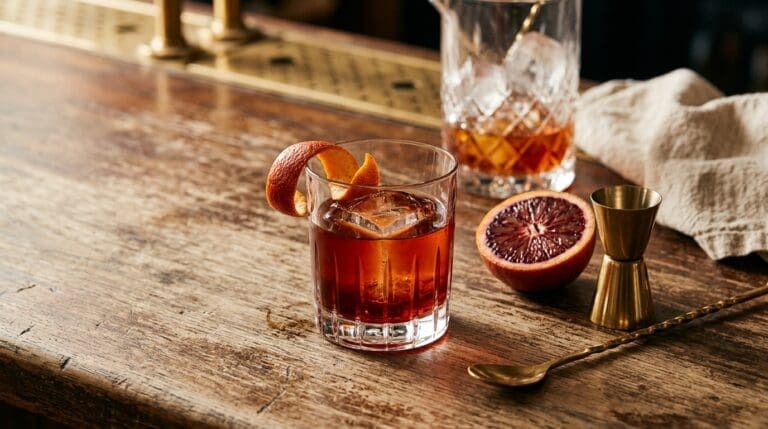
Recipe
Blood Orange Negroni
A Negroni with fresh blood orange peel and a splash of fresh blood orange juice. Winter Australian variation.
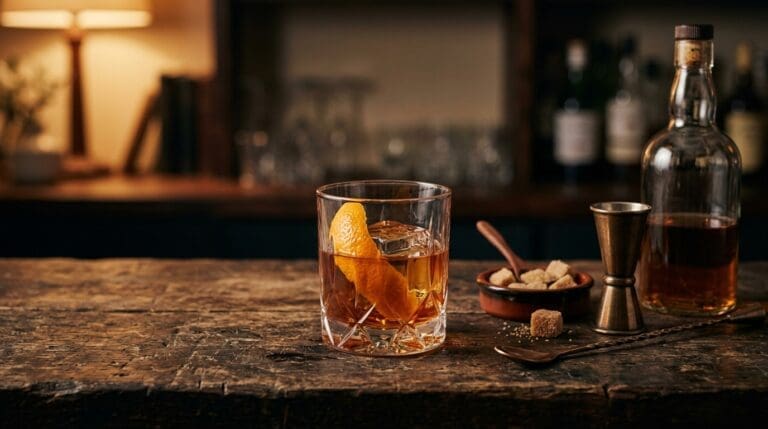
Recipe
Scotch Old Fashioned
Demerara, Angostura, Scotch, expressed orange peel, served over a single large rock. Smokier and drier than the bourbon version.
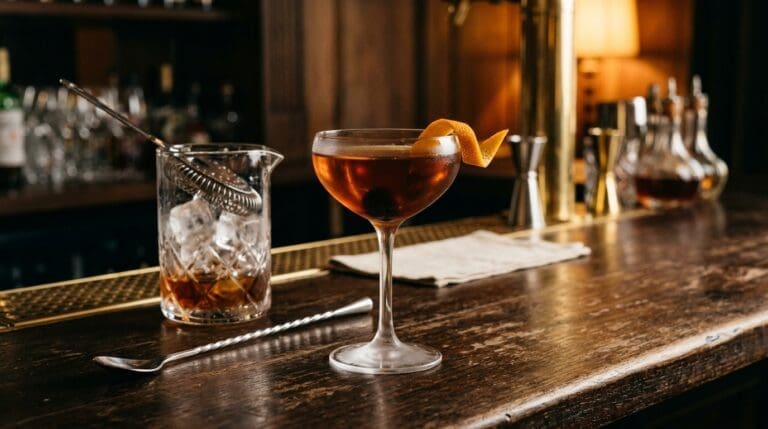
Recipe
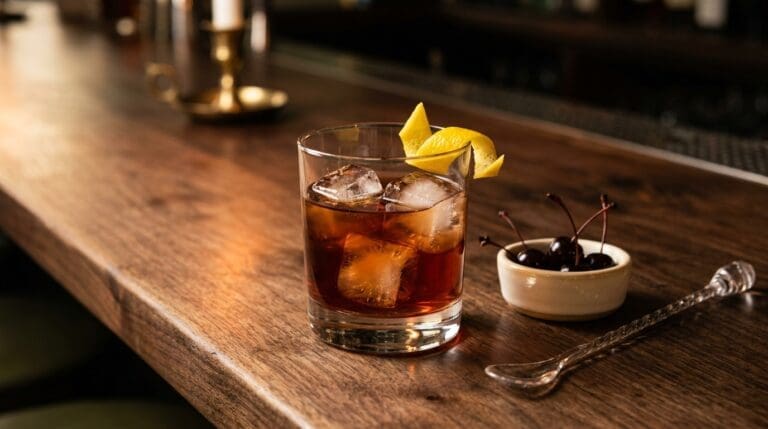
Rye Manhattan
Rye, sweet vermouth, three dashes Angostura, expressed orange. Sharper than a bourbon Manhattan and twice as honest about it.
Recipe
Vieux Carre
Rye, cognac, sweet vermouth, Benedictine, two bitters. The New Orleans classic, built in a rocks glass over ice.
Recipe
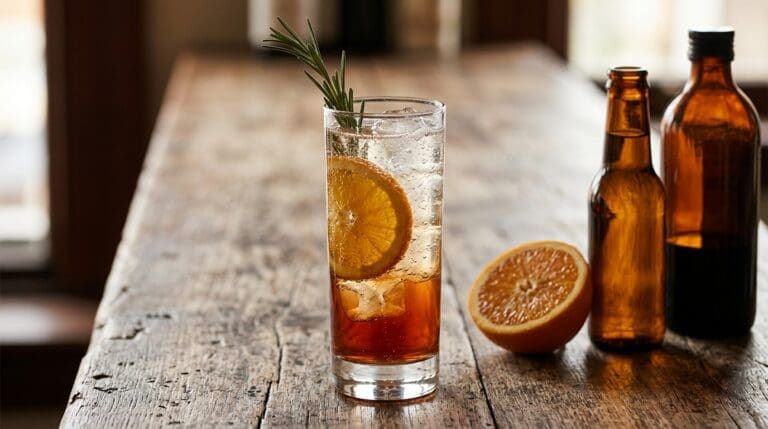
Amaro Tonic
Cynar or Averna over ice, premium tonic, a fat wheel of orange. Bitter, refreshing, low-ABV. The Italian alternative to a G&T.
The bottles you actually need
The Christmas-in-July cocktail bar can be built around eight bottles. Anything more is decoration; anything less and you are missing options. The list below is the working kit: the spirits, the modifiers, the bitters, the citrus, with the everyday bottle and the upgrade pour for each.
- Bourbon or rye: Wild Turkey 101 ($55) or Bulleit Rye ($55). Covers Old Fashioneds, hot toddies, eggnog.
- Scotch: Monkey Shoulder ($55) for blended; Laphroaig 10 ($90) for peated. Covers Blood and Sand, Scotch Old Fashioned, hot toddy.
- Dark rum: Appleton Estate Signature ($55). Covers eggnog, hot buttered rum.
- Cognac or brandy: Hennessy VS ($55). Covers eggnog, mulled wine, Vieux Carre.
- Sweet vermouth: Dolin Rouge ($30) or Carpano Antica ($60). Covers Manhattan, Negroni, Blood and Sand.
- Amaro: Cynar ($45) or Campari ($45). Covers Negroni, Amaro Tonic.
- Cherry brandy: Heering ($45) or Bols ($30). Covers Blood and Sand, Vieux Carre.
- Bitters: Angostura ($18). Covers everything.
You also need: caster sugar, demerara sugar cubes, real honey, fresh lemons, fresh oranges (blood oranges if in season), whole nutmeg, cinnamon sticks, whole cloves, star anise, bay leaves. Everything else is optional.
The bottles in detail

Bottle
Appleton Estate Signature Rum
Featured in the cocktails above. Available at Dan Murphy’s, BWS or your local bottle shop.

Bottle
Hentley Farm The Beauty Shiraz
Featured in the cocktails above. Available at Dan Murphy’s, BWS or your local bottle shop.

Bottle
Monkey Shoulder Blended Malt
Featured in the cocktails above. Available at Dan Murphy’s, BWS or your local bottle shop.

Bottle
The Glenlivet 12 Year
Featured in the cocktails above. Available at Dan Murphy’s, BWS or your local bottle shop.

Bottle
Rittenhouse Rye
Featured in the cocktails above. Available at Dan Murphy’s, BWS or your local bottle shop.

Bottle
Campari Aperitif Bitter
Featured in the cocktails above. Available at Dan Murphy’s, BWS or your local bottle shop.
Frequently asked questions
What is Christmas in July?
An Australian (and broader Southern Hemisphere) tradition of celebrating a winter Christmas in mid-year, when the cold weather actually matches the food and drink of a traditional Christmas. Roasts, mulled wine, hot toddies, fruit cake, eggnog. Started informally in the 1980s in the Blue Mountains; now common across NSW, Victoria, Tasmania and southern WA.
How many cocktails should I serve at a Christmas in July dinner party?
Three per person across the night is the working ratio. For 8 guests, that is 24 drinks total. Pick 3 or 4 cocktails (one aperitif, one paired with dinner, one or two after dinner) rather than offering all 12 options. Batch what batches well (eggnog, mulled wine, Negronis, Old Fashioneds), build fresh what does not (anything with fresh citrus or egg).
Can I make eggnog the day before?
Yes. Eggnog must rest at least 3 hours and is significantly better made the morning of, refrigerated until serving. The flavour deepens and the alcohol mellows into the dairy. Eggnog also keeps for up to 5 days in a sealed jar in the fridge.
What is the best winter cocktail for someone who does not like Scotch?
The Hot Buttered Rum (dark rum-based), the Eggnog (brandy and rum-based), or the Blood Orange Negroni (gin and Campari-based). All are warming, all suit winter, none rely on Scotch character. The Mulled Wine is also a safe option as it is wine-based.
How do I serve mulled wine to a crowd?
Make a triple batch (3 bottles of wine) in a large heavy pot. Hold at low heat (around 70°C) on the stove, lid off, for up to 2 hours. Ladle into warm mugs as guests arrive. Add the brandy at the end of each pour, off the heat, so the alcohol holds. Garnish each mug with a fresh strip of orange peel.
What food should I serve with a Christmas in July cocktail night?
Match the drinks. Hot toddies and Irish coffees go with a winter pudding (self-saucing chocolate pudding, sticky date pudding, fruit cake). Mulled wine and Negronis go with a slow-roast main (lamb shanks, boeuf bourguignon, cassoulet). The Blood and Sand and the Amaro Tonic are aperitif drinks: serve with olives, jamon, aged hard cheese before dinner. Avoid lighter summer foods (salads, raw fish, tropical fruit); the cocktails will smother them.
Are these cocktails available in non-alcoholic versions?
Most are. A non-alc mulled wine (red grape juice, same spices), a non-alc hot toddy (hot water, honey, lemon, ginger), and a non-alc Amaro Tonic (Seedlip Spice 94 with tonic) cover most of the spirit-based options. The eggnog and the Blood and Sand do not have meaningful non-alc versions.